
Oeil de Perdrix Réserve BAUR AU LAC VINS 2025
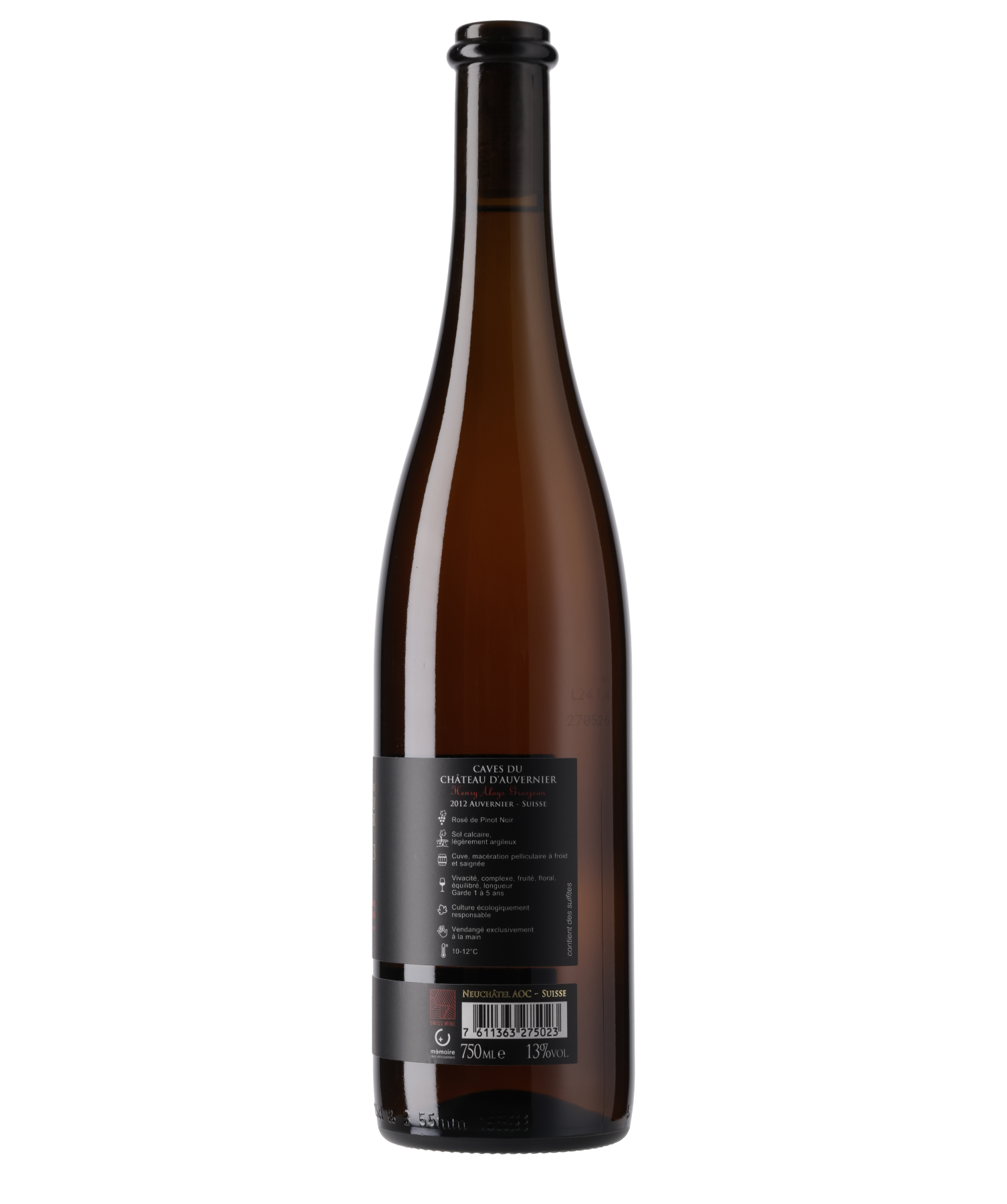
AOC Neuenburg, Château d'Auvernier, 750 ml


Description
This rosé classic seduces with an intense, fruity bouquet that reminds of strawberries, oranges and delicate flowers. A soft, berry-fruity, luscious and yet fresh rosé. Its hint of residual sweetness playfully spreads with the fruit aroma on the palate and ends in a juicy, mineral finish.
Attributes
| Grape variety: | Pinot Noir |
| Producer: | Château d'Auvernier / Thierry Grosjean |
| Origin: | Switzerland / Neuenburg / Neuenburg |
| Other bottle sizes: | 375 ml |
| Ripening potential: | 1 to 2 years |
| Drinking temperature: | 10 to 12 °C |
| Food Pairing: | Grilled fish, Italian antipasti, Apéro riche, Crispy roast chicken |
| Vinification: | cooling period, soft pressing, fermentation in steel tank, fermentation at low temperatures |
| Harvest: | hand-picking |
| Maturation: | in steel tank |
| Volume: | 13.0 % |
| Note: | Contains sulphites |
Neuenburg
Neuchâtel: the Burgundy of Switzerland
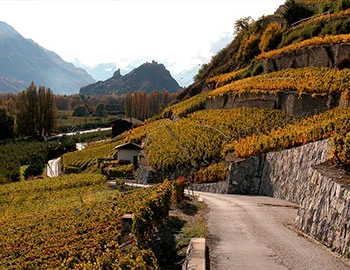
Neuchâtel is considered the stronghold of the art of watchmaking. The precision that characterizes the clockwork mechanisms can also be found in many crus here, which grow on calcareous soils. The narrow strip between Lake Neuchâtel and the southern rim of the Jura Mountains is the perfect terroir for Chasselas, but also for Pinot Noirs, which present Burgundian characteristics. With the white “Non Filtré” and the indigenous “Oeil de Perdrix”, vintners in Neuchâtel have two particular specialties.

Switzerland
Switzerland – A small country with enormous diversity
Switzerland is famous for its banks, watches, and cheese, but not necessarily for its wine. The Swiss didn't invent wine, but they have been extremely open and curious to it. Wine culture arrived in what is now modern Switzerland via several routes: from Marseilles to Lake Geneva and the Lower Valais region; from the Aosta Valley through the Great St. Bernard Pass to the rest of Valais; from the Rhone through Burgundy, across the Jura Mountains to Lake Constance; and from Lombardy to Ticino, and then on to Grisons.