
Alvaro Palacios, S.L.
Álvaro Palacios was only 25 years old when he moved to the lonely Priorat in 1989. He left his parents’ vineyard in Rioja (Palacios Remondo) behind, which had grown too small for him. He joined forces with a group of friends to reawaken the sleeping beauty of the Priorat, which the prior inhabitants had mostly abandoned in search of a better and easier life in the cities.
Coming from the vibrant cosmopolitan city of Barcelona, it’s a good hour and a half’s drive to the Priorat. First, you head southwards down the coast until you turn inland after Tarragona and enter this wild, mountainous region. In summer, it smells of hot stone and dry herbs under the haze of the shimmering heat. Hard to believe that the grapevines on the terraced slopes can have such a vibrant green colour. Their roots search for water several metres deep in the barren slate soil, which is known locally as llicorella.
Red wines from Alvaro Palacios, S.L.
from Alvaro Palacios, S.L.
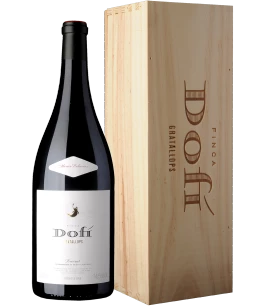
Together with José Luis Pérez, René Barbier, Daphne Glorian and Carles Pastrana, Álvaro Palacios became one of the Priorat’s principal rediscoverers and pioneers. In the beginning, these friends made wine together. One by one, they ‘restored’ the abandoned, partly ancient plots of land, which were overgrown with gnarled Garnacha and Cariñena vines – hard, sweaty labour on steep slopes. They planted new varieties such as Cabernet Sauvignon and Merlot to blend them with the local grapes. It was not long before wine lovers took notice. As time passed, each of the friends developed and realised their own ideas. Álvaro named his first project Clos Dofí after his own nickname Dofí, meaning dolphin.
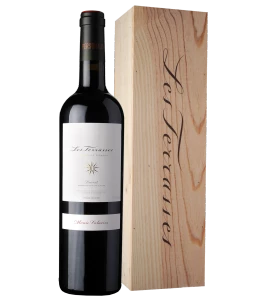
The present-day Finca Dofí wine comes from various vineyards in the municipality of Gratallops and is primarily made from Garnacha grapes. Later came Les Terrasses, a blend of Garnacha and Cariñena from different villages, followed by L’Ermita (1993), which grows on just 1.44 hectares of the eponymous vineyard with Garnacha and Cariñena vines over 70 and 100 years old respectively, and is one of the world’s great cult wines.
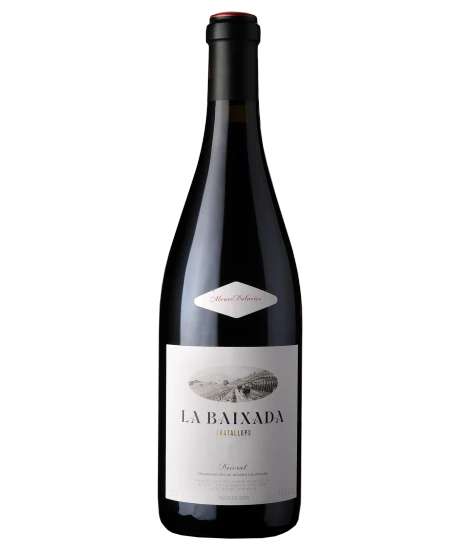
Just as he did at his winery Descendientes de J. Palacios in Bierzo, Álvaro developed his wine-making approach in the Priorat according to the Burgundian model by studying the characteristics of the individual plots of land in order to produce true gems of wines from single vineyards. As time went by, he bade farewell to the international grape varieties and focused on the native plants. La Baixada (1.3 ha in Gratallops) and Les Aubaguetes (1.79 ha in Bellmunt with almost 120-year-old vines) are two such examples.
Camins del Priorat is the gateway to the Priorat as a wine that (still) contains a certain amount of international grape varieties (Cabernet Sauvignon, Syrah and Merlot). The grapes for this wine come from different villages. Vi de Vila Gratallops, on the other hand, is made exclusively from Garnacha and Cariñena, with a minimal proportion of white varieties that grow sporadically throughout the vineyards. As the name suggests, all the vineyards are located in the municipality of Gratallops.


Producer
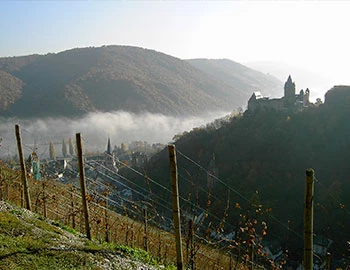
Weingut Ratzenberger / Fam. Ratzenberger
The most beautiful way of traveling to Bacharach on the Rhine is by boat, passing the famous Loreley cliff. To the left and right of the Middle Rhine, medieval castles and picturesque villages follow in quick succession. Bacharach is one of the most beautiful towns in the Upper Middle Rhine Valley, designated a UNESCO World Heritage Site. Once there, the locality of Steeg can be reached on foot within half an hour or by car in just five minutes.

Dominio de Pingus
The first Pingus was bottled in 1995. This limited production wine from Ribera del Duero made history with a legendary rating from Robert Parker Junior (1998): "One of the greatest young red wines I have ever tasted." The vintage is also at the centre of a somewhat mythical-sounding story – the freighter carrying a quarter of the limited production sank off the Azores, with the wine ending up in Davy Jones's locker at the bottom of the sea.
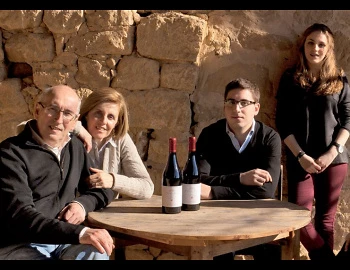
Viñedos Lacalle y Laorden
In 2015 the two families of Zapiain and Lopez de Lacalle launched the Izar-Leku Mahastiak project (today Grupo Artadi) in Zarautz/Basque Country, with the aim of producing a table wine as well as a sparkling wine with Txakoli as the base wine. Today this sparkling wine is part of the "Viñedos Lacalle y Laorden" company - just like the premium single-vineyard wine "Viña El Pisón", though this wine comes from the Álava/Rioja region.