

Château Les Carmes Haut-Brion 2025
AC Pessac-Léognan, 375 ml
Description
Citing Robert Parker The Wine Advocate: "...The 2025 Les Carmes Haut-Brion is a blend of 54% Cabernet Franc, 29% Cabernet Sauvignon and 17% Merlot, one of the highest proportions of Cabernet Franc at the estate and comparable to 2016. It was vinified with 65% whole clusters and matured in 70% new oak. It reveals a complex, harmonious bouquet of pomegranate, iris and peony, intertwined with cassis, mulberries and dark berries. Medium- to full-bodied, dense and structured, it’s deep and layered, its concentrated core of fruit framed by velvety structuring tannins, concluding with a long, mineral-inflected finish. Combining tension with an ethereal profile, it delivers remarkable clarity, freshness and elegance. While slightly more overtly structured at this stage than the prodigious 2022, it remains impeccably balanced..."
Attributes
| Grape variety: | Merlot, Cabernet Franc, Cabernet Sauvignon |
| Producer: | Château Les Carmes Haut-Brion |
| Origin: | France / Bordeaux / Péssac-Léognan |
| Other bottle sizes: | 750 ml 1500 ml |
| Ripening potential: | 5 to 30 years |
| Drinking temperature: | 16 to 18 °C |
| Volume: | 12.5 % |
| Note: | Contains sulphites |
Cabernet Franc
Forefather of the Bordeaux varieties
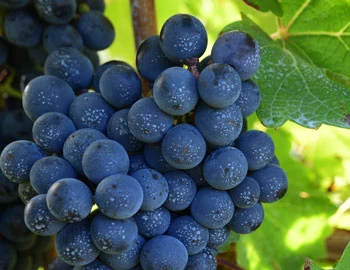
The Cabernet Franc is one of the oldest varieties of Bordelais and a parent of three other red grapes in the Bordeaux assortment: Cabernet Sauvignon, Merlot and Carmenère. It is distinguished by its complex, flavourful bouquet of raspberry, graphite, violet, liquorice and white pepper. In addition, it presents round, crisp tannins which turn out less strongly than those of Cabernet Sauvignon. While the Cabernet Franc always appears as part of a blend in Bordeaux, it is pressed alone on the Loire. The most renowned appellations are Chinon and Bourgueil. Incidentally, the Cabernet originates not in Bordeaux but in the Spanish Basque Country. Cabernet owes its name to the Latin “carbon”, meaning black.
Merlot
Everybody’s darling
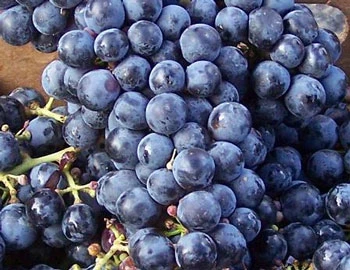
Merlot is the most charming member of the Bordeaux family. It shines with rich colour, fragrant fullness, velvety tannins and sweet, plummy fruit. It even makes itself easy for the vintner, as it matures without issue in cool years as well. This is in contrast to the stricter Cabernet Sauvignon, which it complements as a blending partner. Its good qualities have made the Merlot famous worldwide. At over 100,000 hectares, it is the most-planted grape in France. It also covers large areas in California, Italy, Australia and recently in Eastern Europe. The only catch is that pure Merlot varieties rarely turn out well. Its charm is often associated with a lack of substance. Only the best specimens improve with maturity. They then develop complex notes of leather and truffles. This succeeds in the top wines from the Bordeaux appellation of Pomerol and those from Ticino, among others.
Cabernet Sauvignon
The backbone of Bordeaux
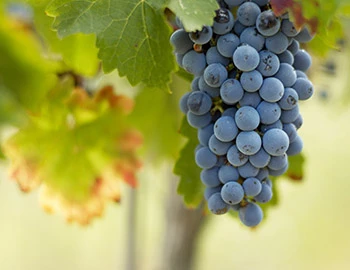
The Cabernet Sauvignon gives the Bordeaux its backbone, yielding deep violet wines with powerful tannins and endless ripening potential. It is the top dog in Médoc, and is placed in all five premier crus of Bordelais. When young, it often appears strict and unapproachable, but with advancing years, its tannins round off. It is wonderfully velvety, and yet always maintains its freshness. Typical flavours include cassis, graphite and cedar. Wherever Cabernet Sauvignon is found, Merlot is not far away. It complements the robust structure of Cabernet with softness, fruit and richness. The Cabernet Sauvignon is the most-exported vine in the world. It delivers persuasive qualities in Italy as an ingredient of the Super Tuscan, or as the flagship variety from California. There, it is lovingly titled “Cab Sauv”. Meat fans should be aware that it fantastically accompanies a grilled entrecôte. The family tree of Cabernet Sauvignon is surprising: its parents are Cabernet Franc and the white Sauvignon blanc.
Péssac-Léognan
Pessac-Léognan: top crus from the suburbs
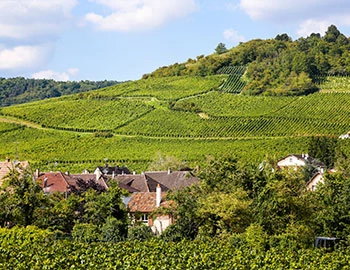
Pessac-Léognan is a communal appellation (following the example of the village appellations in the Médoc) located in the northernmost part of the Graves region. Its immediate proximity to the city of Bordeaux has drastically altered the area in recent years. Many chateaux have had to yield to settlement pressures. For this reason, some of the very best Bordeaux terroirs are located in the new suburbs. Top crus are produced on deep gravel soils, which combine the greatest possible elegance and power in the best Bordeaux style.
Bordeaux
Bordeaux: high prestige, high quality
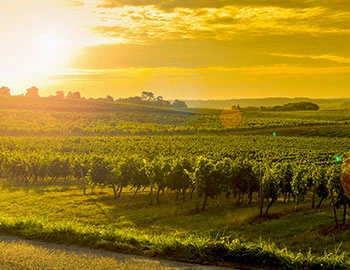
With a total area of around 115,000 hectares, Bordeaux may not be France’s largest wine-growing region, but it is certainly its most prestigious. The range of wines produced here today is enormous: ranging from red everyday wines with a great relationship between price and quality to exclusive, and accordingly expensive, premier crus. Elegant white wines and noble sweet specialties round out the spectrum.
France
France – Philosophy in a bottle
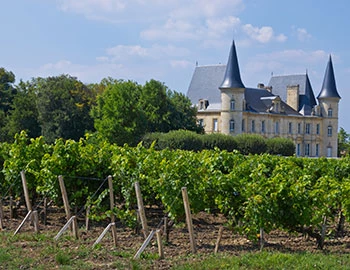
According to French philosophy, wine should be an expression of the soil and climate. They use the word “terroir” to describe this. Terroir makes every wine different, and many especially good. French wine is regarded worldwide as an expression of cultural perfection. The French believe that humans are responsible for the quality of the berries, the vine variety for their character, and nature for the quantity. This philosophy can be expressed succinctly as: “the truth is the vineyard, not the man.”