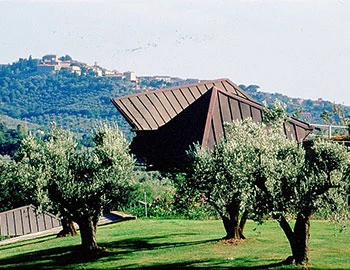

Ornellaia 2022
DOC Toscana, Tenuta dell'Ornellaia, 1500 ml


Description
Citing Robert Parker The Wine Advocate "...The blend is 55% Cabernet Sauvignon, 25% Merlot, 10% Cabernet Franc and 10% Petit Verdot. The wine sees 18 months of aging with up to 70% new oak, but the trick, proprietor Lamberto Frescobaldi tells me, is drawing from a large group of coopers with different toast levels and forests. "I don't want to make a wine of any one tonnellerie," he says. The oak element is crucial to the identity of this wine that reveals dark fruit, blackberry, sweet spice and cinnamon. Most of the vines were planted in the 1980s, and the average age of the plants is over 20 years old. Fruit comes from many parcels, including Bellaria, Bellaria Nuova, Bellaria Alta, Pero, Fosso, Vigna Vecchia and Stallina. Indeed, some 80 wines are made before final blending. The 2022 vintage will be remembered for its full-bodied appeal, concentrated fruit and generous oak renderings. Petit Verdot plays a slightly larger role in this vintage and was one of the surprise hits of 2022. It serves to elongate the wine and adds to its length. The wine's abundant fruit weight cedes to elegantly integrated tannins. This vintage will appeal to die-hard Ornellaia enthusiasts..."
Attributes
| Grape variety: | Cabernet Sauvignon, Merlot, Cabernet Franc, Petit Verdot |
| Producer: | Tenuta dell'Ornellaia |
| Origin: | Italy / Toscana / Bolgheri |
| Other bottle sizes: | 750 ml |
| Ripening potential: | 6 to 25 years |
| Drinking temperature: | 16 to 18 °C |
| Food Pairing: | Châteaubriand, Filet Wellington, Roast veal with morel sauce, Spicy hard cheese |
| Vinification: | fermentation in steel tank |
| Harvest: | hand-picking, strict selection, in small boxes, selecting the grapes (by hand) |
| Maturation: | in partly new and used barriques/ Pièces |
| Maturation duration: | 18 months |
| Volume: | 15.0 % |
| Note: | Contains sulphites |
Cabernet Sauvignon
The backbone of Bordeaux
The Cabernet Sauvignon gives the Bordeaux its backbone, yielding deep violet wines with powerful tannins and endless ripening potential. It is the top dog in Médoc, and is placed in all five premier crus of Bordelais. When young, it often appears strict and unapproachable, but with advancing years, its tannins round off. It is wonderfully velvety, and yet always maintains its freshness. Typical flavours include cassis, graphite and cedar. Wherever Cabernet Sauvignon is found, Merlot is not far away. It complements the robust structure of Cabernet with softness, fruit and richness. The Cabernet Sauvignon is the most-exported vine in the world. It delivers persuasive qualities in Italy as an ingredient of the Super Tuscan, or as the flagship variety from California. There, it is lovingly titled “Cab Sauv”. Meat fans should be aware that it fantastically accompanies a grilled entrecôte. The family tree of Cabernet Sauvignon is surprising: its parents are Cabernet Franc and the white Sauvignon blanc.
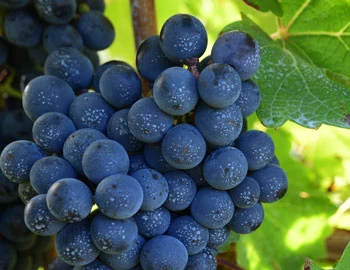
Cabernet Franc
Forefather of the Bordeaux varieties
The Cabernet Franc is one of the oldest varieties of Bordelais and a parent of three other red grapes in the Bordeaux assortment: Cabernet Sauvignon, Merlot and Carmenère. It is distinguished by its complex, flavourful bouquet of raspberry, graphite, violet, liquorice and white pepper. In addition, it presents round, crisp tannins which turn out less strongly than those of Cabernet Sauvignon. While the Cabernet Franc always appears as part of a blend in Bordeaux, it is pressed alone on the Loire. The most renowned appellations are Chinon and Bourgueil. Incidentally, the Cabernet originates not in Bordeaux but in the Spanish Basque Country. Cabernet owes its name to the Latin “carbon”, meaning black.
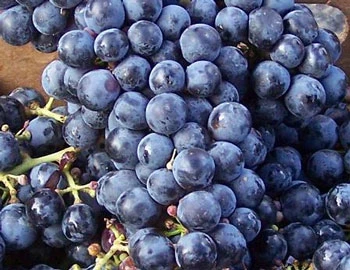
Petit Verdot
Bordeaux’s secret weapon
It is commonly said that the Petit Verdot originated in Bordeaux. But genetically, it is closer to a group of vines from near the Pyrenees, which are most likely descended from wild clematis. In French, these wild plants are called “lambrusques”, and the Petit Verdot is also known under the synonym Lumbrusquet. It is a high quality grape: very dark and spicy with notes of cassis and graphite, plenty of robust tannins and strong acidity. Most major Bordeaux contain a small proportion of Petit Verdot. Appropriately, it is valued wherever wines are produced according to the Bordeaux recipe. For example, in Italian Maremma or in California, where it covers the largest area worldwide. It is almost never vinified purely by itself. Incidentally, its name, derived from “vert”, meaning green, alludes to its Achilles heel: in cool weather it tends to form small, seedless green grapes.
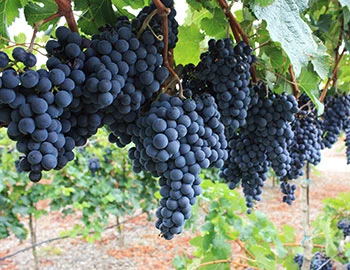
Merlot
Everybody’s darling
Merlot is the most charming member of the Bordeaux family. It shines with rich colour, fragrant fullness, velvety tannins and sweet, plummy fruit. It even makes itself easy for the vintner, as it matures without issue in cool years as well. This is in contrast to the stricter Cabernet Sauvignon, which it complements as a blending partner. Its good qualities have made the Merlot famous worldwide. At over 100,000 hectares, it is the most-planted grape in France. It also covers large areas in California, Italy, Australia and recently in Eastern Europe. The only catch is that pure Merlot varieties rarely turn out well. Its charm is often associated with a lack of substance. Only the best specimens improve with maturity. They then develop complex notes of leather and truffles. This succeeds in the top wines from the Bordeaux appellation of Pomerol and those from Ticino, among others.
Italy
Italy – Where wine is a way of life
The Italian wine regions are extremely diverse, and this is made clear in their wines. Established varieties such as Merlot, Syrah, and Sauvignon can be found on just 15 percent of the total vine growing area. The remaining 85 percent is reserved for autochthonous, indigenous varieties. More than 2,000 different grape varieties are grown under diverse conditions and pressed with various techniques into wines that reach the top tier of the international wine market.