
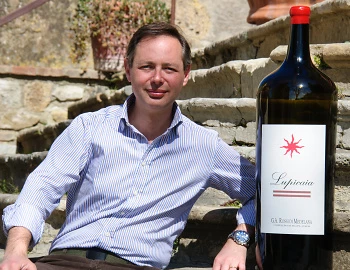
Castello del Terriccio 2017
IGT Toscana, Tenuta del Terriccio, 750 ml


Description
A premium wine with a Mediterranean touch, named after the Tuscan estate Castello del Terriccio. The assemblage (Syrah, Petit Verdot, etc.), which is unusual for the region, displays fascinating aromas that are rarely found in Tuscany. The scent fascinates with aromas reminiscent of graphite, lilac and red roses, dried plums, sour cherries and gingerbread spice. The longer you smell it, the more aromas are revealed. From the very first sip, this Toscana Rosso presents itself as dancing and elegant without being lean. Its aroma is reminiscent of sour cherries, juicy Sicilian blood oranges, cloves, dates and plums. A touch of fine cocoa vibrates along with it. A structured, powerful and yet smooth Tuscan. It is worth decanting this wine!
Tasting – The Art of Wine Selection at the Baur au Lac

Meet over 20 wine and spirits producers, benefit from attractive special offers, and attend exclusive masterclasses featuring aged wines. Limited places available.
Sunday, November 15, 2026 | 2.00 pm until 7.00 pm
Monday, November 16, 2026 | 2.00 pm until 8.00 pm
Attributes
| Grape variety: | Syrah, Petit Verdot |
| Producer: | Castello del Terriccio |
| Origin: | Italy / Toscana / Montescudaio |
| Label: | Vegan |
| Ripening potential: | 4 to 10 years |
| Drinking temperature: | 16 to 18 °C |
| Food Pairing: | Bistecca fiorentina, T-Bone steak, Saddle of lamb fillet with herb jus, Wild specialities, Moroccan specialities, Spiced grillades |
| Vinification: | long must fermentation |
| Harvest: | hand-picking |
| Maturation: | in tonneau |
| Bottling: | no filtration |
| Maturation duration: | 22 months |
| Volume: | 15.0 % |
| Note: | Contains sulphites |
Castello del Terriccio
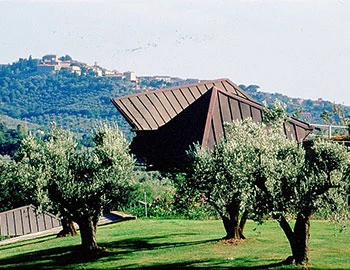
Castello del Terriccio is one of the largest agricultural estates in Tuscany (Province of Pisa) with its own microclimate. The approximately 1700 hectares extend from the northern end of the Maremma to the Tyrrhenian Sea. The vineyards enjoy a south-southwest exposure with the warming and luminous effect of the sea. The Mediterranean maquis and the eucalyptus trees growing all around it not only protect the grapes from the wind, but also imbue them with the scents and aromas that give the wines of the Terriccio their distinctive flavour.
Leaving the charming Tuscan town of Castellina Marittima via the narrow and picturesque serpentine road passing large pine trees and wonderful scenery, after a few kilometres you reach the gates of the splendid Castello del Terriccio estate. After the entrance, a private road leads up to the vineyard. On the way there, the gently rolling hills of the Maremma pass you by: forests, fields with Limousine cattle and horses, vineyards and of course olive groves. Situated at the top of a hill is the centre of the Castello, with a historic village centre, manor house, granary, wine cellar, olive press, and, of course, the obligatory church. The view of the seemingly infinite landscape and the dark blue Tyrrhenian Sea with the islands of Elba, Capraia, and Corsica is of a breathtaking, rare beauty. Castello del Terriccio is located north of Bolgheri in the Province of Pisa within the Maremma. With its impressive 1700 hectares, including 65 hectares of vineyards, it is one of the largest private estates in Tuscany.
Petit Verdot
Bordeaux’s secret weapon
It is commonly said that the Petit Verdot originated in Bordeaux. But genetically, it is closer to a group of vines from near the Pyrenees, which are most likely descended from wild clematis. In French, these wild plants are called “lambrusques”, and the Petit Verdot is also known under the synonym Lumbrusquet. It is a high quality grape: very dark and spicy with notes of cassis and graphite, plenty of robust tannins and strong acidity. Most major Bordeaux contain a small proportion of Petit Verdot. Appropriately, it is valued wherever wines are produced according to the Bordeaux recipe. For example, in Italian Maremma or in California, where it covers the largest area worldwide. It is almost never vinified purely by itself. Incidentally, its name, derived from “vert”, meaning green, alludes to its Achilles heel: in cool weather it tends to form small, seedless green grapes.
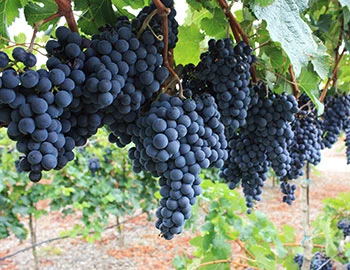
Syrah
A hint of pepper
The legend stubbornly persists that the Syrah variety came from the Persian city of Shiraz. Yet, researchers have shown that it is a natural crossing of two old French varieties: the red Dureza from the Rhône Valley and the white Mondeuse blanche from Savoy. Wines from Syrah are gentle and concentrated. They smell of dark berries, violets and liquorice, and amaze with a piquant touch of white pepper. As varietal wines, they are found on the northern Rhone, as in the Hermitage or Côte Rôtie appellations, as well as in Swiss Valais. In the southern Rhône Valley, Syrah is often wedded with Grenache and Mourvèdre. In 1832, a Frenchman brought the variety to Australia, where it became the emblem of the national wine industry. There, the weightiest versions develop with typical notes of tar and chocolate.
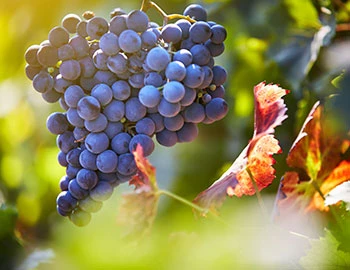
Italy
Italy – Where wine is a way of life
The Italian wine regions are extremely diverse, and this is made clear in their wines. Established varieties such as Merlot, Syrah, and Sauvignon can be found on just 15 percent of the total vine growing area. The remaining 85 percent is reserved for autochthonous, indigenous varieties. More than 2,000 different grape varieties are grown under diverse conditions and pressed with various techniques into wines that reach the top tier of the international wine market.