
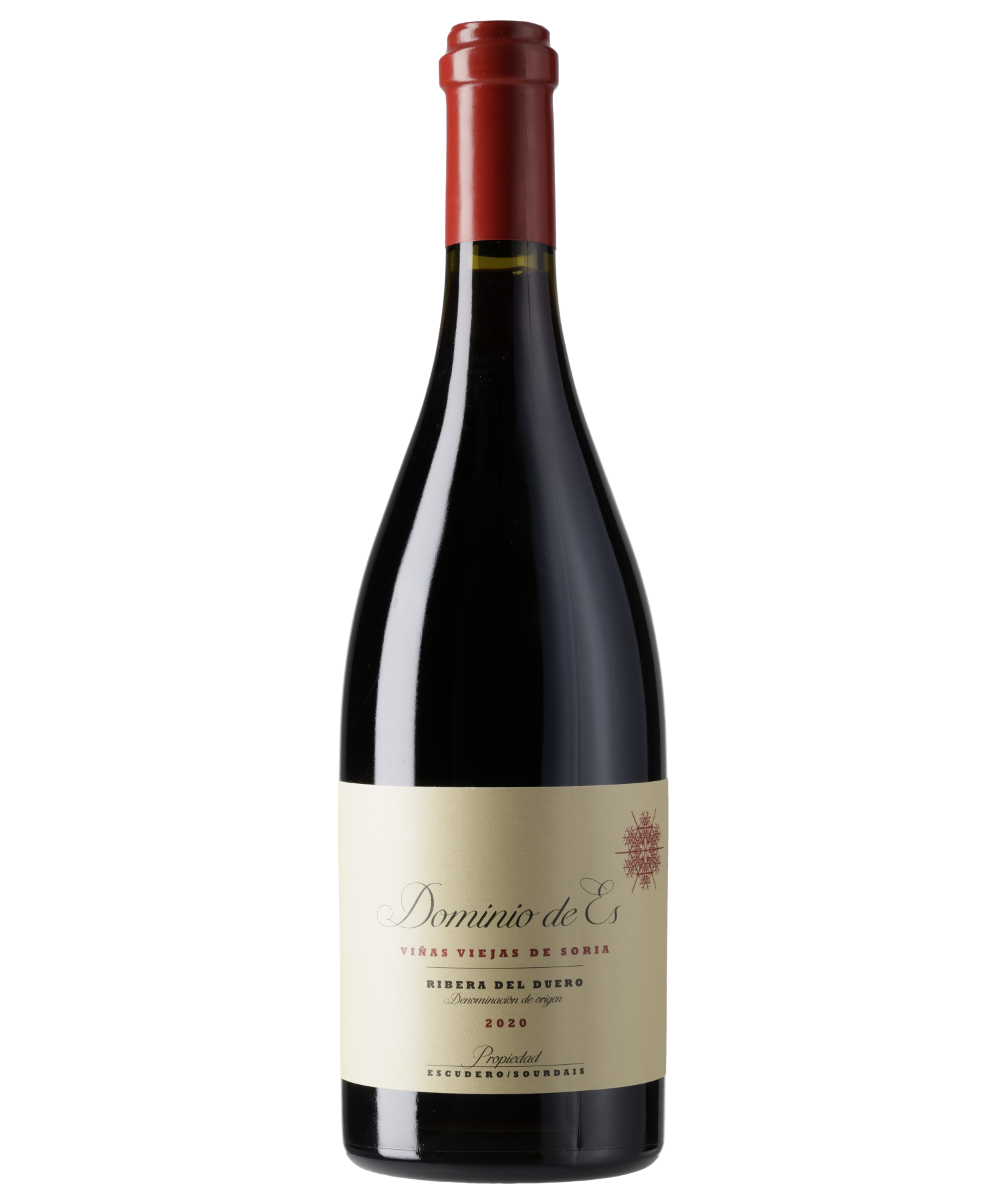
Viñas Viejas de Soria 2020
DO Ribera del Duero, Dominio de Es, 750 ml


Cool Climate Freshness and Elegance
- A modern interpretation based on the classic Ribera del Duero – great experience for fans of wines with character.
- Berry fruit, rosehip, wild herbs; juicy on the palate, silky tannins, lively acidity, long finish.
- Pairs well with lamb, game, beef with herb crust or mushroom dishes.
Description
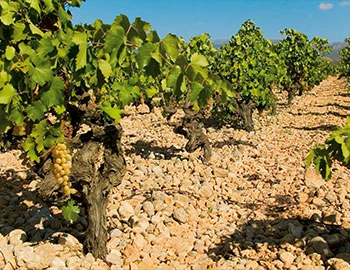
Dominio de Es Viñas Viejas de Soria is an exceptional Ribera del Duero. This vintage has a slightly lower alcohol content than usual, making it more reminiscent of a cool-climate wine – exciting and different. The old vines come from high-altitude micro-plots around Atauta in Soria (950–1,000 m). Different exposures at steep altitudes and limestone-rich soils of sand, loam and marl give the wine depth and freshness. The nose reveals berry fruit, rosehip, cranberry and wild herbs. On the palate, it is firm and precise, with a fine almond note, juicy with lively acidity and silky tannins. Powerful and intense, yet never opulent, but rather carried by great finesse and tension – a modern interpretation with clear references to the classic Ribera del Duero. A real experience for fans of wines with character. Ideal with lamb, game, beef with herb crust and mushroom dishes.
Attributes
| Grape variety: | Tempranillo, Albillo Real, Alicante Bouschet |
| Producer: | Dominio de Es |
| Origin: | Spain / Castilla y León / Ribera del Duero |
| Other vintages: | 2021 |
| Ripening potential: | 1 to 15 years |
| Drinking temperature: | 16 to 18 °C |
| Food Pairing: | Saddle of lamb fillet with herb jus, Rabbit ragout with olives, Risotto with ceps |
| Volume: | 14.0 % |
| Note: | Contains sulphites |
Dominio de Es
Dominio de ES is a hidden gem in the Ribera del Duero region. With its small production and uncompromising quality philosophy, the winery stands for ancient vineyards, biodynamic practices and a deep understanding of terroir. The wines are produced in the remote village of Atauta in the far east of the appellation, near Rioja – one of the coolest and most unspoilt parts of the Ribera.
Bertrand Sourdais, a winemaker from Chinon on the Loire, is responsible for this, together with his partner Olga Escudero. During his time in Atauta, originally to set up Bodegas Antidoto, Sourdais discovered the exceptional old plots that now form the heart of his most personal project. Dominio de ES has been working organically and biodynamically since its inception and is currently in the process of certification.
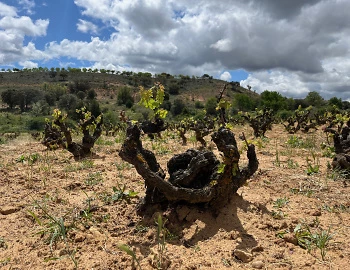
The vineyards cover just four hectares, spread across 35 tiny plots in the municipality of Atauta (province of Soria). At an altitude of 950 to 1,000 metres, they are among the highest in the Ribera del Duero. The terroir is complex and diverse: limestone, chalk, sand, marl and clay alternate. The mostly cool eastern exposures, complemented by individual south-facing slopes, steep slopes and terraces, characterise the character of the wines. The continental highland climate with cold winters, warm days and very cool nights slows down ripening and preserves freshness and acidity. In combination with the altitude, this produces wines with clear fruit, moderate alcohol, fine tannin structure and great precision, significantly more elegant than many of the more powerful representatives of the central Ribera.
Alicante Bouschet
Concise in colour and flavour
The trademark of the Alicante Bouschet is its rich, dark colour. Like the Cinsault or Regent, it is one of the teinturier varieties. These are grapes with red flesh and red juice – for all other varieties, the pigments rest in the skin. The Alicante Bouschet was cultivated in Languedoc by Henri Bouschet in 1855. It is called “Alicante” because one of the hybrid partners was the Garnacha grape, which is traditionally referred to as Alicante in Spain. The Alicante Bouschet is found around the Mediterranean. The largest vineyards lie on Spain's Levante coast. In addition, it thrives in the Portugese Alentejo. It yields dark, robust, mellow wine with deep fruit.
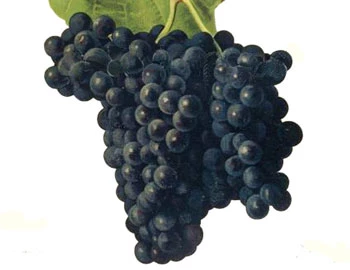
Tempranillo
Iberian Native
The Tempranillo is the emblem of Spain. With its juicy cherry fruit, crisp tannins, and its notes of leather and spices, it gives the Rioja its face. In the Ribera del Duero, it is known as Tinta del país. Here it turns out focused and muscular. As it has inhabited the Iberian Peninsula for centuries, it is known under countless synonyms. Across the border in Portugal, it is called Tinta Roriz, and lends colour and body to port wine. It also plays an important role in the booming wine scene of the Douro Valley. The Tempranillo owes its name to its early maturity – "temprano" in Spanish means "early". Tip: do it like they do in Spain and enjoy it with lamb.
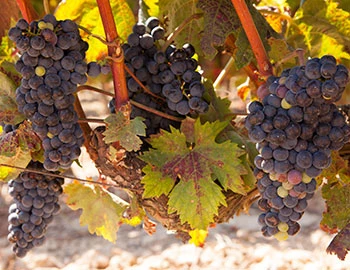
Ribera del Duero
Ribera del Duero: Spanish temperament in a glass
The Tempranillo grape yields a particularly powerful wine with ripe berry fruit and alluring spice in the Ribera del Duero region, where it is called Tinta del País. It is no wonder that the region is seen internationally as a flagship for Spanish red wines. The designation of origin was first introduced in 1982. At the time, only few wineries existed; today, there are over 270. Many premium wines come from exceptionally old vines, sometimes over 80 years old.
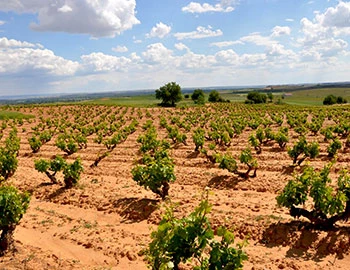
Castilla y León
Castile and León: Increasing diversity
Only 30 years ago, the autonomous region of Castile and León was an almost blank spot on the European wine list. This has changed immensely thanks to three grape varieties. The Tempranillo variety yields feisty, strong wines in Ribera del Duero and Toro. And Bierzo, the small wine area in the region's northwest, has experienced an impressive ascent, thanks to the character-laden Mencia variety. Finally, the fresh and fruity Verdelho pressings from Rueda have become the most successful Spanish white wines.
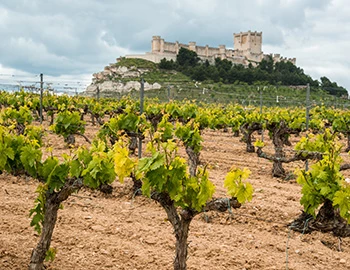
Spain
Spain – Variety and perfection
“Somewhere in la Mancha, in a place whose name I do not care to remember...,” begins Don Quixote's odyssey.
The most famous part is definitely when Don Quixote thinks windmills are his enemy and wants to fight them – until they nearly kill him. It’s possible there was a bit too much of the La Mancha wine at play. Spanish vines fight for their survival in rugged landscapes, battling fierce drought and rough soils. But they fight well.