
1844 Rosé Ohni 2024
Ostschweizer Landwein, Roland und Karin Lenz, 750 ml


Rosé enjoyment – completely hangover-free
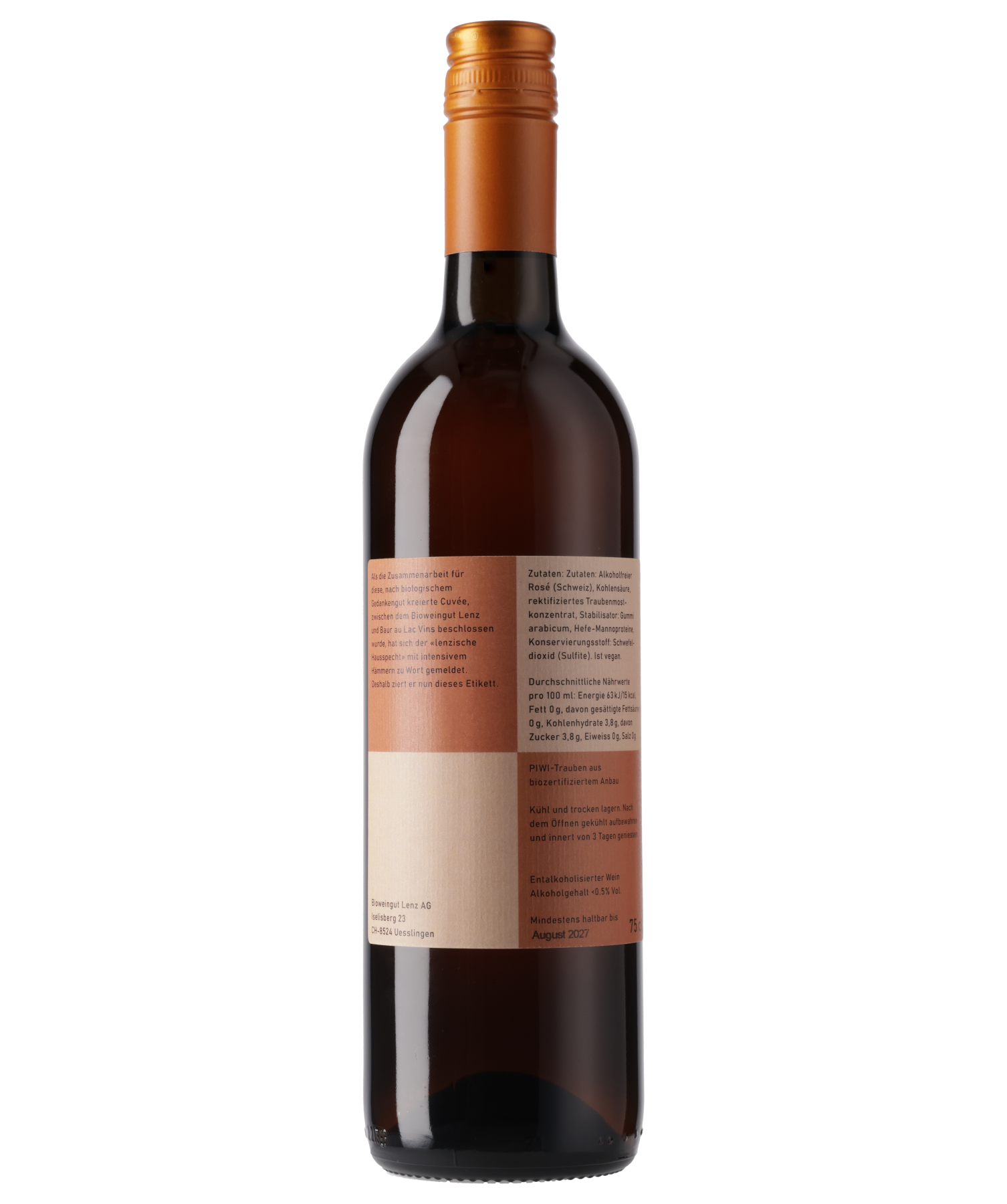
- Non-alcoholic cuvée made from certified organic PIWI grape varieties – lighthearted rosé enjoyment from the Eastern part of Switzerland.
- Seductive, fresh and fruity on the nose; lively, juicy and wonderfully red-fruity on the palate.
- Ideal with picnics, pasta primavera, veggie burgers or desserts with red fruits.
Description
Fresh, cheeky and alcohol-free: this cuvée made from certified organic, fungus-resistant varieties such as Cabernet Jura and Muscat Bleu brings uncomplicated wine enjoyment to the glass. It seduces the nose with sweet notes of vanilla, strawberry caramel, watermelon and candyfloss. On the palate, it is red-fruity, tangy and juicy, with aromas reminiscent of cranberry juice and hibiscus iced tea. Ideal for summer picnics, panna cotta with strawberry coulis, veggie burgers or pasta with sun-dried tomatoes and prawns.
Attributes
| Grape variety: | Cabernet Jura, Muscat Bleu |
| Producer: | Roland und Karin Lenz |
| Origin: | Switzerland / Ostschweiz |
| Label: | Vegan, Certified organic or biodynamic wine |
| Ripening potential: | 1 to 2 years |
| Drinking temperature: | 6 to 7 °C |
| Food Pairing: | Giant crevettes, grilled langoustines, Italian antipasti, Cakes, biscuits, pastries, Hot Asian dishes |
| Vinification: | fermentation in steel tank |
| Harvest: | hand-picking |
| Maturation: | in steel tank |
| Maturation duration: | 6 months |
| Volume: | 0.5 % |
| Note: | Contains sulphites |
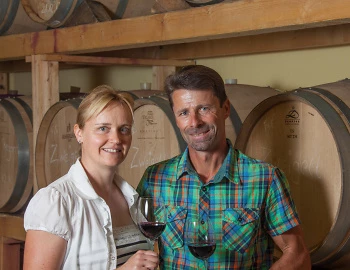
Roland und Karin Lenz
In 1994, while Roland Lenz was still studying oenology, he and his wife Karin were able to acquire eight hectares of vines on the Iselisberg. It was a unique opportunity that they seized, even though they were toying with the idea of setting up their own business abroad, far from Switzerland. They actually did so later, but that's another story…
It is only in the last two decades that the Canton of Thurgau has really come to the attention of wine lovers as a wine-growing area. Its apple orchards and the apple juice (must) pressed from the picked fruit have always been popular, inevitably earning the canton its nickname of «Must India». Viticulture, however, has existed in this region for centuries.
Ostschweiz
Eastern Switzerland: an intriguing puzzle
Eastern Switzerland has long been positioned on the northern rim of the climate zone where the cultivation of popular Swiss varieties is possible. Due to a warming climate, the vineyards of Aargau, Zurich, Schaffhausen, Thurgau and Graubünden are now in the zone where varieties such as Müller-Thurgau or Pinot Noir succeed excellently. But even long-established, almost-forgotten varieties such as Elbling, Räuschling and Completer are experiencing a renaissance.
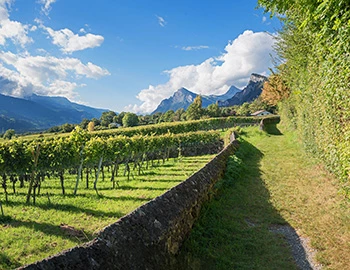
Switzerland
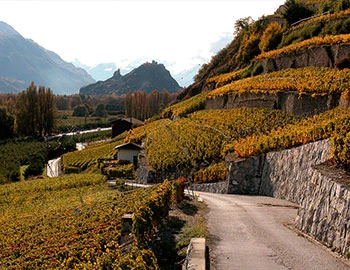
Switzerland – A small country with enormous diversity
Switzerland is famous for its banks, watches, and cheese, but not necessarily for its wine. The Swiss didn't invent wine, but they have been extremely open and curious to it. Wine culture arrived in what is now modern Switzerland via several routes: from Marseilles to Lake Geneva and the Lower Valais region; from the Aosta Valley through the Great St. Bernard Pass to the rest of Valais; from the Rhone through Burgundy, across the Jura Mountains to Lake Constance; and from Lombardy to Ticino, and then on to Grisons.