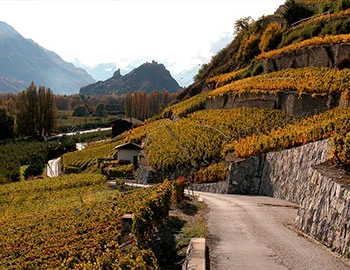


Malanser Pinot Noir Grand Cru 2021
AOC Graubünden, Giani Boner, 750 ml


Tasting – The Art of Wine Selection at the Baur au Lac

Meet over 20 wine and spirits producers, benefit from attractive special offers, and attend exclusive masterclasses featuring aged wines. Limited places available.
Sunday, November 15, 2026 | 2.00 pm until 7.00 pm
Monday, November 16, 2026 | 2.00 pm until 8.00 pm
Attributes
| Grape variety: | Pinot Noir, Syrah |
| Producer: | Completer-Kellerei / Giani Boner |
| Origin: | Switzerland / Ostschweiz / Graubünden |
| Label: | Vegan |
| Ripening potential: | 3 to 10 years |
| Drinking temperature: | 16 to 18 °C |
| Food Pairing: | Châteaubriand, Filet Wellington, Roast saddle of venison, Roast veal with morel sauce, Wild fowl, Coq au vin, Cheese board |
| Vinification: | long must fermentation, fermentation in steel tank |
| Harvest: | hand-picking, strict selection |
| Maturation: | in partly new and used barriques/ Pièces |
| Maturation duration: | 15 months |
| Volume: | 14.0 % |
| Note: | Contains sulphites |
Syrah
A hint of pepper
The legend stubbornly persists that the Syrah variety came from the Persian city of Shiraz. Yet, researchers have shown that it is a natural crossing of two old French varieties: the red Dureza from the Rhône Valley and the white Mondeuse blanche from Savoy. Wines from Syrah are gentle and concentrated. They smell of dark berries, violets and liquorice, and amaze with a piquant touch of white pepper. As varietal wines, they are found on the northern Rhone, as in the Hermitage or Côte Rôtie appellations, as well as in Swiss Valais. In the southern Rhône Valley, Syrah is often wedded with Grenache and Mourvèdre. In 1832, a Frenchman brought the variety to Australia, where it became the emblem of the national wine industry. There, the weightiest versions develop with typical notes of tar and chocolate.
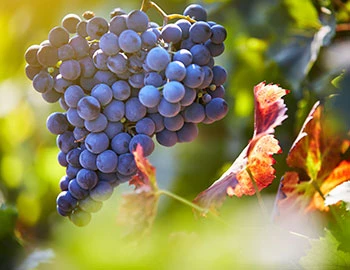
Graubünden
Graubünden: Mecca for Burgundy varieties
Nowhere in Switzerland has a better ratio of first-class Pinot noir crops to cultivation area than Graubünden. The ageing philosophy of vintners here leaves its imprint even more than the subtle differences in terroir from one vineyard village to the next. In recent years, three Pinot types have established themselves here: the light and sweet Herrschäftler for everyday drinking, the selections aged in large wooden barrels or used barriques, and of course the premium selections of individual estates matured in barriques.
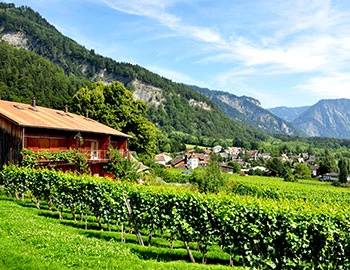
Ostschweiz
Eastern Switzerland: an intriguing puzzle
Eastern Switzerland has long been positioned on the northern rim of the climate zone where the cultivation of popular Swiss varieties is possible. Due to a warming climate, the vineyards of Aargau, Zurich, Schaffhausen, Thurgau and Graubünden are now in the zone where varieties such as Müller-Thurgau or Pinot Noir succeed excellently. But even long-established, almost-forgotten varieties such as Elbling, Räuschling and Completer are experiencing a renaissance.
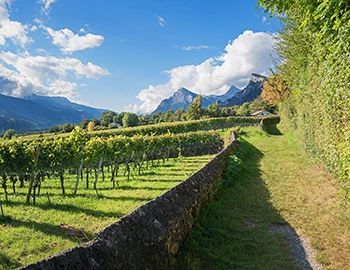
Switzerland
Switzerland – A small country with enormous diversity
Switzerland is famous for its banks, watches, and cheese, but not necessarily for its wine. The Swiss didn't invent wine, but they have been extremely open and curious to it. Wine culture arrived in what is now modern Switzerland via several routes: from Marseilles to Lake Geneva and the Lower Valais region; from the Aosta Valley through the Great St. Bernard Pass to the rest of Valais; from the Rhone through Burgundy, across the Jura Mountains to Lake Constance; and from Lombardy to Ticino, and then on to Grisons.