
Saint-Saphorin rouge Ligne Prestige 2023
AOC Lavaux, J. & M. Dizerens, 750 ml


Description
This red St. Saphorin from Vaud presents itself from its most beautiful side. The nose is dominated by dark fruit aromas of plum, cherry and blueberries as well as a floral violet component. On the palate, the red wine shows a light structure with soft, supple tannins and flavours that match the aroma. Culinary tip: goes perfectly with "Züri- Geschnetzeltem".
Attributes
| Grape variety: | Pinot noir, Gamay |
| Producer: | J. & M. Dizerens |
| Origin: | Switzerland / Waadt / Lavaux |
| Other vintages: | 2024 |
| Label: | Vegan |
| Ripening potential: | 1 to 4 years |
| Drinking temperature: | 16 to 18 °C |
| Food Pairing: | Cold fish dish, dried meat, Crispy roast chicken, Vegetable flan, quiche, Cheese board, Meat terrine, Succulent chicken breast with cream sauc |
| Vinification: | fermentation in steel tank |
| Harvest: | hand-picking |
| Volume: | 13.0 % |
| Note: | Contains sulphites |
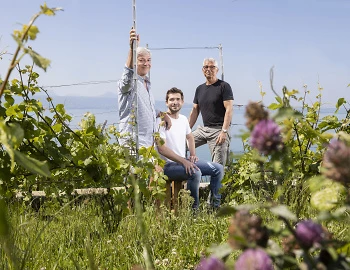
J. & M. Dizerens
Pinot noir
Blueprint of the terroir
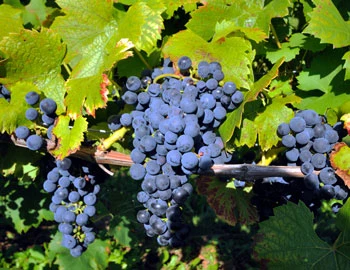
No other variety expresses its terroir as precisely as Pinot noir. It is a sensitive, fragile grape. But when it succeeds, it gives the world some of its very greatest wine plants. It especially excels in Burgundy, where it has been cultivated for at least 700 years. Even in the middle ages, it was considered so precious that it was kept separate from other grapes so as to not diminish its value. The finest examples are delicate and fragrant with aromas of cherries and red berries. With maturity, notes of forest floor, leather and truffles enter as well. An irresistible fruity sweetness still shines through, even after several decades. The Pinot noir does well in cool locations: in Switzerland and in Germany, where it is known as Blauburgunder and Spätburgunder respectively; in Alsace and in South Tyrol, in Oregon, New Zealand and Tasmania. Not least, it yields fantastic champagnes. It is a wonderful culinary companion. With its soft tannins and charming bouquet, it meshes with everything, from Güggeli and cheeses to fried fish.
Gamay
The ideal summer red
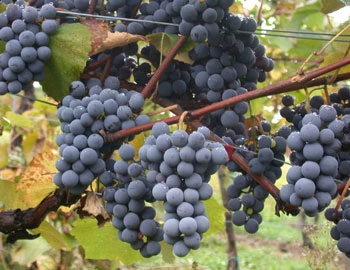
The first written mention of the Gamay grape was not particularly flattering. In 1395, Philip the Bold, Duke of Burgundy, wrote that the variety showed a “terrible bitterness” and was “very harmful to human beings”. For this reason, the entire stock was to be pulled within five months. Luckily, it did not come to this. Otherwise, today we would have neither the excellent crus of Beaujolais, produced from this grape, nor the Dole du Valais a marriage of Gamay and Pinot noir. Admittedly, the Beaujolais nouveau, which was clamoured about in the 1980s, is not its best manifestation. But with good maturity and competent grapes, the Gamay shows great charm and a fragrant strawberry, raspberry and cherry fruit, backed by peppery notes. It is the ideal summer red: slightly chilled, it tastes great on the terrace, and is excellent with grilled fish.
Lavaux
The Lavaux: In the stronghold of Chasselas
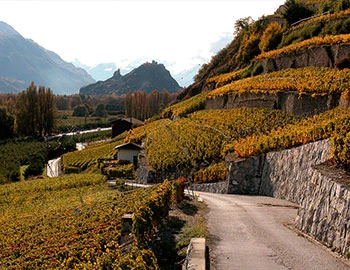
The Lavaux comprise 825 of the 3,800 total hectares in Vaud, and form the heart of viticulture in this wine-growing canton. In the sometimes spectacularly steep terraced vineyards, the Chasselas grape demonstrates that it can produce tightly structured crus shaped by the terroir. The wines from the 54-hectare grand cru site, Dézaley, have a legendary reputation. More delicate wines are produced in the western parts of the Lavaux (Lutry and Villette) and the eastern foothills (Montreux).
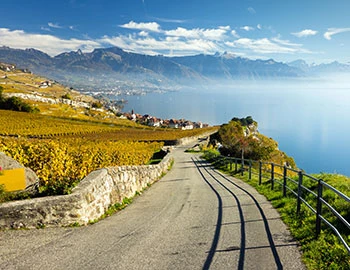
Waadt
Vaud: stronghold of the Chasselas
Vintners of Vaud have almost stubbornly maintained their loyalty to their preferred variety, Chasselas. This is now paying off, as white wines with moderate alcohol content are experiencing a renaissance. And vintners today interpret the lightness of Chasselas in their own individual ways. Over 100 chateaux produce wine here. By contrast, the wine villages fascinate with rural charm. It is these contrasts that make this winegrowing canton an exciting destination for wine tourism.
Switzerland
Switzerland – A small country with enormous diversity
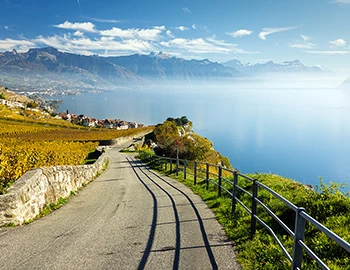
Switzerland is famous for its banks, watches, and cheese, but not necessarily for its wine. The Swiss didn't invent wine, but they have been extremely open and curious to it. Wine culture arrived in what is now modern Switzerland via several routes: from Marseilles to Lake Geneva and the Lower Valais region; from the Aosta Valley through the Great St. Bernard Pass to the rest of Valais; from the Rhone through Burgundy, across the Jura Mountains to Lake Constance; and from Lombardy to Ticino, and then on to Grisons.