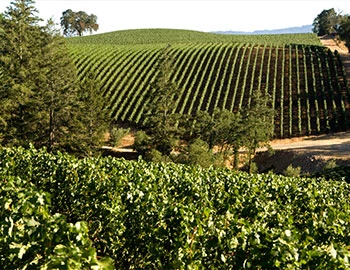

Cabernet Sauvignon Au Paradis 2019
AVA Oakville, Peter Michael Winery, 750 ml


Description
Citing Robert Parker The Wine Advocate "...In 2009, Peter Michael purchased the former Showket Vineyard in Oakville, on the hillside below Continuum and above Dalla Valle. That is the source for the 2019 Cabernet Sauvignon Au Paradis, a blend of 76% Cabernet Sauvignon, 16% Cabernet Franc and 8% Merlot. Matured in 60% new French oak, it's a fairly forward, opulent wine, marked by scents of cigar box, tobacco, cassis, cherries and fine leather. Full-bodied, rich and velvety without being chocolaty or overdone, the lingering finish is—texturally—plush winter-weight flannel pajamas interwoven with complex, faintly herbal threads..."
Tasting – The Art of Wine Selection at the Baur au Lac

Meet over 20 wine and spirits producers, benefit from attractive special offers, and attend exclusive masterclasses featuring aged wines. Limited places available.
Sunday, November 15, 2026 | 2.00 pm until 7.00 pm
Monday, November 16, 2026 | 2.00 pm until 8.00 pm
Attributes
| Grape variety: | Cabernet Sauvignon, Cabernet Franc, Merlot |
| Producer: | Peter Michael Estate |
| Origin: | USA / California / Napa Valley |
| Other vintages: | 2020 2018 |
| Drinking temperature: | 16 to 18 °C |
| Food Pairing: | Spiced grillades, Châteaubriand, Filet Wellington, Roasted lamb gigot, Roast saddle of venison |
| Maturation: | in partly new and used barriques/ Pièces |
| Maturation duration: | 18 months |
| Volume: | 14.5 % |
| Note: | Contains sulphites |
Peter Michael Winery
In the 1970s, Sir Peter Michael came to California as a young engineer and discovered the emerging wine world of California, with some excellent names already drawing international attention.
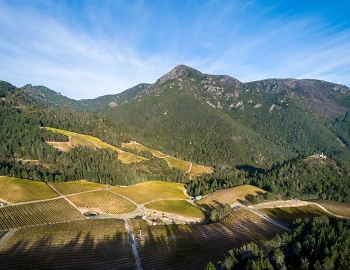
This awakened his desire to try something new. The search for a suitable piece of land ended in the secluded Knights Valley on the western slope of Mount St. Helena, in the east of Sonoma County, north of Napa Valley. The first vines were planted in 1983. His son Paul was helping out at the time and was full of enthusiasm, although the rows of vines were extremely difficult to set up on the very steep (inclines of up to 40%), stony layers of primarily volcanic rock. Later, Sir Peter was able to buy more plots of land on the coast and in Oakville, in Napa: Fort Ross-Seaview, with perfect growing conditions for Pinot Noir, and Au Paradis, planted with Cabernet Sauvignon and Cabernet Franc.
Cabernet Franc
Forefather of the Bordeaux varieties
The Cabernet Franc is one of the oldest varieties of Bordelais and a parent of three other red grapes in the Bordeaux assortment: Cabernet Sauvignon, Merlot and Carmenère. It is distinguished by its complex, flavourful bouquet of raspberry, graphite, violet, liquorice and white pepper. In addition, it presents round, crisp tannins which turn out less strongly than those of Cabernet Sauvignon. While the Cabernet Franc always appears as part of a blend in Bordeaux, it is pressed alone on the Loire. The most renowned appellations are Chinon and Bourgueil. Incidentally, the Cabernet originates not in Bordeaux but in the Spanish Basque Country. Cabernet owes its name to the Latin “carbon”, meaning black.
Merlot
Everybody’s darling
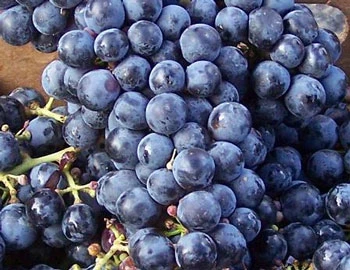
Merlot is the most charming member of the Bordeaux family. It shines with rich colour, fragrant fullness, velvety tannins and sweet, plummy fruit. It even makes itself easy for the vintner, as it matures without issue in cool years as well. This is in contrast to the stricter Cabernet Sauvignon, which it complements as a blending partner. Its good qualities have made the Merlot famous worldwide. At over 100,000 hectares, it is the most-planted grape in France. It also covers large areas in California, Italy, Australia and recently in Eastern Europe. The only catch is that pure Merlot varieties rarely turn out well. Its charm is often associated with a lack of substance. Only the best specimens improve with maturity. They then develop complex notes of leather and truffles. This succeeds in the top wines from the Bordeaux appellation of Pomerol and those from Ticino, among others.
Cabernet Sauvignon
The backbone of Bordeaux
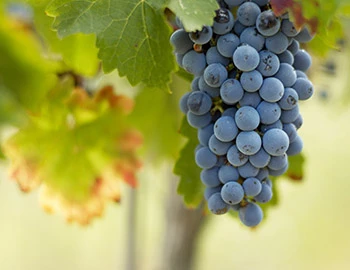
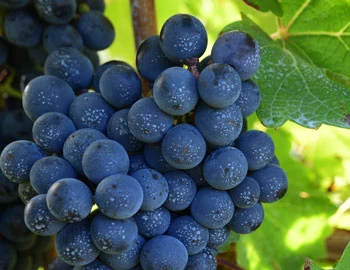
The Cabernet Sauvignon gives the Bordeaux its backbone, yielding deep violet wines with powerful tannins and endless ripening potential. It is the top dog in Médoc, and is placed in all five premier crus of Bordelais. When young, it often appears strict and unapproachable, but with advancing years, its tannins round off. It is wonderfully velvety, and yet always maintains its freshness. Typical flavours include cassis, graphite and cedar. Wherever Cabernet Sauvignon is found, Merlot is not far away. It complements the robust structure of Cabernet with softness, fruit and richness. The Cabernet Sauvignon is the most-exported vine in the world. It delivers persuasive qualities in Italy as an ingredient of the Super Tuscan, or as the flagship variety from California. There, it is lovingly titled “Cab Sauv”. Meat fans should be aware that it fantastically accompanies a grilled entrecôte. The family tree of Cabernet Sauvignon is surprising: its parents are Cabernet Franc and the white Sauvignon blanc.
California
California: Lots of fruit and ripe tannins
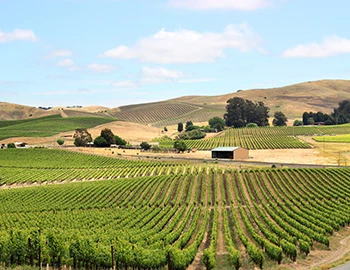
Around 90 percent of the wine produced in the USA comes from California. The Napa Valley, situated roughly 100 kilometers north of San Francisco, is the most prominent wine region in the western hemisphere. California vintners first caused an international sensation with Chardonnay and Cabernet Sauvignon. Today, however, superior wines are also produced from Pinot Noir, Syrah and other varieties. California’s wine country shows more variety today than ever before.
USA
USA - Yes, they can!
The United States is the third-largest nation on the planet in terms of both land area (after Russia and Canada) and population (after China and India). Every conceivable climate zone can be found in the US, from hot deserts to arctic frost. Thanks to immigration from all over the world, the US is probably the most multicultural country on the planet. Thus it has the ideal conditions for producing internationally recognized wine.