
Le Rosé 2025
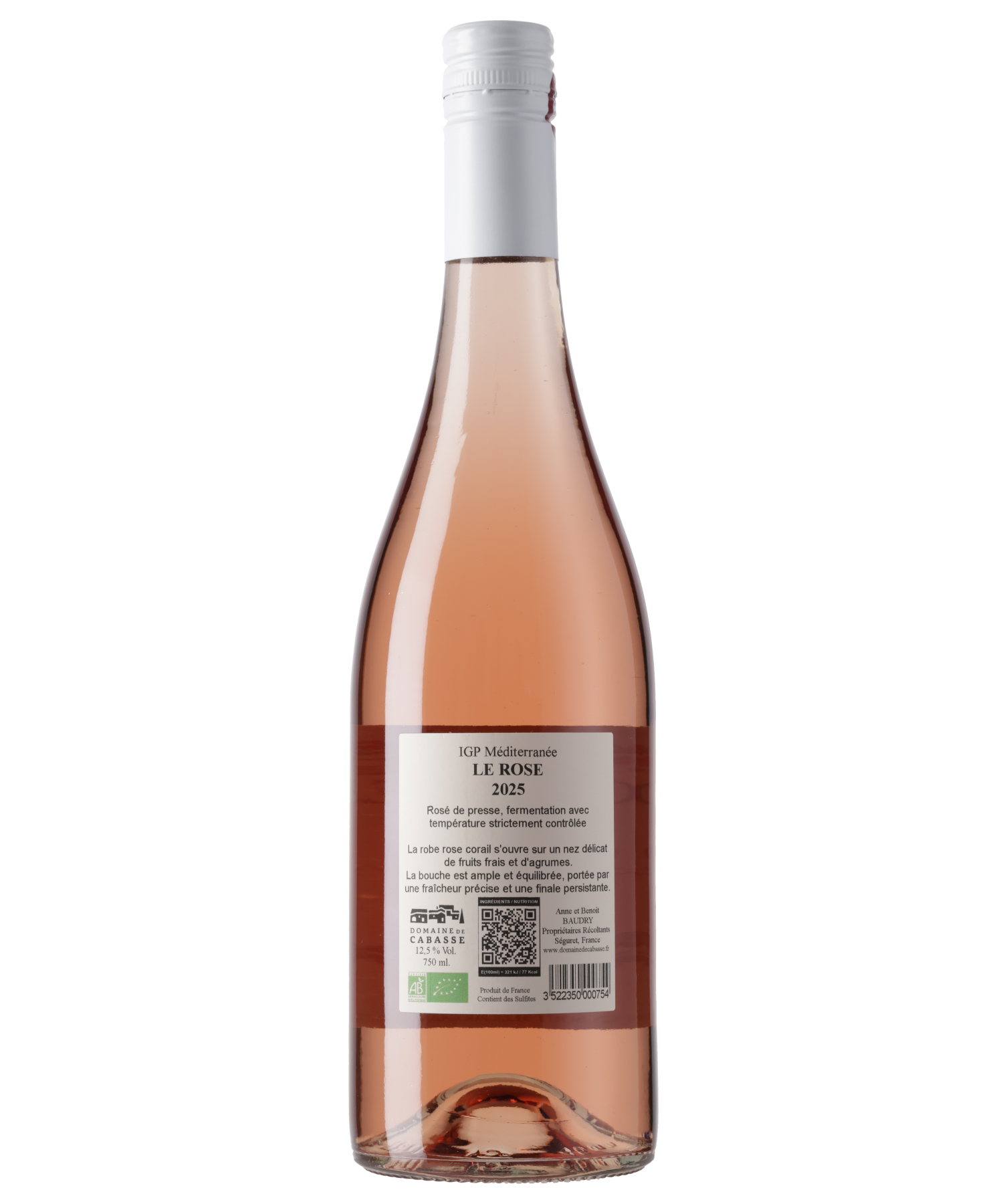
IGP Méditerranée, Domaine de Cabasse, 750 ml


A must-have for every beach bag
- An expressive southern French wine – perfectly chilled for the beach, pool or terrace.
- Bouquet: Pink grapefruit, red berries, floral notes. Delightfully fresh, lively and straightforward on the palate.
- With its practical twist-off cap, it is ideal for picnics.
Description
Close your eyes and dream of the Mediterranean: this rosé is not labelled ‘Méditerranée’ for nothing. With its practical screw cap, you'll want to take it to the beach chilled. But the terrace or swimming pool will do just as well. Bouquet: pink grapefruit, apple, red berries, floral touch. Wonderfully fresh, lively and uncomplicated on the palate. It flows! Ideal for picnics – pack it in: Vegetables with dip, cold meat, goat's cheese with crispy baguette and a fresh vegetable tart.
Attributes
| Grape variety: | Grenache, Syrah, Counoise |
| Producer: | Domaine de Cabasse |
| Origin: | France / Rhône / Côtes du Rhône Villages |
| Label: | Certified organic or biodynamic wine |
| Ripening potential: | 1 to 4 years |
| Drinking temperature: | 10 to 12 °C |
| Food Pairing: | Vegetable flan, quiche, Vegetable pie, Cold fish dish, dried meat, Cheese board, Pizza or Flammkuchen, Bouillabaisse |
| Volume: | 12.5 % |
| Note: | Contains sulphites |
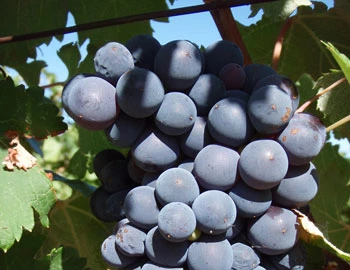
Syrah
A hint of pepper
The legend stubbornly persists that the Syrah variety came from the Persian city of Shiraz. Yet, researchers have shown that it is a natural crossing of two old French varieties: the red Dureza from the Rhône Valley and the white Mondeuse blanche from Savoy. Wines from Syrah are gentle and concentrated. They smell of dark berries, violets and liquorice, and amaze with a piquant touch of white pepper. As varietal wines, they are found on the northern Rhone, as in the Hermitage or Côte Rôtie appellations, as well as in Swiss Valais. In the southern Rhône Valley, Syrah is often wedded with Grenache and Mourvèdre. In 1832, a Frenchman brought the variety to Australia, where it became the emblem of the national wine industry. There, the weightiest versions develop with typical notes of tar and chocolate.
Counoise
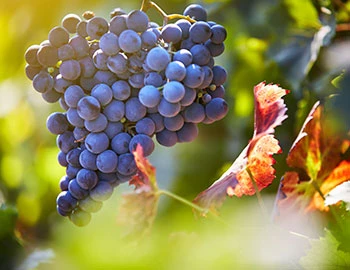
Crisp, rare and elegant
This sparsely-stocked red grape spawns astonishingly crisp wines. It is cultivated in small quantities in the southern Rhône Valley and the Languedoc. However, it originated in Spain. Legend has it that Pope Urban V (1310-1370), the penultimate Avignon Pope, received a vine as a gift from a Spaniard named Counesa.
This variety matures late, with weak productivity; its high quality makes up for it, though. In total, nearly 1,000 hectares are planted with Counoise in France. Wines pressed from the Counoise grape are mostly light in color, elegant, multi-layered, and fruity.
Rhône
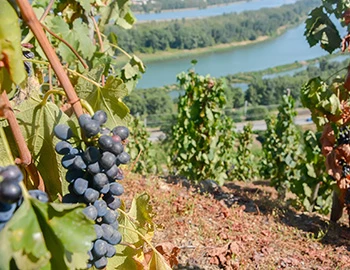
Rhône: northern power, southern charm
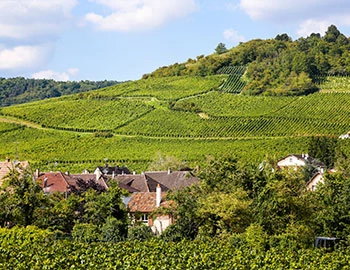
The Rhône’s source is in Valais, and it flows into the Mediterranean 800 kilometres to the south. In the last 200 kilometres of its course, it is lined with vines which yield a range of red crus that are among the most prestigious wines in the world – for example, on the spectacular cliffs of the Hermitage Mountains, or in the gravelly terraces of Châteauneuf-du-Pape. The river valley, however, is also a rich source of characterful white wines and affordable, high-quality, everyday red wines.
France
France – Philosophy in a bottle
According to French philosophy, wine should be an expression of the soil and climate. They use the word “terroir” to describe this. Terroir makes every wine different, and many especially good. French wine is regarded worldwide as an expression of cultural perfection. The French believe that humans are responsible for the quality of the berries, the vine variety for their character, and nature for the quantity. This philosophy can be expressed succinctly as: “the truth is the vineyard, not the man.”