
Abelé 1757 Brut Millésime 2008
AOC Champagne, 1500 ml


Perfect balance between maturity and freshness
- The Brut Millésimé combines maturity and freshness, showcasing the distinctive character of its vintage.
- An elegant cuvée with a fine, smooth effervescence, lively freshness and harmonious balance.
- À déguster avec une salade de fruits de mer, des huîtres, du jambon ibérique ou un brie jeune.
Description
With its perfect balance of maturity and freshness, the Brut millésimé vividly reflects the distinctive character of its vintage whilst remaining true to the house’s signature style. Fragrant, floral notes such as hawthorn give way to intense aromas of apricot and citrus, accompanied by delicate toasted notes. The fine, supple perlage, with lively, delicate bubbles, delights the palate with a pleasant effervescence. The Chardonnay is elegantly complemented by the Pinot Noir. Fresh notes of grapefruit blend with dense Pinot aromas such as redcurrants, raspberries and blackberries, culminating in an aromatically intense finish, with a wonderful balance of fullness, ripeness and finesse. A delight with caviar, lobster salad or pluma from the Ibérico pig.
Celebrate the Art of Sabring!

With its elegant design, this champagne sabre is not only an impressive eye-catcher at any celebration and an indispensable tool for stylish sabering, but also the perfect gift for all passionate sparkling wine lovers.
Attributes
| Grape variety: | Chardonnay, Pinot noir |
| Producer: | Abelé 1757 |
| Origin: | France / Champagne |
| Ripening potential: | 8 to 15 years |
| Drinking temperature: | 10 to 12 °C |
| Food Pairing: | Oysters, Giant crevettes, grilled langoustines, Apéro riche, Seafood salad |
| Maturation duration: | 96 months |
| Volume: | 12.5 % |
| Note: | Contains sulphites |
Abelé 1757
CHAMPAGNE MAISON ABELÉ 1757
exceptional – tailor-made – long maturing time – very small quantities
Maison Abelé 1757 is one of the oldest Champagne houses. With a deliberately limited production, it preserves the familiar character of a small company while guaranteeing the highest quality – two and a half centuries of stories and legends in the heart of Reims.
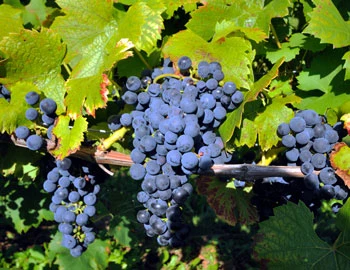
Pinot noir
Blueprint of the terroir
No other variety expresses its terroir as precisely as Pinot noir. It is a sensitive, fragile grape. But when it succeeds, it gives the world some of its very greatest wine plants. It especially excels in Burgundy, where it has been cultivated for at least 700 years. Even in the middle ages, it was considered so precious that it was kept separate from other grapes so as to not diminish its value. The finest examples are delicate and fragrant with aromas of cherries and red berries. With maturity, notes of forest floor, leather and truffles enter as well. An irresistible fruity sweetness still shines through, even after several decades. The Pinot noir does well in cool locations: in Switzerland and in Germany, where it is known as Blauburgunder and Spätburgunder respectively; in Alsace and in South Tyrol, in Oregon, New Zealand and Tasmania. Not least, it yields fantastic champagnes. It is a wonderful culinary companion. With its soft tannins and charming bouquet, it meshes with everything, from Güggeli and cheeses to fried fish.
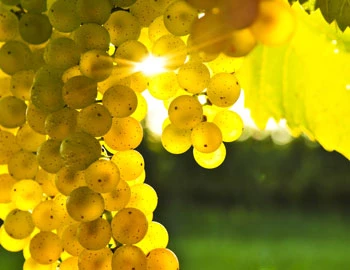
Chardonnay
King or beggar?
Hardly any variety of vine shows such a broad spectrum of quality as the Chardonnay. Its wines range from faceless neutrality to breath-taking class. It is an extremely low-maintenance vine, which explains why it is grown around the world – even in places where it probably should not be. The aromas of the Chardonnay variety are not very pronounced: a bit of green apple, a little hazelnut; in warmer latitudes, also melon and exotic fruits. The wines are often defined by maturing in casks. They develop more or less subtle notes of butter, toasted bread and vanilla. The grapes achieve their highest expression in their region of origin, Burgundy. Its heart beats in the Côte de Beaune: one might think of the plant growth of Meursault or Puligny-Montrachet. With their finesse and complexity, they can survive for decades. Chardonnay also achieves first class in some Blanc-de-Blancs champagnes. It additionally yields great wines in the Burgundian Chablis, and increasingly in Australia and Chile. A simple rule of thumb for pairing with food: When butter and cream are involved, you cannot go wrong with Chardonnay.
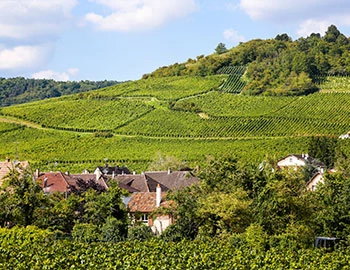
France
France – Philosophy in a bottle
According to French philosophy, wine should be an expression of the soil and climate. They use the word “terroir” to describe this. Terroir makes every wine different, and many especially good. French wine is regarded worldwide as an expression of cultural perfection. The French believe that humans are responsible for the quality of the berries, the vine variety for their character, and nature for the quantity. This philosophy can be expressed succinctly as: “the truth is the vineyard, not the man.”