
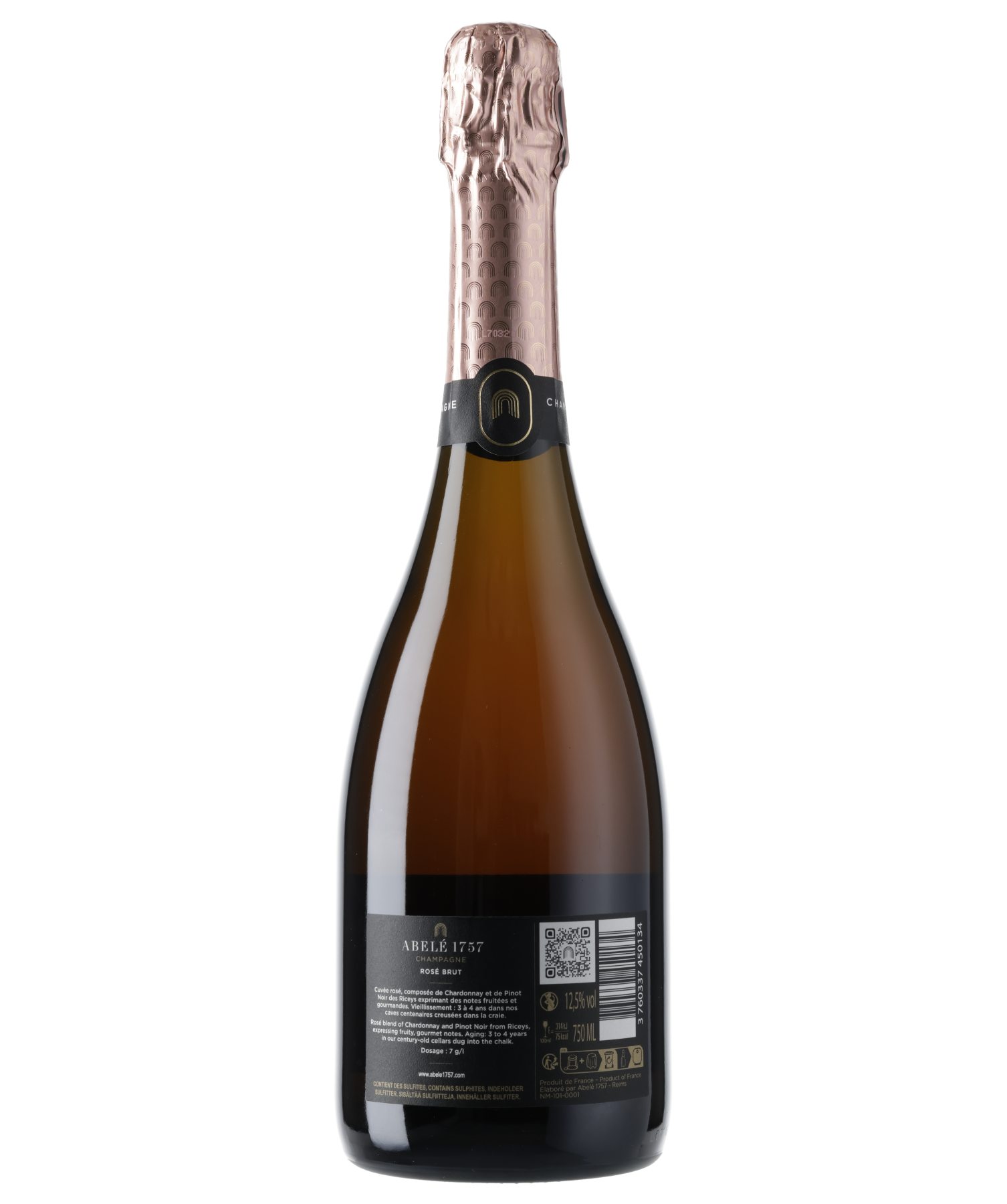
Abelé 1757 Brut Rosé
AOC Champagne, 750 ml


The essence of elegance and sensuality
- A charming rosé champagne with seductive aromas.
- A harmonious bouquet, with a smooth effervescence and delicate freshness on the palate.
- Perfect as an aperitif, with spicy dishes or with fruity desserts.
Description
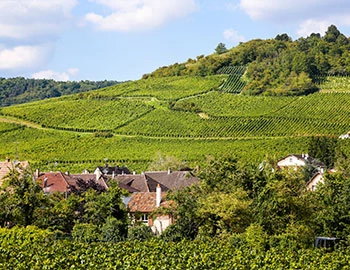
The ultimate charmer among the champagnes from Abelé 1757. The Pinot Noir in this cuvée comes from the historic vineyards of Les Riceys in the south of Champagne, near the border with Burgundy, and lends the champagne its characteristic expressiveness and finesse. On the nose, this rosé reveals delightful aromas of ripe red fruits, with the unmistakable, delicately fragrant notes of raspberry and strawberry, which blend into a harmonious bouquet. A gentle attack on the palate, delicate, seductive fruit, a smooth perlage and subtle toasted notes round off this sensual rosé. Enjoy it on its own, as an accompaniment to spicy dishes or with fruity desserts.
Celebrate the Art of Sabring!

With its elegant design, this champagne sabre is not only an impressive eye-catcher at any celebration and an indispensable tool for stylish sabering, but also the perfect gift for all passionate sparkling wine lovers.
Attributes
| Grape variety: | Chardonnay, Pinot noir |
| Producer: | Abelé 1757 |
| Origin: | France / Champagne |
| Other bottle sizes: | 1500 ml |
| Ripening potential: | 2 to 4 years |
| Drinking temperature: | 10 to 12 °C |
| Food Pairing: | Apéro riche, Sushi, Sashimi, Ceviche, Grilled fish, Fruit tart |
| Maturation duration: | 36 months |
| Volume: | 12.5 % |
| Note: | Contains sulphites |
Abelé 1757
CHAMPAGNE MAISON ABELÉ 1757
exceptional – tailor-made – long maturing time – very small quantities
Maison Abelé 1757 is one of the oldest Champagne houses. With a deliberately limited production, it preserves the familiar character of a small company while guaranteeing the highest quality – two and a half centuries of stories and legends in the heart of Reims.
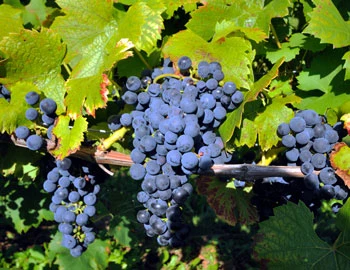
Pinot noir
Blueprint of the terroir
No other variety expresses its terroir as precisely as Pinot noir. It is a sensitive, fragile grape. But when it succeeds, it gives the world some of its very greatest wine plants. It especially excels in Burgundy, where it has been cultivated for at least 700 years. Even in the middle ages, it was considered so precious that it was kept separate from other grapes so as to not diminish its value. The finest examples are delicate and fragrant with aromas of cherries and red berries. With maturity, notes of forest floor, leather and truffles enter as well. An irresistible fruity sweetness still shines through, even after several decades. The Pinot noir does well in cool locations: in Switzerland and in Germany, where it is known as Blauburgunder and Spätburgunder respectively; in Alsace and in South Tyrol, in Oregon, New Zealand and Tasmania. Not least, it yields fantastic champagnes. It is a wonderful culinary companion. With its soft tannins and charming bouquet, it meshes with everything, from Güggeli and cheeses to fried fish.
France
France – Philosophy in a bottle
According to French philosophy, wine should be an expression of the soil and climate. They use the word “terroir” to describe this. Terroir makes every wine different, and many especially good. French wine is regarded worldwide as an expression of cultural perfection. The French believe that humans are responsible for the quality of the berries, the vine variety for their character, and nature for the quantity. This philosophy can be expressed succinctly as: “the truth is the vineyard, not the man.”