
André Clouet Clos de Bouzy 2008
AOC Champagne, 1500 ml


Jewel in a magnum bottle
- A historic Clos – exclusively in magnum bottles – only bottled in the best years.
- Ripe fruit, nuts and brioche characterise this great vintage, supported by power and creamy perlage.
- Best served in wide-bodied glasses – pairs perfectly with oysters, delicate fish and strong poultry.
Description
Exclusively available in magnum bottles and only bottled in the best years. The French call a vineyard surrounded by walls a clos – usually rightly protected, as these are often historic top sites. This is also the case here: the Clos de Bouzy is the jewel of the Clouet family. The vintage champagne from a top year beguiles the nose with golden apple, ripe pear and intense nut and brioche notes. On the palate, it impresses with its power, fullness and creamy perlage. Be sure to enjoy it from bulbous wine glasses: this champagne of the extra class deserves space to unfold! A wonderful accompaniment to food – from oysters and grilled fish to stronger poultry.
Celebrate the Art of Sabring!

With its elegant design, this champagne sabre is not only an impressive eye-catcher at any celebration and an indispensable tool for stylish sabering, but also the perfect gift for all passionate sparkling wine lovers.
Attributes
| Grape variety: | Pinot noir |
| Producer: | Champagne André Clouet |
| Origin: | France / Champagne |
| Ripening potential: | 1 to 10 years |
| Drinking temperature: | 8 to 10 °C |
| Food Pairing: | Grilled fish, Bouillabaisse, Wild fowl, Apéro riche, Roast saddle of venison |
| Vinification: | pressing the whole grape |
| Harvest: | hand-picking |
| Maturation: | in used barriques, on the yeast |
| Maturation duration: | 108 months |
| Volume: | 12.0 % |
| Note: | Contains sulphites |
Champagne André Clouet
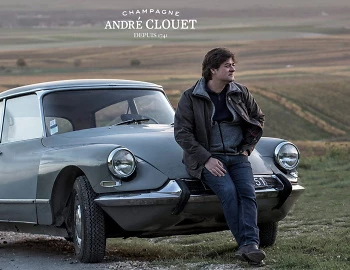
We didn’t find the low house, dating from the 17th century, straight away, even though the village of Bouzy is not very large. Modest buildings are grouped around a courtyard, behind which a vineyard lies, similar to a clos.
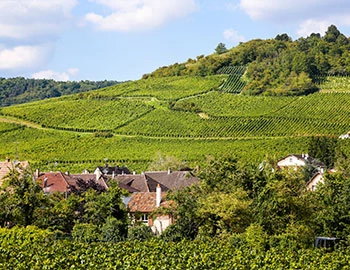
But first of all, Jean François Clouet, last scion of this old family that is traceable to the court of Louis XV, guided us to an elevation. We found ourselves above Bouzy on the south side of the Montagne de Reims range of hills. Jean François points westwards: In 451 AD, Attila the Hun came riding from that direction and it was here that he met the army of the Western Roman Empire. But today, instead of a battlefield, a tranquil sea of vines stretches towards the horizon.
Pinot noir
Blueprint of the terroir
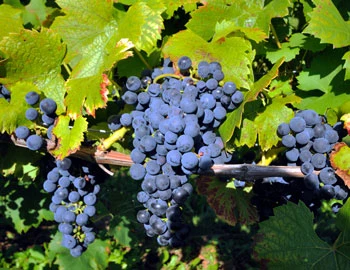
No other variety expresses its terroir as precisely as Pinot noir. It is a sensitive, fragile grape. But when it succeeds, it gives the world some of its very greatest wine plants. It especially excels in Burgundy, where it has been cultivated for at least 700 years. Even in the middle ages, it was considered so precious that it was kept separate from other grapes so as to not diminish its value. The finest examples are delicate and fragrant with aromas of cherries and red berries. With maturity, notes of forest floor, leather and truffles enter as well. An irresistible fruity sweetness still shines through, even after several decades. The Pinot noir does well in cool locations: in Switzerland and in Germany, where it is known as Blauburgunder and Spätburgunder respectively; in Alsace and in South Tyrol, in Oregon, New Zealand and Tasmania. Not least, it yields fantastic champagnes. It is a wonderful culinary companion. With its soft tannins and charming bouquet, it meshes with everything, from Güggeli and cheeses to fried fish.
France
France – Philosophy in a bottle
According to French philosophy, wine should be an expression of the soil and climate. They use the word “terroir” to describe this. Terroir makes every wine different, and many especially good. French wine is regarded worldwide as an expression of cultural perfection. The French believe that humans are responsible for the quality of the berries, the vine variety for their character, and nature for the quantity. This philosophy can be expressed succinctly as: “the truth is the vineyard, not the man.”