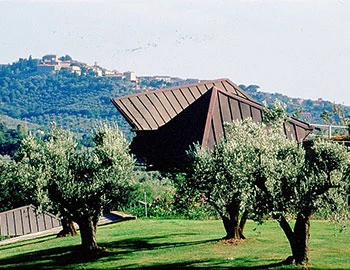

Franciacorta Brut Gran Cuvée
DOCG, Castello Bonomi, 750 ml


Italy's sparkling answer to champagne
- For everyone who loves sparkling elegance – made using traditional bottle fermentation.
- Fruity and elegant: peach, acacia, brioche, creamy and fresh on the palate.
- Ideal as an aperitif, with sushi or fish, and a genuine alternative to champagne.
Description
This Franciacorta is a real treat for anyone who loves sparkling elegance. It is produced using traditional bottle fermentation, which gives it its fine perlage and delicate creaminess – a complex process that guarantees quality and character. The nose is captivating with fresh aromas of white peaches and delicate acacia blossoms, accompanied by a subtle hint of brioche. On the palate, it is soft, yet juicy and lively, with a balanced freshness that makes you want to take another sip. This Franciacorta is not only an ideal accompaniment to light starters, sushi or grilled fish, but also a perfect aperitif or an elegant complement to fine cheeses – a charming and worthy alternative to champagne.
Falstaff Sparkling Special 2025: 92 Points
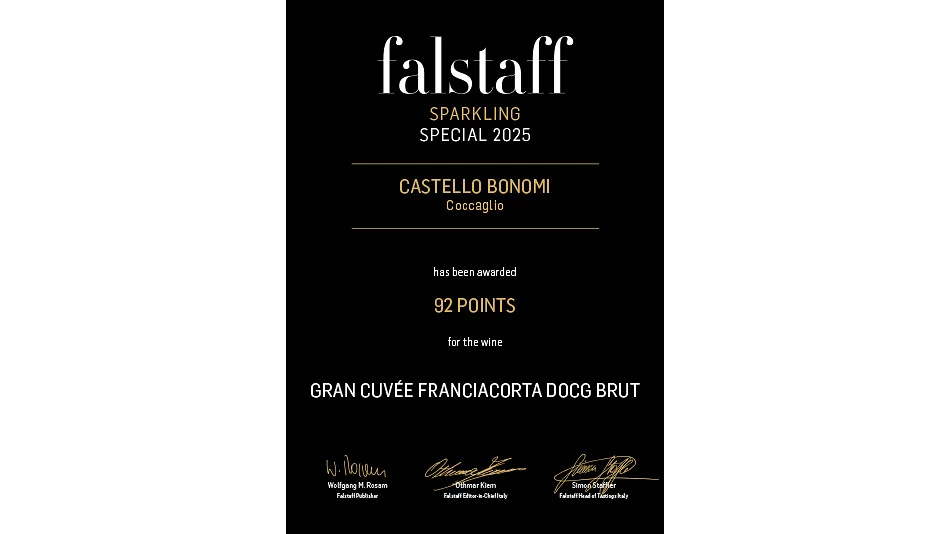
Castello Bonomi's Franciacorta Brut Gran Cuvée scored 92 points at the Falstaff Sparkling Special 2025.
Tasting – The Art of Wine Selection at the Baur au Lac

Meet over 20 wine and spirits producers, benefit from attractive special offers, and attend exclusive masterclasses featuring aged wines. Limited places available.
Sunday, November 15, 2026 | 2.00 pm until 7.00 pm
Monday, November 16, 2026 | 2.00 pm until 8.00 pm
Attributes
| Grape variety: | Chardonnay, Pinot noir |
| Producer: | Castello Bonomi |
| Origin: | Italy / Lombardia / Franciacorta |
| Ripening potential: | 1 to 3 years |
| Drinking temperature: | 6 to 8 °C |
| Food Pairing: | Italian antipasti, Apéro riche, Smoked fish, Oysters, Sushi, Sashimi, Ceviche, Asparagus specialities |
| Vinification: | soft pressing, fermentation at low temperatures, fermentation in steel tank, fermentation in wooden barrel, bottle fermentation |
| Harvest: | hand-picking, strict selection |
| Maturation: | partly in steel tank, partly in barrique/ Pièces |
| Maturation duration: | 24 months |
| Volume: | 12.5 % |
| Note: | Contains sulphites |
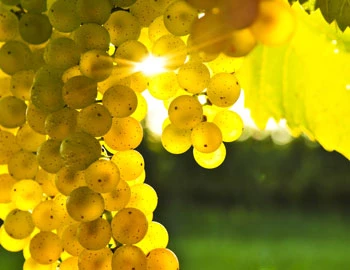
Chardonnay
King or beggar?
Hardly any variety of vine shows such a broad spectrum of quality as the Chardonnay. Its wines range from faceless neutrality to breath-taking class. It is an extremely low-maintenance vine, which explains why it is grown around the world – even in places where it probably should not be. The aromas of the Chardonnay variety are not very pronounced: a bit of green apple, a little hazelnut; in warmer latitudes, also melon and exotic fruits. The wines are often defined by maturing in casks. They develop more or less subtle notes of butter, toasted bread and vanilla. The grapes achieve their highest expression in their region of origin, Burgundy. Its heart beats in the Côte de Beaune: one might think of the plant growth of Meursault or Puligny-Montrachet. With their finesse and complexity, they can survive for decades. Chardonnay also achieves first class in some Blanc-de-Blancs champagnes. It additionally yields great wines in the Burgundian Chablis, and increasingly in Australia and Chile. A simple rule of thumb for pairing with food: When butter and cream are involved, you cannot go wrong with Chardonnay.
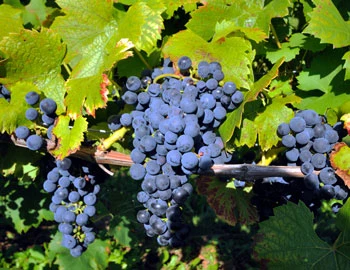
Pinot noir
Blueprint of the terroir
No other variety expresses its terroir as precisely as Pinot noir. It is a sensitive, fragile grape. But when it succeeds, it gives the world some of its very greatest wine plants. It especially excels in Burgundy, where it has been cultivated for at least 700 years. Even in the middle ages, it was considered so precious that it was kept separate from other grapes so as to not diminish its value. The finest examples are delicate and fragrant with aromas of cherries and red berries. With maturity, notes of forest floor, leather and truffles enter as well. An irresistible fruity sweetness still shines through, even after several decades. The Pinot noir does well in cool locations: in Switzerland and in Germany, where it is known as Blauburgunder and Spätburgunder respectively; in Alsace and in South Tyrol, in Oregon, New Zealand and Tasmania. Not least, it yields fantastic champagnes. It is a wonderful culinary companion. With its soft tannins and charming bouquet, it meshes with everything, from Güggeli and cheeses to fried fish.
Italy
Italy – Where wine is a way of life
The Italian wine regions are extremely diverse, and this is made clear in their wines. Established varieties such as Merlot, Syrah, and Sauvignon can be found on just 15 percent of the total vine growing area. The remaining 85 percent is reserved for autochthonous, indigenous varieties. More than 2,000 different grape varieties are grown under diverse conditions and pressed with various techniques into wines that reach the top tier of the international wine market.