
Chablis Les Vaudevey 2023
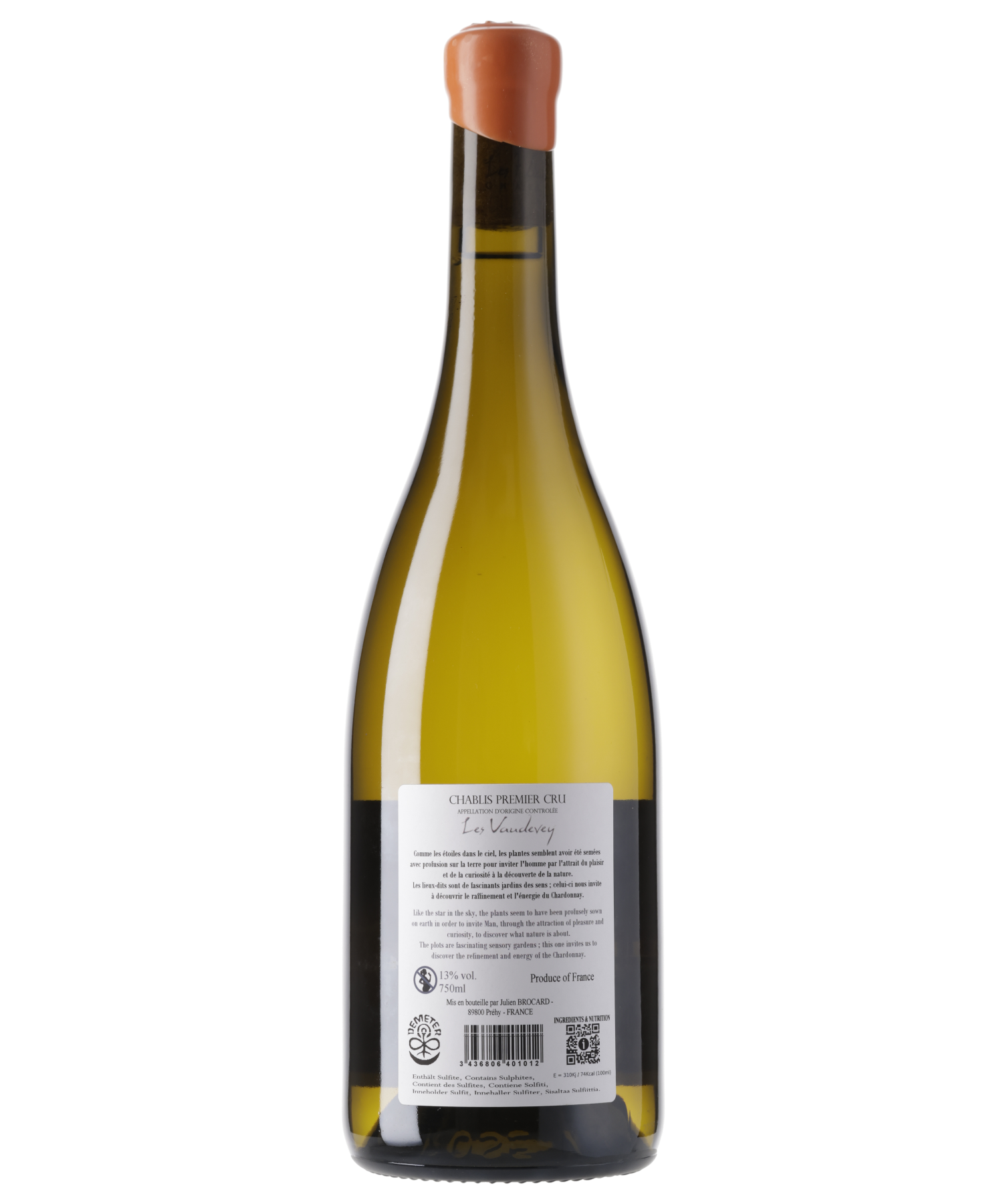
AC 1er cru, Julien Brocard, 750 ml


Chablis with wow factor
- An expressive Premier Cru with floral elegance, salty minerality and crisp precision.
- Floral and citrusy on the nose. Fresh, salty and precise on the palate, with a maritime finish.
- Shellfish, scallops, grilled fish, asparagus with hollandaise sauce, and poultry.
Description
The Chablis 1er Cru Les Vaudevey boasts one of Julien Brocard’s most floral bouquets and is characterised by so-called Kimmeridgian soil (calcareous marl), which lends the wines a slightly smoky, flinty minerality and a salty note. The cool microclimate and the valley’s aspect also ensure a slow, even ripening of the grapes, lending the wine additional finesse and tension. Linden blossom and acacia blossom dominate the nose, complemented by notes of lemon curd and quince. On the palate, it is fresh and slightly salty, with a crisp acidity and a lively, maritime-inspired finish. Culinary-wise, it is an ideal accompaniment to oysters, shellfish and scallops, as well as grilled fish, asparagus with hollandaise sauce or light poultry dishes.
Bitte beachten: Die Kartoneinheit dieses Produkts umfasst 7 Flaschen.
Tasting – The Art of Wine Selection at the Baur au Lac

Meet over 20 wine and spirits producers, benefit from attractive special offers, and attend exclusive masterclasses featuring aged wines. Limited places available.
Sunday, November 15, 2026 | 2.00 pm until 7.00 pm
Monday, November 16, 2026 | 2.00 pm until 8.00 pm
Attributes
| Grape variety: | Chardonnay |
| Producer: | Domaine Julien Brocard |
| Origin: | France / Bourgogne / Chablis |
| Label: | Certified organic or biodynamic wine |
| Ripening potential: | 2 to 8 years |
| Drinking temperature: | 10 to 12 °C |
| Food Pairing: | Whitefish fillets à la meunière, Grilled fish, Fresh water fish with cream sauce, Crispy roast chicken, Coquilles Saint Jacques on lentils, Succulent chicken breast with cream sauc |
| Vinification: | soft pressing, fermentation in steel tank, biological acid degradation in barrel |
| Harvest: | hand-picking, strict selection |
| Volume: | 13.0 % |
| Note: | Contains sulphites |
Domaine Julien Brocard
The seven vineyards - Chablis "naturally"
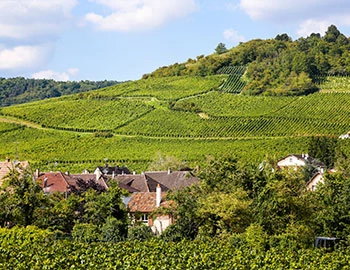
Julien Brocard's domaine is located in Préhy, just a few kilometres from the town of Chablis in northern Burgundy. The aim of the domaine is to bring out the true character of the wines without any distortion, and for this purpose the vines have been cultivated biodynamically since 2011.
In 1973 Jean-Marc Brocard planted his first vines in the Chablis winegrowing region. In 1995 Julien Brocard followed in his father's footsteps and took on his first responsibilities in the family business. Together they created ecological niches by planting new fruit trees typical of the region, such as hazelnut, pear and vineyard peach. These promote biodiversity and the balance between animals and plants. In 1997 Julien Brocard discovered the vineyard of La Boissonneuse, where he ventured on his first biodynamic experiments. This vineyard received biodynamic certification as early as 2002. All the other vineyards and plots were also gradually converted to biodynamics.
Chardonnay
King or beggar?
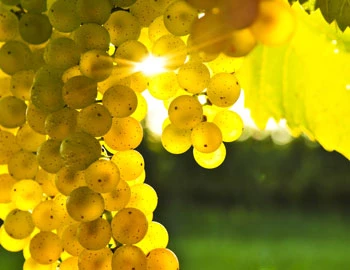
Hardly any variety of vine shows such a broad spectrum of quality as the Chardonnay. Its wines range from faceless neutrality to breath-taking class. It is an extremely low-maintenance vine, which explains why it is grown around the world – even in places where it probably should not be. The aromas of the Chardonnay variety are not very pronounced: a bit of green apple, a little hazelnut; in warmer latitudes, also melon and exotic fruits. The wines are often defined by maturing in casks. They develop more or less subtle notes of butter, toasted bread and vanilla. The grapes achieve their highest expression in their region of origin, Burgundy. Its heart beats in the Côte de Beaune: one might think of the plant growth of Meursault or Puligny-Montrachet. With their finesse and complexity, they can survive for decades. Chardonnay also achieves first class in some Blanc-de-Blancs champagnes. It additionally yields great wines in the Burgundian Chablis, and increasingly in Australia and Chile. A simple rule of thumb for pairing with food: When butter and cream are involved, you cannot go wrong with Chardonnay.
Chablis
Chablis: the pure finesse of Chardonnay
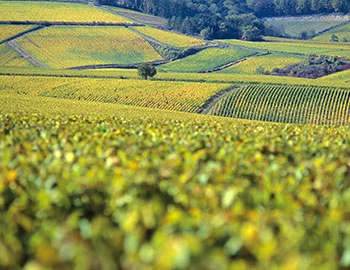
Nowhere is the Chardonnay variety as clearly recognizable as in the Chablis appellation, with its approximately 5,000 hectares of vineyard area. It is the pronounced acidity that lends the wines their dancing finesse and crispness. Sitting at 48 degrees latitude, and with extraordinary limestone-marl soils, the area has long been seen as France's “cool climate” region par excellence. Despite a warming climate, Chablis wines still retain their charmingly cool freshness.
Bourgogne
Burgundy: home of the crus
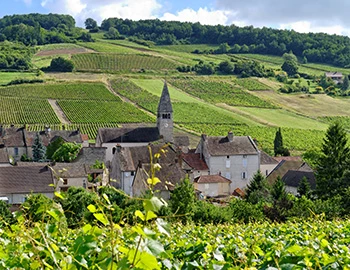
Burgundy and Bordeaux are France’s most prestigious wine regions. Nonetheless, they are completely distinct in character: while Bordeaux, as the land of the chateaux, enjoys an aristocratic image, Burgundy has retained its rustic agrarian structure. Burgundy stretches for over 200 kilometres, from Dijon in the north to Lyon in the south. In a highly complex jigsaw of the most diverse of terroirs, Chardonnay and Pinot Noir demonstrate the subtle ways in which they embody their sources.
France
France – Philosophy in a bottle
According to French philosophy, wine should be an expression of the soil and climate. They use the word “terroir” to describe this. Terroir makes every wine different, and many especially good. French wine is regarded worldwide as an expression of cultural perfection. The French believe that humans are responsible for the quality of the berries, the vine variety for their character, and nature for the quantity. This philosophy can be expressed succinctly as: “the truth is the vineyard, not the man.”