
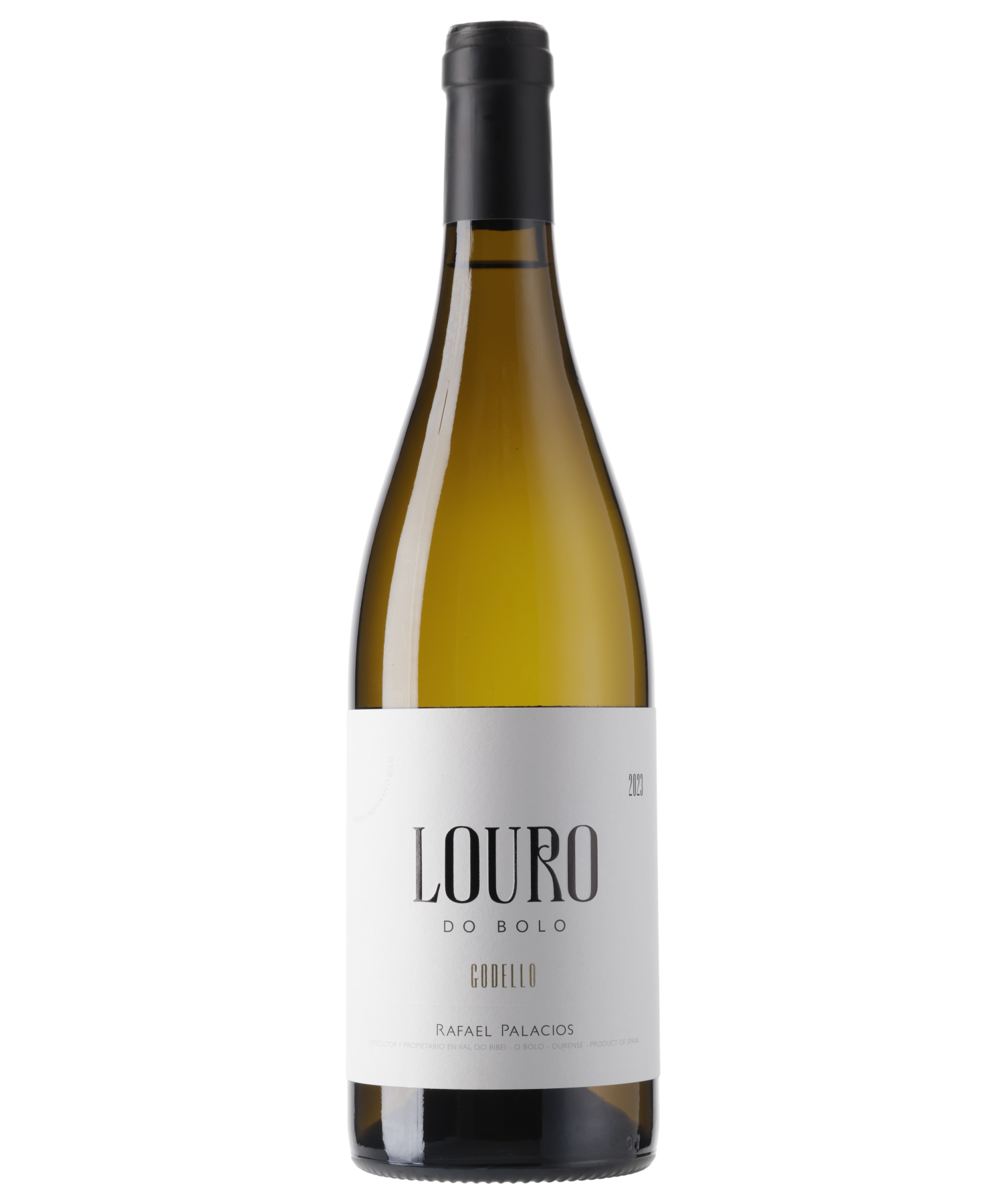
Louro do Bolo 2023
DO Valdeorras, Rafael Palacios, 750 ml


Godello at its best
- What Rafael Palacios is doing in Galicia with the indigenous Godello grape variety is simply brilliant.
- Exotic aroma with a hint of pepper, juicy, fresh and full-bodied on the palate.
- Goes well with grilled fish, crispy chicken – but also with vegetable couscous and asparagus quiche.
Description
In the 1970s, there were only a few hundred vines left of the Godello grape variety. In the wines of Rafael Palacios, highly praised by luminaries such as Robert Parker, the rescued variety shows its full brilliance. Quince, citrus, tropical fruit, herbs, white pepper. Super juicy and lively on the palate, full-bodied and mineral with a floral finish. It vibrates! Fish or meat with citrus and herbs? Godello is the right choice. And with its smoothness, it is a dream partner for vegetable couscous or asparagus quiche.
Attributes
| Grape variety: | Godello |
| Producer: | Bodega Rafael Palacios S.L. |
| Origin: | Spain / Galicia / Valdeorras |
| Ripening potential: | 1 to 4 years |
| Drinking temperature: | 10 to 12 °C |
| Food Pairing: | Oysters, Giant crevettes, grilled langoustines, Mussels au gratin, Vegetable flan, quiche |
| Vinification: | fully destemmed, short must fermentation, soft pressing, biological acid degradation in barrel |
| Harvest: | hand-picking |
| Maturation: | in large wooden barrel/foudre, bâtonnage |
| Bottling: | filtration |
| Maturation duration: | 4 months |
| Volume: | 14.0 % |
| Note: | Contains sulphites |
Bodega Rafael Palacios S.L.
He wanted to prove to the world that he could produce the best white wine in all of Spain -- and he succeeded!
A migrant from Rioja, Rafael Palacios came to Valdeorras and quickly made a name for himself there. He regularly proved his worth in his family home of Palacios Remondo. In 2004, he founded his own vineyard in a northwestern nook of Spain, at the centre of Galicia, in the remote Valle del Bibei. Meanwhile, his brother Álvaro assumed the management of the vineyard in Rioja.
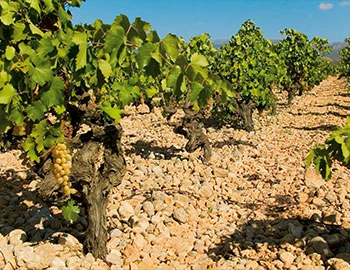
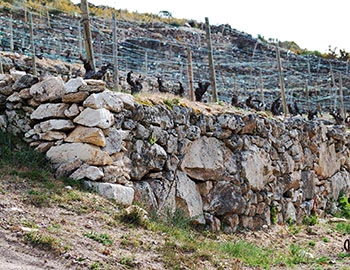
In light of the autochtonous godello grape's potential, Rafael was convinced he could use it to produce world-class wines from the very beginning. Little by little, he purchased parcels stocked with old vines -- locally referred to as sortes. Sortes found in elevated, north-facing locations caught his attention in particular. These yield fresh, mineral, and well structured wines. The oldest location is Sorte Antiga, planted in 1920. The Valle del Bibei in the parish of O Bolo is the highest located area of Valdeorras and is situated 680 to 740 metres above sea level. The ground, which developed through the erosion of granite, is barren with a sandy surface.
By now, Rafael is faced with hard work on 30 hectares spread over 30 vineyards, since the mostly abandoned sortes need to be maintained, the walls must be repaired, the grounds must be vitalised, and the neglected vines must be cosseted up. While doing this, he applies organic and partially biodynamic methods of cultivation.
Louro do Bolo stems from various parcels. The Godello is refined with 6% of the indigenous Treixedura and fermented and developed in large 3000 litre wooden barrels. After having sampled this wine, you will be ready to get to know the As Sortes, which was hailed as the best white wine of Spain. However, Rafael Palacios does not simply sit on his laurels. His latest attempt, called Sorte O Soro, has taken over this title and sees its place along the biggest names of the world of white wines.
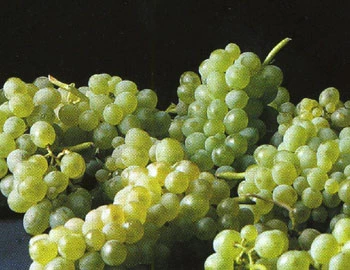
Godello
Mentioned by roman scholars
This white autochthonous variety from Galicia can look back on a long tradition. The Roman scholar Pliny the Elder (23-79 CE) even mentioned Godello in his encyclopedic work on natural history. He associated the vine with the Bergidum Flavium region, which today is the Bierzo wine-growing area.
For a long time, the power resting in the Godello was disregarded in favour of other grape varieties. But in the 1970s, a few avid vintners discovered its potential, and since then Godello has gained ever more attention and importance, and its vineyard area is continually expanding across all of Spain.
Valdeorras
Valdeorras: a hint of Burgundy
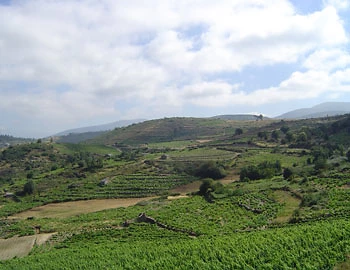
In the western foothills of the Cantabrian Mountains, under the influence of the cool air of the Atlantic, wholesome white wines with seemingly Burgundian finesse have been produced for several years. The basis for this white wine wonder in the small but beautiful Valdeorras wine-growing region is the Godello variety. Thanks to new plantings and the restoration of old parcels, the quality of wines here has only increased in recent years. The top crus are increasingly aged on the fine lees.
Galicia
Galicia: shaped by the cool Atlantic
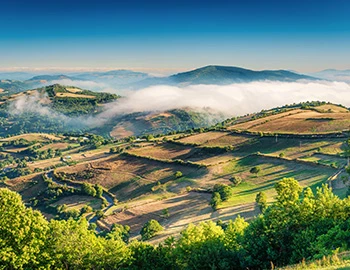
Situated in the far northwest of the Iberian Peninsula, Galicia is like a tip which pushes west toward the Atlantic Ocean, north of Portugal. In keeping with this exposed location, wines made here, with their fresh, straightforward character, depart strikingly from the general style of Spanish wines. With four cultivation areas with DO status, Galicia is drawing noticeably more international interest. White wines from autochthonous varieties are mostly produced here.
Spain
Spain – Variety and perfection
“Somewhere in la Mancha, in a place whose name I do not care to remember...,” begins Don Quixote's odyssey.
The most famous part is definitely when Don Quixote thinks windmills are his enemy and wants to fight them – until they nearly kill him. It’s possible there was a bit too much of the La Mancha wine at play. Spanish vines fight for their survival in rugged landscapes, battling fierce drought and rough soils. But they fight well.