
Château Brane-Cantenac 2016
AC Margaux 2ème Cru classé, 750 ml


Description
Citing Robert Parker The Wine Advocate: "The 2016 Brane-Cantenac is a blend of 70% Cabernet Sauvignon, 27% Merlot, 2% Cabernet Franc and 1% Carmenere picked from 22 September until 17 October (the tiny parcel of Carmenere picked three days later). The yields came in at 51 hectoliters per hectare and it is matured in 75% new oak and 25% one-year-old barrels, the final alcohol level 13.3%. It has a beautifully defined, very detailed bouquet with mineral-rich black fruit laced with cedar and graphite notes, living up to its nom de plume as the "Pauillac of Margaux." The palate is simply the best that I have ever tasted at the estate, without question. This has presence, but also weightlessness, filigree tannin and perfectly pitched acidity, with real intensity and drive. The tension here is outstanding and the persistence is incredibly long. It is not the showiest of all the 2016s by a long stretch, and yet it is everything you could possibly want from a Margaux. Like Beychevelle this year, the 2016 Brane-Cantenac puts recent vintages in the shade, thanks not only to the growing season, but also a new punching down system in their gravity-fed winery that was completed in 2015. The 2016 is a benchmark against which future vintages will be compared."
Attributes
| Grape variety: | Cabernet Sauvignon, Merlot, Cabernet Franc, Petit Verdot, Carmenere |
| Producer: | Château Brane Cantenac |
| Origin: | France / Bordeaux / Margaux |
| Other vintages: | 2022 2021 2020 |
| Drinking temperature: | 16 to 18 °C |
| Volume: | 13.5 % |
| Note: | Contains sulphites |
Petit Verdot
Bordeaux’s secret weapon
It is commonly said that the Petit Verdot originated in Bordeaux. But genetically, it is closer to a group of vines from near the Pyrenees, which are most likely descended from wild clematis. In French, these wild plants are called “lambrusques”, and the Petit Verdot is also known under the synonym Lumbrusquet. It is a high quality grape: very dark and spicy with notes of cassis and graphite, plenty of robust tannins and strong acidity. Most major Bordeaux contain a small proportion of Petit Verdot. Appropriately, it is valued wherever wines are produced according to the Bordeaux recipe. For example, in Italian Maremma or in California, where it covers the largest area worldwide. It is almost never vinified purely by itself. Incidentally, its name, derived from “vert”, meaning green, alludes to its Achilles heel: in cool weather it tends to form small, seedless green grapes.
Merlot
Everybody’s darling
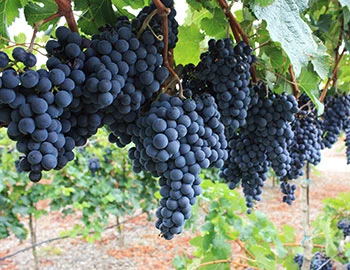
Merlot is the most charming member of the Bordeaux family. It shines with rich colour, fragrant fullness, velvety tannins and sweet, plummy fruit. It even makes itself easy for the vintner, as it matures without issue in cool years as well. This is in contrast to the stricter Cabernet Sauvignon, which it complements as a blending partner. Its good qualities have made the Merlot famous worldwide. At over 100,000 hectares, it is the most-planted grape in France. It also covers large areas in California, Italy, Australia and recently in Eastern Europe. The only catch is that pure Merlot varieties rarely turn out well. Its charm is often associated with a lack of substance. Only the best specimens improve with maturity. They then develop complex notes of leather and truffles. This succeeds in the top wines from the Bordeaux appellation of Pomerol and those from Ticino, among others.
Cabernet Sauvignon
The backbone of Bordeaux
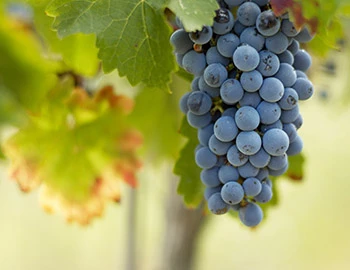
The Cabernet Sauvignon gives the Bordeaux its backbone, yielding deep violet wines with powerful tannins and endless ripening potential. It is the top dog in Médoc, and is placed in all five premier crus of Bordelais. When young, it often appears strict and unapproachable, but with advancing years, its tannins round off. It is wonderfully velvety, and yet always maintains its freshness. Typical flavours include cassis, graphite and cedar. Wherever Cabernet Sauvignon is found, Merlot is not far away. It complements the robust structure of Cabernet with softness, fruit and richness. The Cabernet Sauvignon is the most-exported vine in the world. It delivers persuasive qualities in Italy as an ingredient of the Super Tuscan, or as the flagship variety from California. There, it is lovingly titled “Cab Sauv”. Meat fans should be aware that it fantastically accompanies a grilled entrecôte. The family tree of Cabernet Sauvignon is surprising: its parents are Cabernet Franc and the white Sauvignon blanc.
Cabernet Franc
Forefather of the Bordeaux varieties
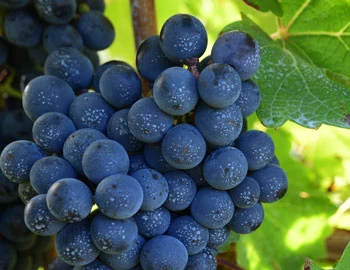
The Cabernet Franc is one of the oldest varieties of Bordelais and a parent of three other red grapes in the Bordeaux assortment: Cabernet Sauvignon, Merlot and Carmenère. It is distinguished by its complex, flavourful bouquet of raspberry, graphite, violet, liquorice and white pepper. In addition, it presents round, crisp tannins which turn out less strongly than those of Cabernet Sauvignon. While the Cabernet Franc always appears as part of a blend in Bordeaux, it is pressed alone on the Loire. The most renowned appellations are Chinon and Bourgueil. Incidentally, the Cabernet originates not in Bordeaux but in the Spanish Basque Country. Cabernet owes its name to the Latin “carbon”, meaning black.
Carmenere
Incognito emigrant
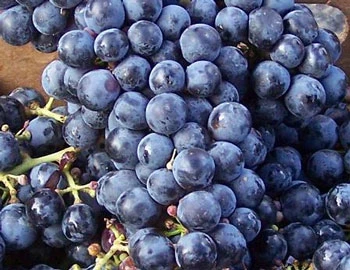
The Carmenère had to emigrate to become famous. Once, it belonged to the main red varieties in Bordeaux. But it was not particularly loved by vintners there. It matured poorly, yielded little return and often turned out harsh and herbaceous. For this reason, it was replaced after the phylloxera epidemic by more low-maintenance varieties. Meanwhile, it found its way to Chile. In the warm climate of South America, the wines suddenly presented deep blackberry fruit, chocolate notes and velvety tannins. These were joined by a fine eucalyptus note, which became its trademark. The catch: for a long time, no-one knew that this had to be done with Carmenère. Instead, wine growers kept their vine stocks for Merlot. Since the error became apparent in 1997, this variety has experienced a phenomenal upturn. In Bordeaux as well, some châteaux are incorporating a dash of Carmenère in their grand crus.
Margaux
Margaux: a guarantor of finesse
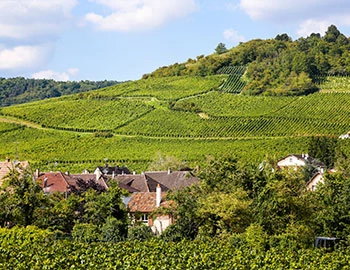
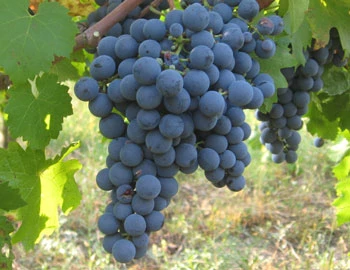
For Bordeaux experts, it makes perfect sense that this prestigious appellation in the southern part of the Médoc, just 30 kilometres from Bordeaux's city centre, has a female first name. The best Margaux crus, owing to their delicacy and subtle elegance, are frequently described as feminine. Nonetheless, Margaux wines have been increasing in fullness as a result of a warming climate. Despite their elegance, the wines possess great longevity.
Bordeaux
Bordeaux: high prestige, high quality
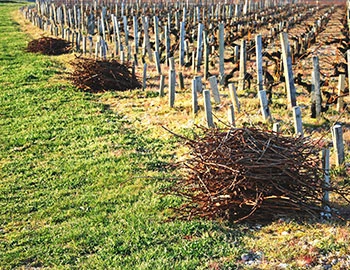
With a total area of around 115,000 hectares, Bordeaux may not be France’s largest wine-growing region, but it is certainly its most prestigious. The range of wines produced here today is enormous: ranging from red everyday wines with a great relationship between price and quality to exclusive, and accordingly expensive, premier crus. Elegant white wines and noble sweet specialties round out the spectrum.
France
France – Philosophy in a bottle
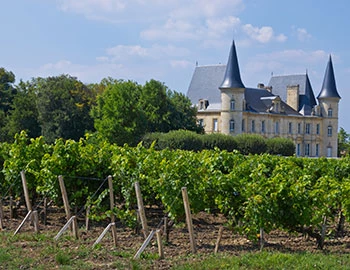
According to French philosophy, wine should be an expression of the soil and climate. They use the word “terroir” to describe this. Terroir makes every wine different, and many especially good. French wine is regarded worldwide as an expression of cultural perfection. The French believe that humans are responsible for the quality of the berries, the vine variety for their character, and nature for the quantity. This philosophy can be expressed succinctly as: “the truth is the vineyard, not the man.”