
Beaune Clos du Roi 1er cru 2023
AC, Tollot-Beaut, 1500 ml


Charismatic and durable
- Premier Cru from the renowned Clos du Roi vineyard with remarkable length.
- Bouquet of sweet wild berries, mint and a hint of chocolate; juicy on the palate, with dense, fine tannins.
- A versatile accompaniment to game, braised vegetables or mature cheese – also delicious on its own.
Description
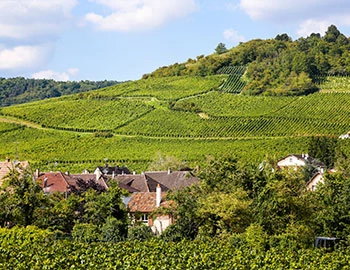
The Premier Cru Clos du Roi from Domaine Tollot-Beaut comes from one of Beaune's most renowned vineyards, whose chalky soils and optimal sun exposure give the grapes a special depth and finesse. The bouquet unfolds a rich array of aromas of small, sweet wild berries, complemented by notes of mint, cocoa and chocolate, which hint at the fine wood ageing. On the palate, it displays a firm structure, juicy acidity and densely integrated tannins. The taste experience is complex, profound and remarkably long-lasting. A charismatic, age-worthy red wine that is excellent on its own or paired with hearty dishes or mature cheeses.
Tasting – The Art of Wine Selection at the Baur au Lac

Meet over 20 wine and spirits producers, benefit from attractive special offers, and attend exclusive masterclasses featuring aged wines. Limited places available.
Sunday, November 15, 2026 | 2.00 pm until 7.00 pm
Monday, November 16, 2026 | 2.00 pm until 8.00 pm
Attributes
| Grape variety: | Pinot Noir |
| Producer: | Domaine Tollot-Beaut / Nathalie Tollot |
| Origin: | France / Bourgogne / Côte de Beaune |
| Other bottle sizes: | 750 ml |
| Other vintages: | 2022 2021 |
| Label: | Vegan |
| Ripening potential: | 5 to 15 years |
| Drinking temperature: | 16 to 18 °C |
| Food Pairing: | Wild fowl, Roast veal with morel sauce, Spicy hard cheese |
| Vinification: | short must fermentation, Punching down, soft pressing, biological acid degradation in barrel |
| Harvest: | hand-picking |
| Maturation: | in partly new and used barriques/ Pièces, some months bottle storage before sale |
| Volume: | 13.0 % |
| Note: | Contains sulphites |
Domaine Tollot-Beaut / Nathalie Tollot
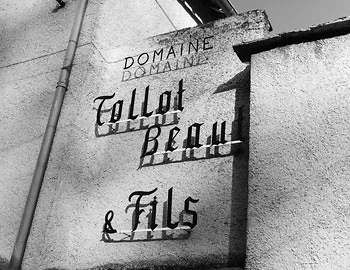
This fine family domaine has existed since the end of the 19th century. Initially, there were only a few vineyards in the village of Chorey. As time went on, it developed into 24 hectares in the communes of Beaune, Savigny and Aloxe-Corton. The estate is now run by cousins Nathalie, Jean-Paul, and Olivier Tollot.
On the approximately 30 different plots that are exclusively planted with Pinot Noir and Chardonnay, Jean-Paul and Olivier are very busy using traditional methods: the soil is tilled with a hoe, weeded and naturally everything is harvested by hand. No fertilisers are used at all. Knowledge and experience pertaining to the individual plots have been passed down to them across the generations. This is how they manage to express the particularities of each individual location through their wines.
The domaine is one of the most prestigious in Burgundy, with wines featured on the wine lists of the finest international restaurants. This is in no small part due to the lively and charming Nathalie, who is responsible for marketing and sales. When you pass through the low, seemingly small cellar, you will be greeted by her contagious cheerfulness and charmed by the purity of these wines – whether it’s a simple Bourgogne rouge or blanc or a complex and elegant Grand Cru.
Côte de Beaune
Côte de Beaune: guarantor of elegance
The city of Beaune is the cultural and economic centre of Burgundy. The prestigious vineyard sites, stretching in a band from Santenay (located about 20 kilometres south of Beaune) to the village of Aloxe-Corton (five kilometres north of Beaune), form the Côte de Beaune. Legendary, uniquely expressive crus originate here. In fact, the most prestigious Chardonnay growths in the world are produced around Chassagne-Montrachet, Puligny-Montrachet and Meursault.
Bourgogne
Burgundy: home of the crus
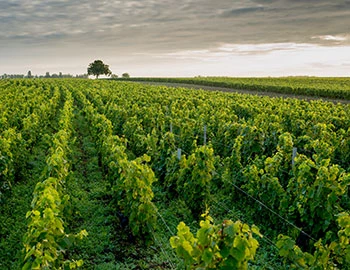
Burgundy and Bordeaux are France’s most prestigious wine regions. Nonetheless, they are completely distinct in character: while Bordeaux, as the land of the chateaux, enjoys an aristocratic image, Burgundy has retained its rustic agrarian structure. Burgundy stretches for over 200 kilometres, from Dijon in the north to Lyon in the south. In a highly complex jigsaw of the most diverse of terroirs, Chardonnay and Pinot Noir demonstrate the subtle ways in which they embody their sources.
France
France – Philosophy in a bottle
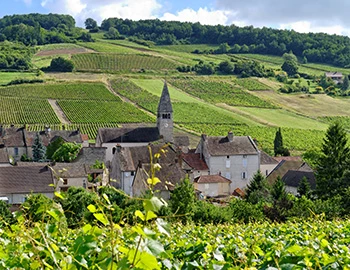
According to French philosophy, wine should be an expression of the soil and climate. They use the word “terroir” to describe this. Terroir makes every wine different, and many especially good. French wine is regarded worldwide as an expression of cultural perfection. The French believe that humans are responsible for the quality of the berries, the vine variety for their character, and nature for the quantity. This philosophy can be expressed succinctly as: “the truth is the vineyard, not the man.”