
Las Lamas 2022
Bierzo, Descendientes de J. Palacios, 750 ml


Mineral vein
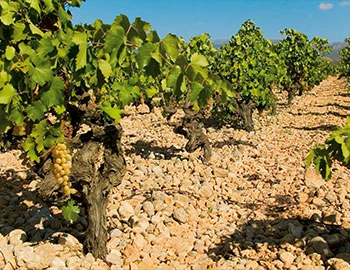
- The vines for this top-quality Mencía grow at an altitude of 730 metres above sea level. It has a cool, elegant yet generous character.
- Delicate hints of violets, ripe berries, cool stone. Silky, fresh and finely woven.
- To serve with grilled spring onions, Spanish-style, or with a juicy Wagyu burger.
Description
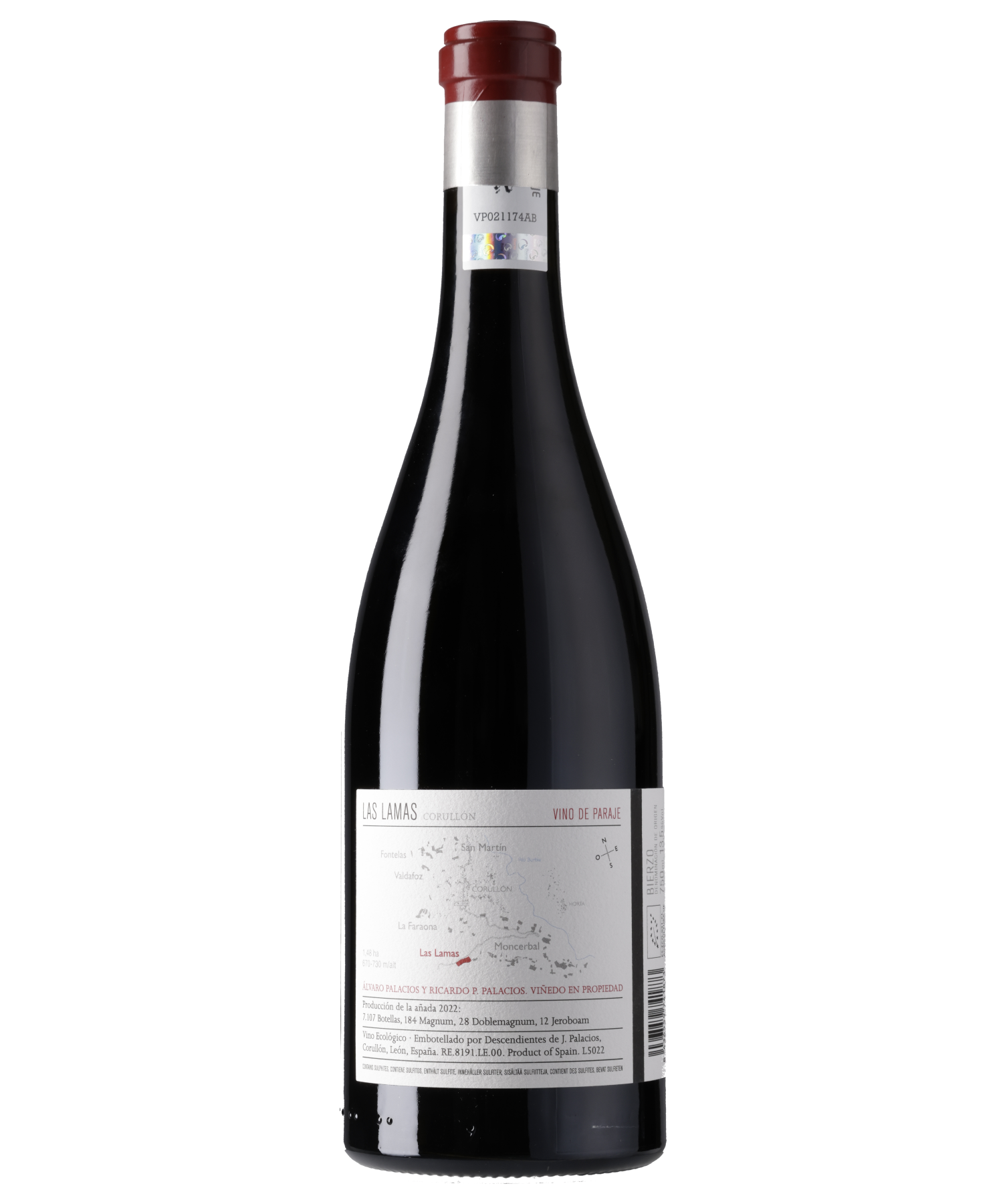
This world-class Mencía is grown at 730 metres above sea level on the ‘Gran Vinya Classificada» – Las Lamas – which, in the Burgundian sense, is equivalent to a Grand Cru. The wine captivates with its elegant, understated, almost cool character, marked by spiced, mineral aromas. Delicate notes of violets, ripe berries and cool stone. Silky, fresh and finely woven. When young, it is advisable to decant it before serving. Enjoy it with young leeks from the grill, as they do in Spain, or with a juicy Wagyu burger. The 2022 Las Lamas was awarded 97 points by Falstaff.
Tasting – The Art of Wine Selection at the Baur au Lac

Meet over 20 wine and spirits producers, benefit from attractive special offers, and attend exclusive masterclasses featuring aged wines. Limited places available.
Sunday, November 15, 2026 | 2.00 pm until 7.00 pm
Monday, November 16, 2026 | 2.00 pm until 8.00 pm
Attributes
| Grape variety: | Mencia |
| Producer: | Descendientes de J. Palacios, S.L. |
| Origin: | Spain / Castilla y León / Bierzo |
| Other vintages: | 2023 |
| Label: | Vegan |
| Ripening potential: | 3 to 20 years |
| Drinking temperature: | 14 to 18 °C |
| Food Pairing: | Spiced grillades, Bistecca fiorentina, T-Bone steak, Wild specialities |
| Vinification: | partly destemmed, fermentation with grapes' own yeast, fermentation in wooden barrel |
| Harvest: | hand-picking, strict selection |
| Maturation: | in used barriques, in large wooden barrel/foudre |
| Bottling: | no filtration |
| Maturation duration: | 11 months |
| Volume: | 13.5 % |
| Note: | Contains sulphites |
Descendientes de J. Palacios, S.L.
Welcome to Spain’s most famous unknown wine region: Bierzo! Even winemaker Ricardo Pérez Palacios, today one of the appellation’s most prominent ambassadors, did not really have the region on his radar – until he heard that Émile Peynaud, the French wine legend and father of modern oenology, once said that «Bierzo is the most French-like of all Spanish wine regions.»
An oenological Eldorado hidden in north-western Spain, destined to produce great wines. Ricardo was born in Rioja, and his uncle is Spain’s wine superstar Álvaro Palacios. Like him, he studied in Bordeaux and, like him, returned with the vision of crafting outstanding wines from unique vineyard sites.
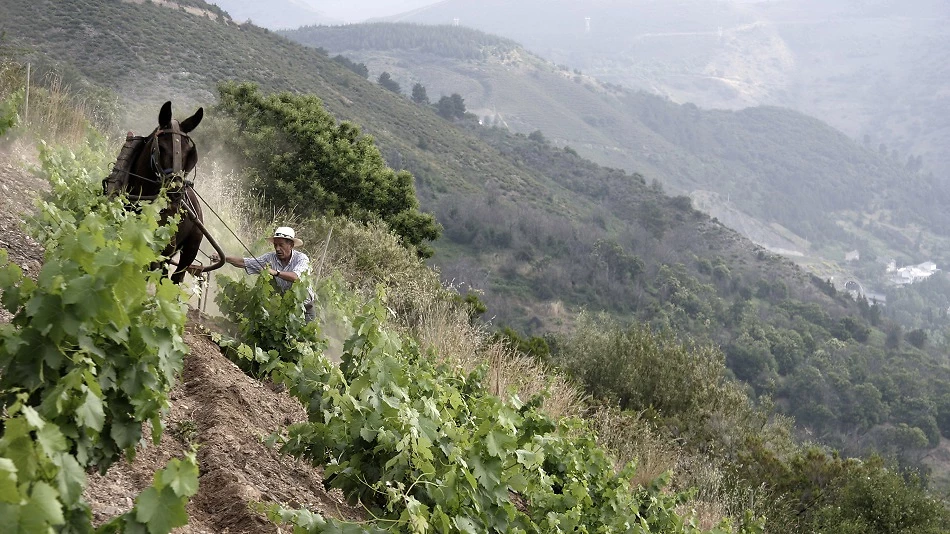
The Bierzo wine region lies in the green north of Spain, on the border between Castilla y León and Galicia. Its humid climate, with frequent fog and rainfall, provides ideal conditions for the Mencía grape variety, whose origins remain not fully understood to this day. The oldest vines and the greatest genetic diversity of this variety are found in Bierzo.
Mencia
Mysterious origin, today widespread
Mencia is a red, Spanish variety currently cultivated on an area of around 10,000 hectares. The origin of Mencia has not been definitively determined. It was long surmised that this vine was a mutation of the French Cabernet Franc, which came via the Way of St. James to Bordeaux. Nowadays, it is assumed that the Mencia cultivar is descended from an autochthonous native variety. Mencia is widespread throughout Galicia and Castile, and is confined almost exclusively to northwestern Spain.
Red wine derived from Mencia grapes is usually rather pale, intense in the nose, and smooth and fresh in the mouth.
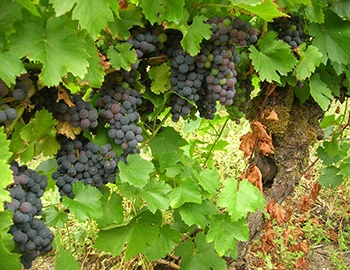
Bierzo
Bierzo: to the top with the Mencia variety
At the beginning of the 90s, the Bierzo region, which is crossed by the Camino de Santiago, was barely known in the international wine scene. It was only when new residents and investors began to bottles top crus from selected slopes, which perfectly united finesse and force, that interest in this region and its primary variety grew. This variety, Mencia, is considered one of the highest quality red wine varieties in the Iberian Peninsula.
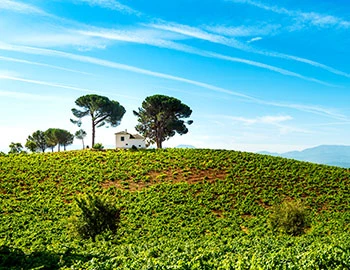
Castilla y León
Castile and León: Increasing diversity
Only 30 years ago, the autonomous region of Castile and León was an almost blank spot on the European wine list. This has changed immensely thanks to three grape varieties. The Tempranillo variety yields feisty, strong wines in Ribera del Duero and Toro. And Bierzo, the small wine area in the region's northwest, has experienced an impressive ascent, thanks to the character-laden Mencia variety. Finally, the fresh and fruity Verdelho pressings from Rueda have become the most successful Spanish white wines.
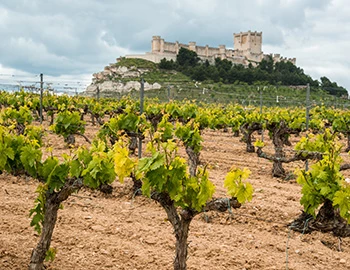
Spain
Spain – Variety and perfection
“Somewhere in la Mancha, in a place whose name I do not care to remember...,” begins Don Quixote's odyssey.
The most famous part is definitely when Don Quixote thinks windmills are his enemy and wants to fight them – until they nearly kill him. It’s possible there was a bit too much of the La Mancha wine at play. Spanish vines fight for their survival in rugged landscapes, battling fierce drought and rough soils. But they fight well.