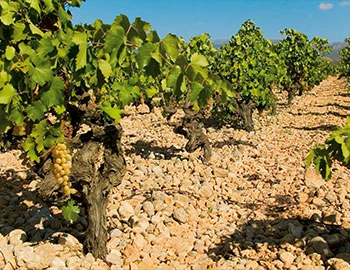

Valtuille Vino de Villa 2021
DO Bierzo, Castro Ventosa, 750 ml


Description
The nose is intense, fruity, spicy and concentrated with raspberry, blueberry and cherry. Full and harmonious on palate with smooth but pronounced tannins. Long, elegant finish.
Attributes
| Grape variety: | Mencia |
| Producer: | Castro Ventosa / Fam. Pérez Pereira |
| Origin: | Spain / Castilla y León / Bierzo |
| Label: | Vegan |
| Ripening potential: | 3 to 10 years |
| Drinking temperature: | 16 to 18 °C |
| Food Pairing: | Cold fish dish, dried meat, Meat terrine, Spicy hard cheese |
| Vinification: | soft pressing, fermentation in steel tank |
| Harvest: | hand-picking, strict selection |
| Maturation: | in used barriques |
| Maturation duration: | 14 months |
| Volume: | 13.0 % |
| Note: | Contains sulphites |
Castro Ventosa / Fam. Pérez Pereira
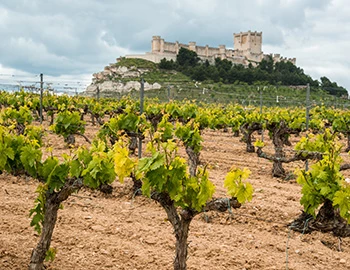
Castro Ventosa – a winery in the heart of the Bierzo wine-growing region. The Bierzo region comprises around 3,500 hectares of vineyards, 70 per cent of which are planted with vines aged between 40 and over 100 years. The native Mencía grape variety thrives in the sandy limestone soil.
In 1752, a member of the Pérez Pereira family acquired 54 hectares of land in Valtuille de Abajo. The family has been dedicated to winegrowing there for four generations and is now one of the most prominent names in the Bierzo region. The historic Castro Ventosa winery cultivates some of the area’s finest vineyards, focusing on the indigenous Mencía grape variety, which thrives in the ideal conditions found here.
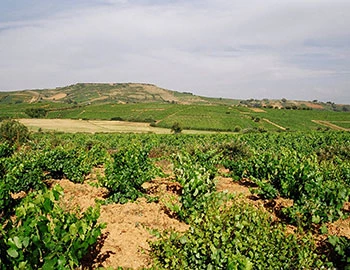
Mencia
Mysterious origin, today widespread
Mencia is a red, Spanish variety currently cultivated on an area of around 10,000 hectares. The origin of Mencia has not been definitively determined. It was long surmised that this vine was a mutation of the French Cabernet Franc, which came via the Way of St. James to Bordeaux. Nowadays, it is assumed that the Mencia cultivar is descended from an autochthonous native variety. Mencia is widespread throughout Galicia and Castile, and is confined almost exclusively to northwestern Spain.
Red wine derived from Mencia grapes is usually rather pale, intense in the nose, and smooth and fresh in the mouth.
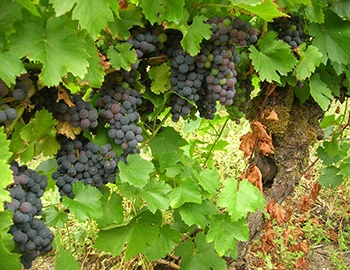
Bierzo
Bierzo: to the top with the Mencia variety
At the beginning of the 90s, the Bierzo region, which is crossed by the Camino de Santiago, was barely known in the international wine scene. It was only when new residents and investors began to bottles top crus from selected slopes, which perfectly united finesse and force, that interest in this region and its primary variety grew. This variety, Mencia, is considered one of the highest quality red wine varieties in the Iberian Peninsula.
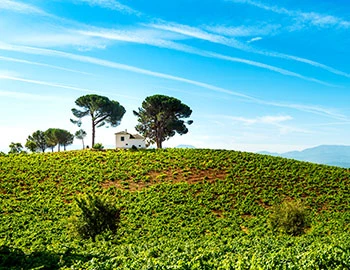
Castilla y León
Castile and León: Increasing diversity
Only 30 years ago, the autonomous region of Castile and León was an almost blank spot on the European wine list. This has changed immensely thanks to three grape varieties. The Tempranillo variety yields feisty, strong wines in Ribera del Duero and Toro. And Bierzo, the small wine area in the region's northwest, has experienced an impressive ascent, thanks to the character-laden Mencia variety. Finally, the fresh and fruity Verdelho pressings from Rueda have become the most successful Spanish white wines.
Spain
Spain – Variety and perfection
“Somewhere in la Mancha, in a place whose name I do not care to remember...,” begins Don Quixote's odyssey.
The most famous part is definitely when Don Quixote thinks windmills are his enemy and wants to fight them – until they nearly kill him. It’s possible there was a bit too much of the La Mancha wine at play. Spanish vines fight for their survival in rugged landscapes, battling fierce drought and rough soils. But they fight well.