
Figuero Tinus 2017
DO Ribera del Duero, Figuero, 750 ml


The power of old vines
- An exceptional wine made from Tempranillo vines over 70 years old. Low yields, long ageing, maximum complexity.
- On the nose, ripe red fruits. On the palate, it is full-bodied, with silky tannins and an elegant freshness.
- To accompany grilled beef, rack of lamb, game dishes, porcini risotto or grilled mushrooms.
Description
Tinus by Figuero is an exceptional wine from an old vineyard with Tempranillo vines over 70 years old, situated in high-altitude single-vineyard plots in La Horra. The selective hand-harvest, the extremely low yield and the long ageing process lend it depth, precision and enormous complexity. On the nose, it is multi-layered, revealing ripe red fruits, black cherry and plum. These are complemented by floral nuances, balsamic accents and notes of tobacco and delicate spices. On the palate, it is both powerful and refined: dense fruit, silky tannins and an elegant acidity provide a balance between freshness and depth. Culinary-wise, it shows its true class when paired with grilled beef (Chateaubriand, entrecôte), herb-crusted saddle of lamb and game dishes such as roe deer or red deer. It also pairs superbly with vegetarian dishes featuring mushrooms, such as porcini risotto or grilled mushrooms. A wine of modern elegance and great structure – powerful, complex and with impressive ageing potential. James Suckling awarded this vintage 95 points.
Tasting – The Art of Wine Selection at the Baur au Lac

Meet over 20 wine and spirits producers, benefit from attractive special offers, and attend exclusive masterclasses featuring aged wines. Limited places available.
Sunday, November 15, 2026 | 2.00 pm until 7.00 pm
Monday, November 16, 2026 | 2.00 pm until 8.00 pm
Attributes
| Grape variety: | Tempranillo |
| Producer: | Figuero |
| Origin: | Spain / Castilla y León / Ribera del Duero |
| Ripening potential: | 4 to 20 years |
| Drinking temperature: | 16 to 18 °C |
| Food Pairing: | Châteaubriand, Filet Wellington, Roast saddle of venison, Saddle of lamb fillet with herb jus, Beef Stroganoff, Wild specialities |
| Vinification: | fully destemmed, cooling period, fermentation in wooden barrel, Punching down, protein fining |
| Harvest: | hand-picking, strict selection |
| Maturation: | in tonneau |
| Bottling: | filtration |
| Maturation duration: | 22 months |
| Volume: | 15.0 % |
| Note: | Contains sulphites |
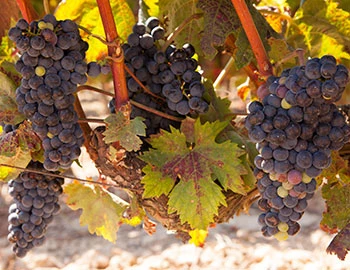
Tempranillo
Iberian Native
The Tempranillo is the emblem of Spain. With its juicy cherry fruit, crisp tannins, and its notes of leather and spices, it gives the Rioja its face. In the Ribera del Duero, it is known as Tinta del país. Here it turns out focused and muscular. As it has inhabited the Iberian Peninsula for centuries, it is known under countless synonyms. Across the border in Portugal, it is called Tinta Roriz, and lends colour and body to port wine. It also plays an important role in the booming wine scene of the Douro Valley. The Tempranillo owes its name to its early maturity – "temprano" in Spanish means "early". Tip: do it like they do in Spain and enjoy it with lamb.
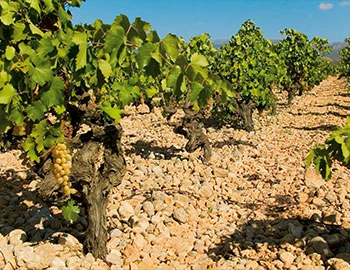
Ribera del Duero
Ribera del Duero: Spanish temperament in a glass
The Tempranillo grape yields a particularly powerful wine with ripe berry fruit and alluring spice in the Ribera del Duero region, where it is called Tinta del País. It is no wonder that the region is seen internationally as a flagship for Spanish red wines. The designation of origin was first introduced in 1982. At the time, only few wineries existed; today, there are over 270. Many premium wines come from exceptionally old vines, sometimes over 80 years old.
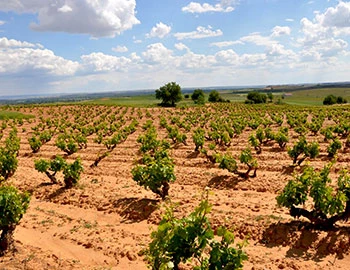
Castilla y León
Castile and León: Increasing diversity
Only 30 years ago, the autonomous region of Castile and León was an almost blank spot on the European wine list. This has changed immensely thanks to three grape varieties. The Tempranillo variety yields feisty, strong wines in Ribera del Duero and Toro. And Bierzo, the small wine area in the region's northwest, has experienced an impressive ascent, thanks to the character-laden Mencia variety. Finally, the fresh and fruity Verdelho pressings from Rueda have become the most successful Spanish white wines.
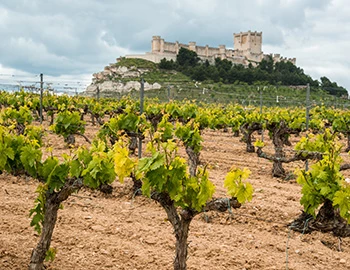
Spain
Spain – Variety and perfection
“Somewhere in la Mancha, in a place whose name I do not care to remember...,” begins Don Quixote's odyssey.
The most famous part is definitely when Don Quixote thinks windmills are his enemy and wants to fight them – until they nearly kill him. It’s possible there was a bit too much of the La Mancha wine at play. Spanish vines fight for their survival in rugged landscapes, battling fierce drought and rough soils. But they fight well.