

Camins del Priorat 2022
DOCa Priorat, Álvaro Palacios, 1500 ml


From the wild mountains
- A cosmopolitan wine with local roots and a lovely introduction to the wine world of the Priorat.
- A berry-like nose with toasted notes and hints of violets; full-bodied and vibrant on the palate, with supple tannins.
- Goes well with spicy cuisine such as Moroccan, Mexican or spicy barbecue.
Description
The perfect way to discover Priorat and the world of Álvaro Palacios: Camins del Priorat is a blend of Catalan and international grape varieties, grown on the region’s characteristic Llicorella schist. A cosmopolitan wine with local DNA. On the nose: berry jam, spicy toasted notes, and a beguiling scent of violets. On the palate: robust structure, vibrant acidity and supple tannins. This wine cries out for something spicy! Enjoy it with roast leg of lamb, Moroccan cuisine, empanadas or spicy barbecue.
Attributes
| Grape variety: | Garnacha, Carignan, Cabernet Sauvignon, Merlot, Syrah, Weisse Autochthone |
| Producer: | Alvaro Palacios, S.L. |
| Origin: | Spain / Catalunya / Priorato |
| Ripening potential: | 2 to 6 years |
| Drinking temperature: | 16 to 18 °C |
| Food Pairing: | Moroccan specialities, Latin American dishes, Roasted lamb gigot, Spiced grillades |
| Vinification: | fully destemmed, soft pressing, fermentation in steel tank, fermentation in cement tank, fermentation in wooden barrel |
| Harvest: | hand-picking, hand-picking with simultaneous grape sel |
| Maturation: | in used barriques, in large wooden barrel/foudre |
| Bottling: | filtration |
| Volume: | 14.5 % |
| Note: | Contains sulphites |
Alvaro Palacios, S.L.
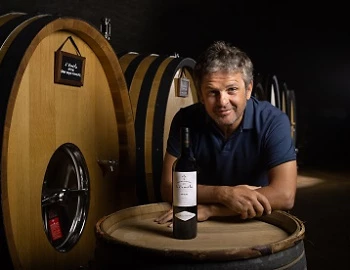
Álvaro Palacios was only 25 years old when he moved to the lonely Priorat in 1989. He left his parents’ vineyard in Rioja (J. Palacios Remondo) behind. He joined forces with a group of friends to reawaken the sleeping beauty of the Priorat, which the prior inhabitants had mostly abandoned in search of a better and easier life in the cities.
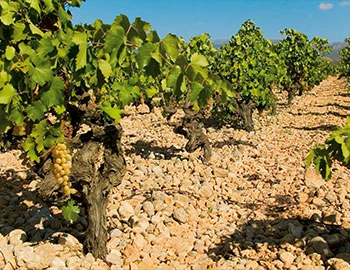
A mystical place! An hour and a half’s drive from Barcelona lies a wild landscape. A place that seems to have fallen out of time, where you almost wonder whether it’s even marked on the map. The spell begins to take hold the moment you leave the main road. Suddenly, you’re in another world. Civilisation falls silent; nature grows loud. The air shimmers with heat, the cicadas chirp almost aggressively, and the air smells of Mediterranean herbs and hot stone. Vines grow on many of the slopes, proud vines pruned in the traditional bush style. It’s hard to believe that these vines glow so green on the terraced slopes. They seek out water metres deep in the barren slate soil, known here as Llicorella.
Syrah
A hint of pepper
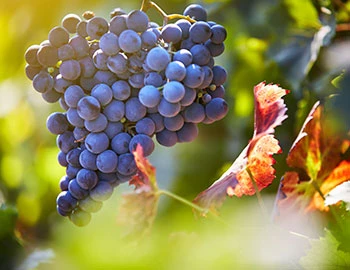
The legend stubbornly persists that the Syrah variety came from the Persian city of Shiraz. Yet, researchers have shown that it is a natural crossing of two old French varieties: the red Dureza from the Rhône Valley and the white Mondeuse blanche from Savoy. Wines from Syrah are gentle and concentrated. They smell of dark berries, violets and liquorice, and amaze with a piquant touch of white pepper. As varietal wines, they are found on the northern Rhone, as in the Hermitage or Côte Rôtie appellations, as well as in Swiss Valais. In the southern Rhône Valley, Syrah is often wedded with Grenache and Mourvèdre. In 1832, a Frenchman brought the variety to Australia, where it became the emblem of the national wine industry. There, the weightiest versions develop with typical notes of tar and chocolate.
Merlot
Everybody’s darling
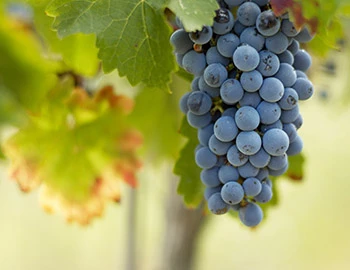
Merlot is the most charming member of the Bordeaux family. It shines with rich colour, fragrant fullness, velvety tannins and sweet, plummy fruit. It even makes itself easy for the vintner, as it matures without issue in cool years as well. This is in contrast to the stricter Cabernet Sauvignon, which it complements as a blending partner. Its good qualities have made the Merlot famous worldwide. At over 100,000 hectares, it is the most-planted grape in France. It also covers large areas in California, Italy, Australia and recently in Eastern Europe. The only catch is that pure Merlot varieties rarely turn out well. Its charm is often associated with a lack of substance. Only the best specimens improve with maturity. They then develop complex notes of leather and truffles. This succeeds in the top wines from the Bordeaux appellation of Pomerol and those from Ticino, among others.
Carignan
Fervid oddball
The red Carignan is a heat-loving Mediterranean grape. It has a bit of everything over other varieties: more colour, more tannins, more acid. It is not easy to press a harmonious wine from it alone. Hence it is most often encountered as a blend partner, as in the Côtes du Rhône wines. In Spain it is called Mazuelo and is part of the traditional Rioja recipe. It provides the wines’ acidic backbone. The most exciting varietal specimens come from the slate slopes of the Catalan Priorat (named here Cariñena), from old bush vines in Chile or from Sardinia, where it is known as Carignano. When pressed properly, this oddball generates a lush bouquet of plums and dark fruits. Its origins lie in the northwest Spanish Aragon, near the town of Cariñena. The surrounding wine area is also named after it. In order to prevent confusion with the vine, it is called Samsó there.
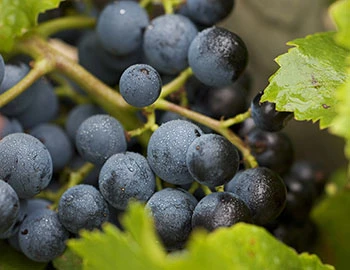
Cabernet Sauvignon
The backbone of Bordeaux
The Cabernet Sauvignon gives the Bordeaux its backbone, yielding deep violet wines with powerful tannins and endless ripening potential. It is the top dog in Médoc, and is placed in all five premier crus of Bordelais. When young, it often appears strict and unapproachable, but with advancing years, its tannins round off. It is wonderfully velvety, and yet always maintains its freshness. Typical flavours include cassis, graphite and cedar. Wherever Cabernet Sauvignon is found, Merlot is not far away. It complements the robust structure of Cabernet with softness, fruit and richness. The Cabernet Sauvignon is the most-exported vine in the world. It delivers persuasive qualities in Italy as an ingredient of the Super Tuscan, or as the flagship variety from California. There, it is lovingly titled “Cab Sauv”. Meat fans should be aware that it fantastically accompanies a grilled entrecôte. The family tree of Cabernet Sauvignon is surprising: its parents are Cabernet Franc and the white Sauvignon blanc.
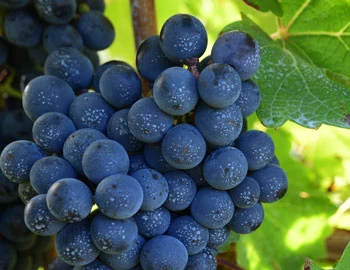
Garnacha
Grenache seldom comes alone
Spaniards and Sardinians make the Grenache contentious: both claim it originated from their country. In fact, it had already appeared in both places by the 16th century. But a large number of mutations in Spain indicates that it has deeper roots on the Iberian Peninsula. The Grenache is meaty, rich in tannins and spicy, with a wonderful, fruity sweetness and rich aromas of blackberry, cassis, plums and pepper. Under the name Garnacha, it contributes fullness to the Rioja. In Sardinia it is called Cannonau, where it yields strong, expressive wines. But its stronghold is in France. Grenache is the star in Châteauneuf-du-Pape and streams into many other assemblages from the south. Its preferred partners are Syrah and Mourvèdre. This blend is also very popular abroad. In Australia, these wines are simply called "GSM".

Priorato
Priorat: Vergessen, wiederentdeckt, gefeiert…
Noch anfangs der 80er Jahre war das Priorat eine durch die Abwanderung geschwächte Problemregion. Dann entdeckten vier junge Winzer den verlassenen Talkessel, der nur eine Autostunde von der katalonischen Mittelmeerküste entfernt liegt, und begannen mit der Restauration der alten Rebanlagen. Heute sind die Priorat-Weine, die meistens von den alteingesessenen Sorten Garnacha und Cariñena geprägt werden, weltweit gefragt. Dank der spektakulären Renaissance der Priorat-Weine erlebt die ganze Region einen Aufschwung.
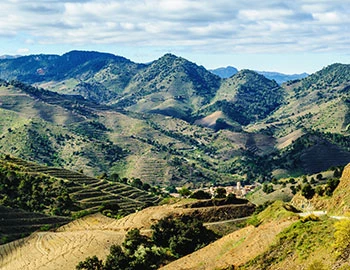
Catalunya
Catalonia: the great range
Spain’s second largest wine region has an impressive variety to offer. As a result, there are eleven different designations of origin in Catalonia. As the home of cava, Catalonia is one of the leading producers of sparkling wines produced according to classical methods. There is a wide selection of both elegant white wines and well-structured reds. Areas such as Priorat or Montsant have experienced an enormous upswing in recent years. The traditional sweet wine Moscatel de Sitges is also produced here.
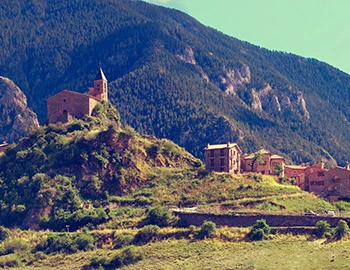
Spain
Spain – Variety and perfection
“Somewhere in la Mancha, in a place whose name I do not care to remember...,” begins Don Quixote's odyssey.
The most famous part is definitely when Don Quixote thinks windmills are his enemy and wants to fight them – until they nearly kill him. It’s possible there was a bit too much of the La Mancha wine at play. Spanish vines fight for their survival in rugged landscapes, battling fierce drought and rough soils. But they fight well.