
Corullón 2021
Bierzo, Descendientes de J. Palacios, 750 ml


Silk and fruit
- A village wine in the Burgundian style – Mencía from 200 plots, with a small proportion of local white varieties.
- Dark berries, fresh herbs, silky-smooth tannins – ultra soft and elegant on the palate.
- Perfect with tapas, beef, or Cordon bleu – after half a day in the decanter, it shows its best side.
Description
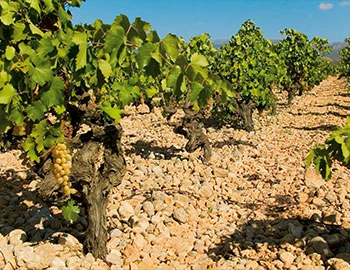
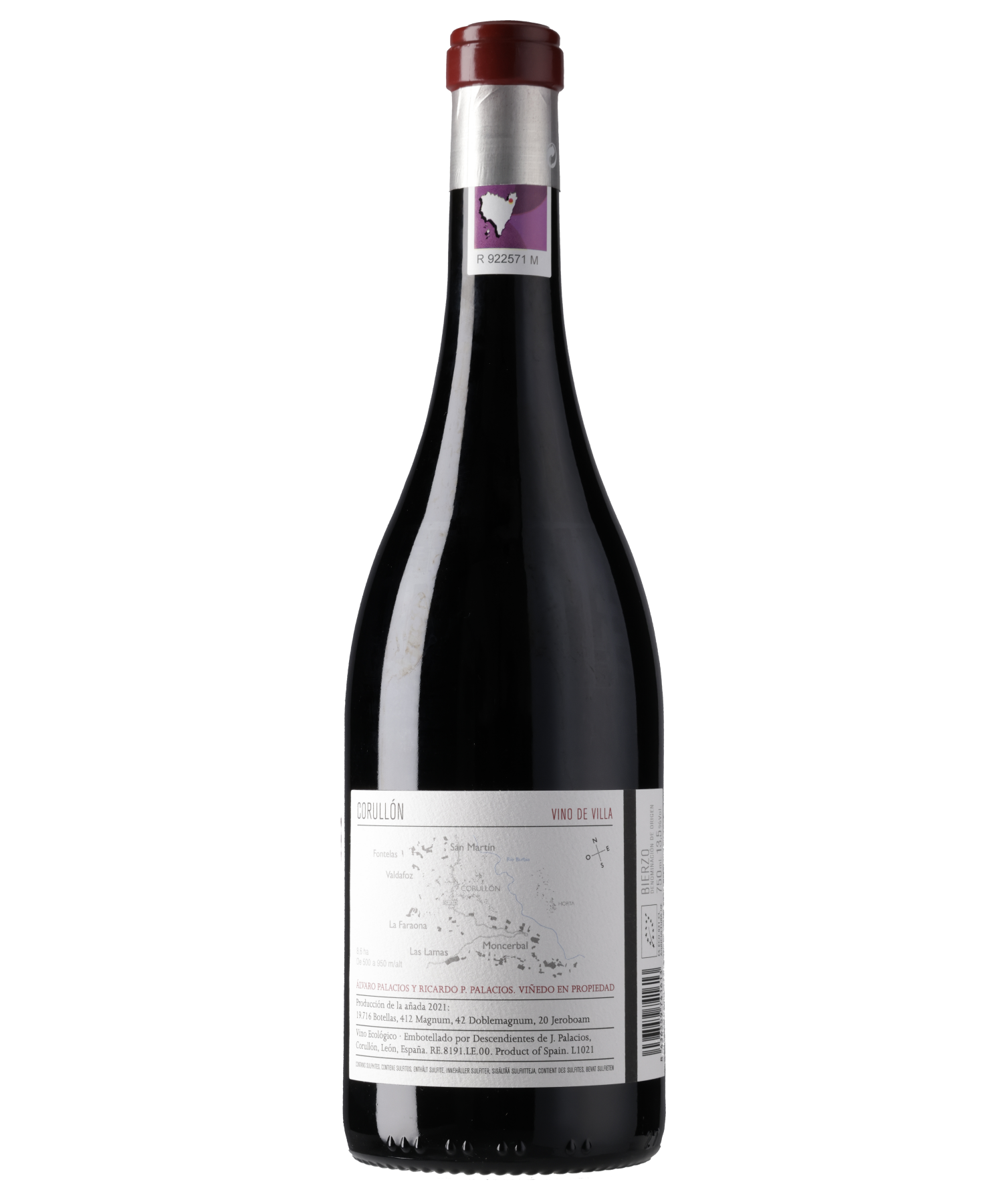
A village wine modelled on Burgundy: this cuvée is sourced from around 200 plots with vines up to 120 years old. The blend is dominated by Mencía, complemented by a small proportion of local white grapes for extra freshness. Dark berries, fresh herbs, subtle spice, silky tannins. Beautiful cherry and rosehip fruit. Ultra-smooth and elegant on the palate. Whether with beef or pork, tapas or a cordon bleu – this wine goes with everything. After half a day in a decanter, it shows itself at its best.
Attributes
| Grape variety: | Mencia |
| Producer: | Descendientes de J. Palacios, S.L. |
| Origin: | Spain / Galicia / Bierzo |
| Label: | Vegan |
| Ripening potential: | 3 to 10 years |
| Drinking temperature: | 16 to 18 °C |
| Food Pairing: | Châteaubriand, Filet Wellington, Roasted lamb gigot, Wild specialities, Beef Stroganoff |
| Vinification: | partly destemmed, fermentation with grapes' own yeast, fermentation in wooden barrel |
| Harvest: | hand-picking, strict selection |
| Maturation: | in used barriques, in large wooden barrel/foudre |
| Bottling: | no filtration |
| Maturation duration: | 10 months |
| Volume: | 13.5 % |
| Note: | Contains sulphites |
Descendientes de J. Palacios, S.L.
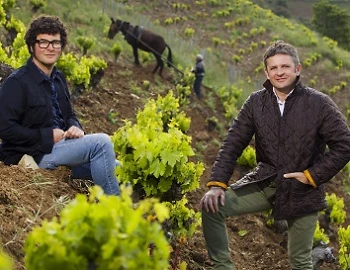
In the late 1990s, Álvaro Palacios came to Bierzo in search of a new challenge after having achieved great success in the Priorat. Bierzo, in the far northwest of Castilla y León, awaited him with its wild, craggy landscape where heather, rock roses and holly oaks dominate the flora, with its climatic and geological characteristics, and with the fascinating grape variety Mencía.
His first experience with this native grape variety was with the Pérez Perreira family at their Castro Ventosa winery in the village of Valtuille de Abajo. In 1999, he teamed up with his nephew Ricardo Pérez Palacios, known as Titín, to found the Bodega Descendientes de J. Palacios in the municipality of Corullón.
Mencia
Mysterious origin, today widespread
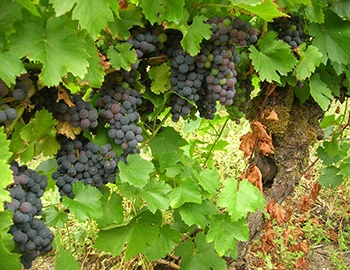
Mencia is a red, Spanish variety currently cultivated on an area of around 10,000 hectares. The origin of Mencia has not been definitively determined. It was long surmised that this vine was a mutation of the French Cabernet Franc, which came via the Way of St. James to Bordeaux. Nowadays, it is assumed that the Mencia cultivar is descended from an autochthonous native variety. Mencia is widespread throughout Galicia and Castile, and is confined almost exclusively to northwestern Spain.
Red wine derived from Mencia grapes is usually rather pale, intense in the nose, and smooth and fresh in the mouth.
Bierzo
Bierzo: to the top with the Mencia variety
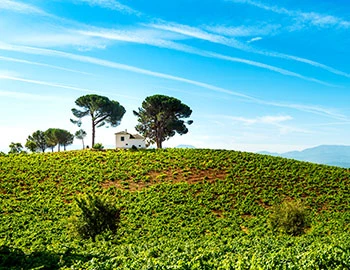
At the beginning of the 90s, the Bierzo region, which is crossed by the Camino de Santiago, was barely known in the international wine scene. It was only when new residents and investors began to bottles top crus from selected slopes, which perfectly united finesse and force, that interest in this region and its primary variety grew. This variety, Mencia, is considered one of the highest quality red wine varieties in the Iberian Peninsula.
Galicia
Galicia: shaped by the cool Atlantic
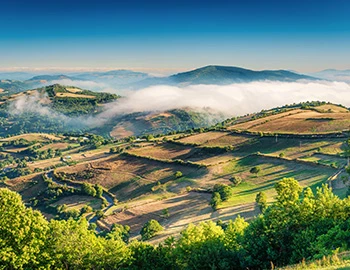
Situated in the far northwest of the Iberian Peninsula, Galicia is like a tip which pushes west toward the Atlantic Ocean, north of Portugal. In keeping with this exposed location, wines made here, with their fresh, straightforward character, depart strikingly from the general style of Spanish wines. With four cultivation areas with DO status, Galicia is drawing noticeably more international interest. White wines from autochthonous varieties are mostly produced here.
Spain
Spain – Variety and perfection
“Somewhere in la Mancha, in a place whose name I do not care to remember...,” begins Don Quixote's odyssey.
The most famous part is definitely when Don Quixote thinks windmills are his enemy and wants to fight them – until they nearly kill him. It’s possible there was a bit too much of the La Mancha wine at play. Spanish vines fight for their survival in rugged landscapes, battling fierce drought and rough soils. But they fight well.