
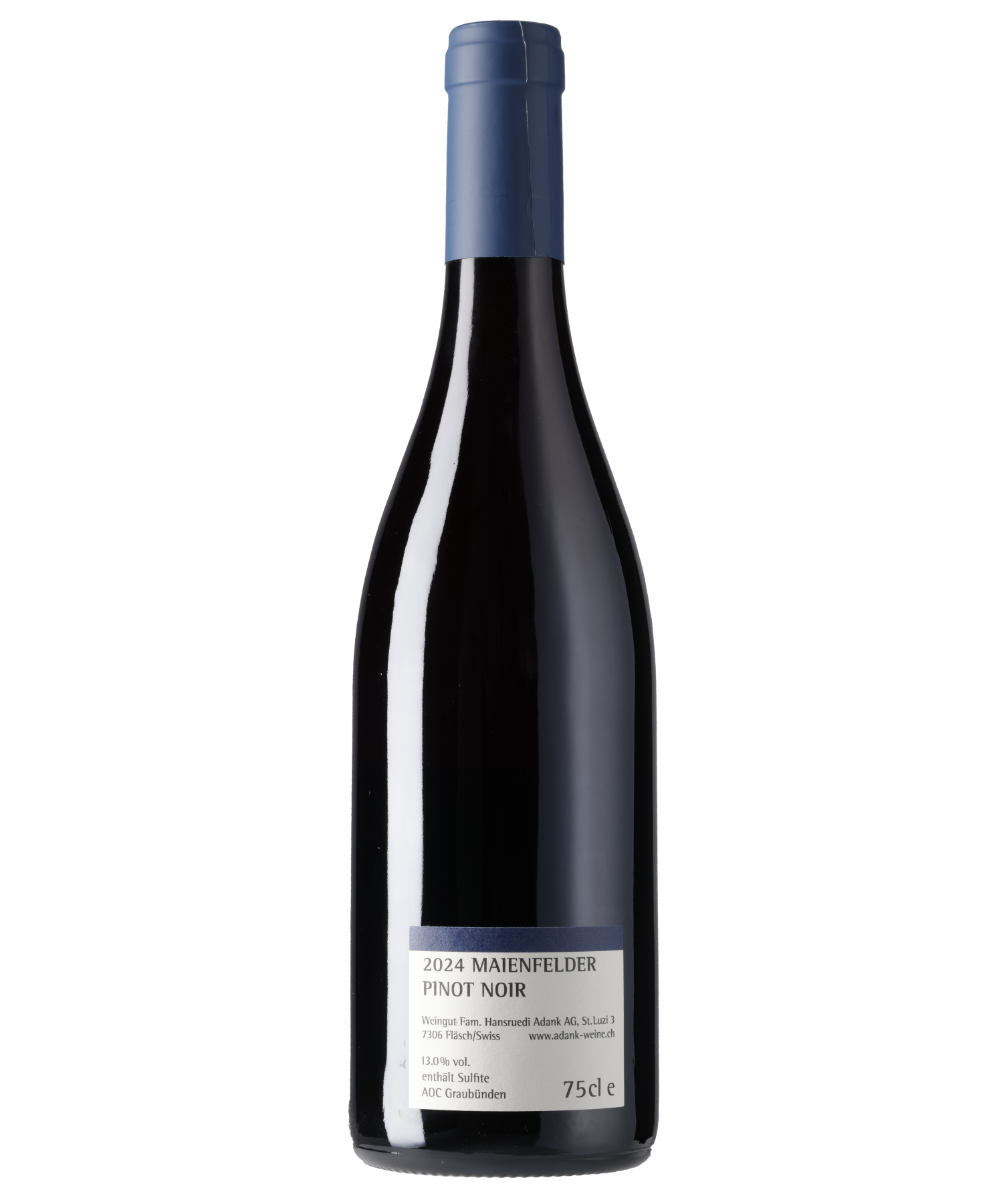
Maienfelder Pinot Noir 2024
AOC Graubünden, Weingut Familie Hansruedi Adank, 750 ml


Lightness from Graubünden in a glass
- A Pinot Noir from Maienfeld, vinified in Fläsch – the Adank family really know their craft.
- Lightness and elegance meet juicy wild berries and delicate spice.
- It whets your appetite for Graubünden specialities such as Salsiz, Graubünden mountain cheese or Capuns.
Description
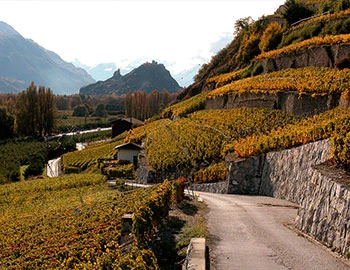
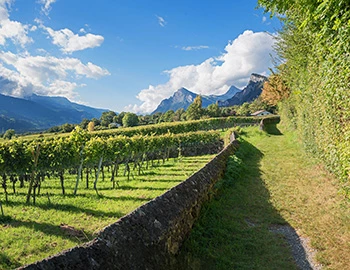
The Adank family has had deep roots in Fläsch for generations and is one of the leading Pinot Noir producers in the Bündner Herrschaft region. For the first time, the grapes for this wine also come from a small plot in Maienfeld, the region’s largest wine-growing municipality. The mild climate, the limestone-rich soils and the warm Föhn wind provide ideal conditions for Pinot Noir and lend the wine a particularly elegant, delicately spicy character. On the nose, the wine is delicate, with a hint of pepper and subtle aromas of red berries. On the palate, it delights with a delicate structure, juicy fruit and notes of wild strawberries and cherries. Lightness and elegance characterise its almost ethereal nature. A Pinot Noir that instantly transports you in your mind to the sun-drenched Bündner Herrschaft and whets your appetite for regional specialities. Best enjoyed slightly chilled.
Tasting – The Art of Wine Selection at the Baur au Lac

Meet over 20 wine and spirits producers, benefit from attractive special offers, and attend exclusive masterclasses featuring aged wines. Limited places available.
Sunday, November 15, 2026 | 2.00 pm until 7.00 pm
Monday, November 16, 2026 | 2.00 pm until 8.00 pm
Attributes
| Grape variety: | Pinot Noir |
| Producer: | Weingut Familie Hansruedi Adank |
| Origin: | Switzerland / Ostschweiz / Graubünden |
| Label: | Vegan |
| Ripening potential: | 1 to 5 years |
| Drinking temperature: | 14 to 16 °C |
| Food Pairing: | Apéro pastries, Vegetable pie, Cold fish dish, dried meat, Cheese board |
| Volume: | 13.0 % |
| Note: | Contains sulphites |
Graubünden
Graubünden: Mecca for Burgundy varieties
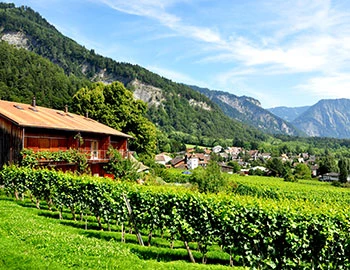
Nowhere in Switzerland has a better ratio of first-class Pinot noir crops to cultivation area than Graubünden. The ageing philosophy of vintners here leaves its imprint even more than the subtle differences in terroir from one vineyard village to the next. In recent years, three Pinot types have established themselves here: the light and sweet Herrschäftler for everyday drinking, the selections aged in large wooden barrels or used barriques, and of course the premium selections of individual estates matured in barriques.
Ostschweiz
Eastern Switzerland: an intriguing puzzle
Eastern Switzerland has long been positioned on the northern rim of the climate zone where the cultivation of popular Swiss varieties is possible. Due to a warming climate, the vineyards of Aargau, Zurich, Schaffhausen, Thurgau and Graubünden are now in the zone where varieties such as Müller-Thurgau or Pinot Noir succeed excellently. But even long-established, almost-forgotten varieties such as Elbling, Räuschling and Completer are experiencing a renaissance.
Switzerland
Switzerland – A small country with enormous diversity
Switzerland is famous for its banks, watches, and cheese, but not necessarily for its wine. The Swiss didn't invent wine, but they have been extremely open and curious to it. Wine culture arrived in what is now modern Switzerland via several routes: from Marseilles to Lake Geneva and the Lower Valais region; from the Aosta Valley through the Great St. Bernard Pass to the rest of Valais; from the Rhone through Burgundy, across the Jura Mountains to Lake Constance; and from Lombardy to Ticino, and then on to Grisons.