
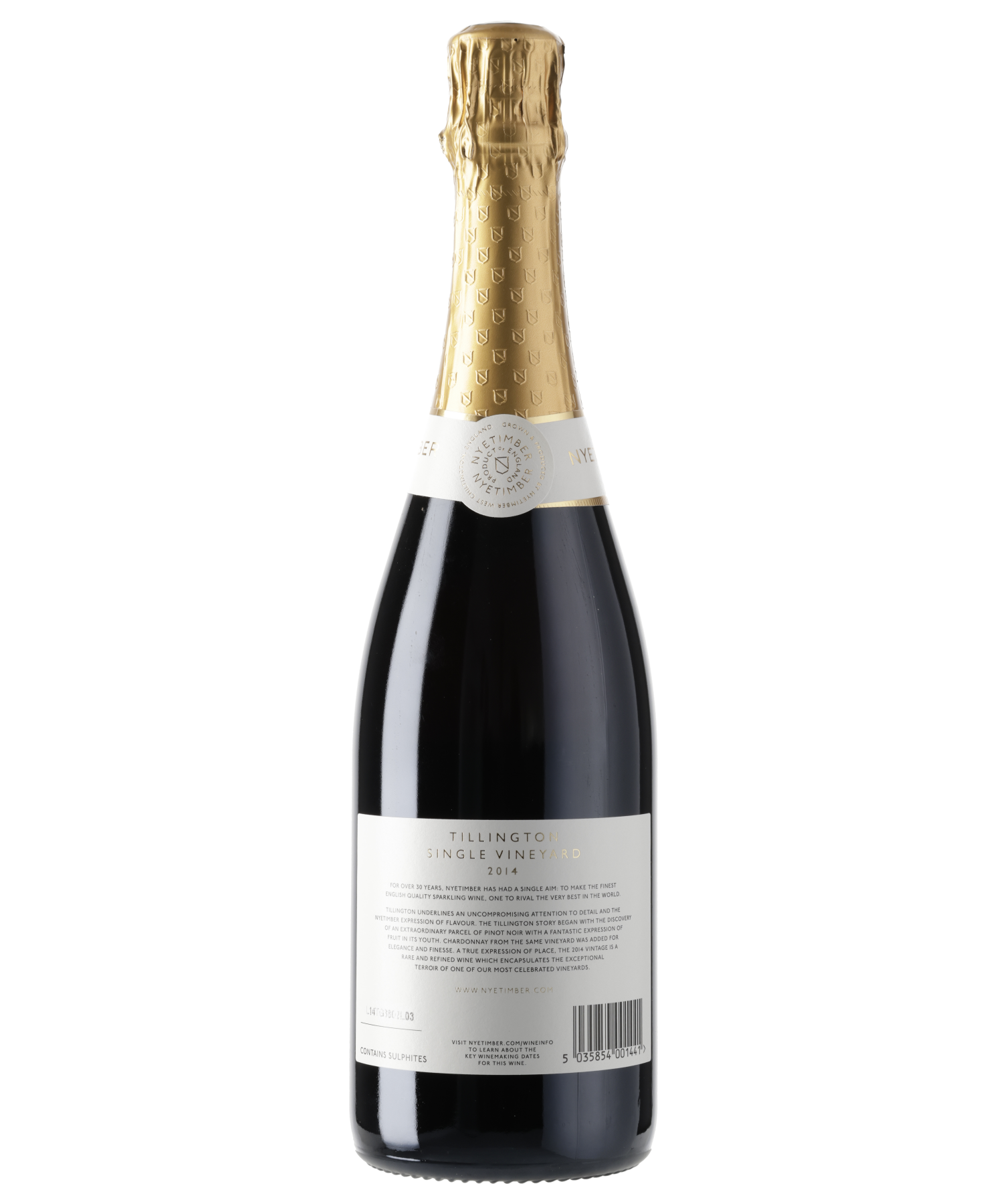
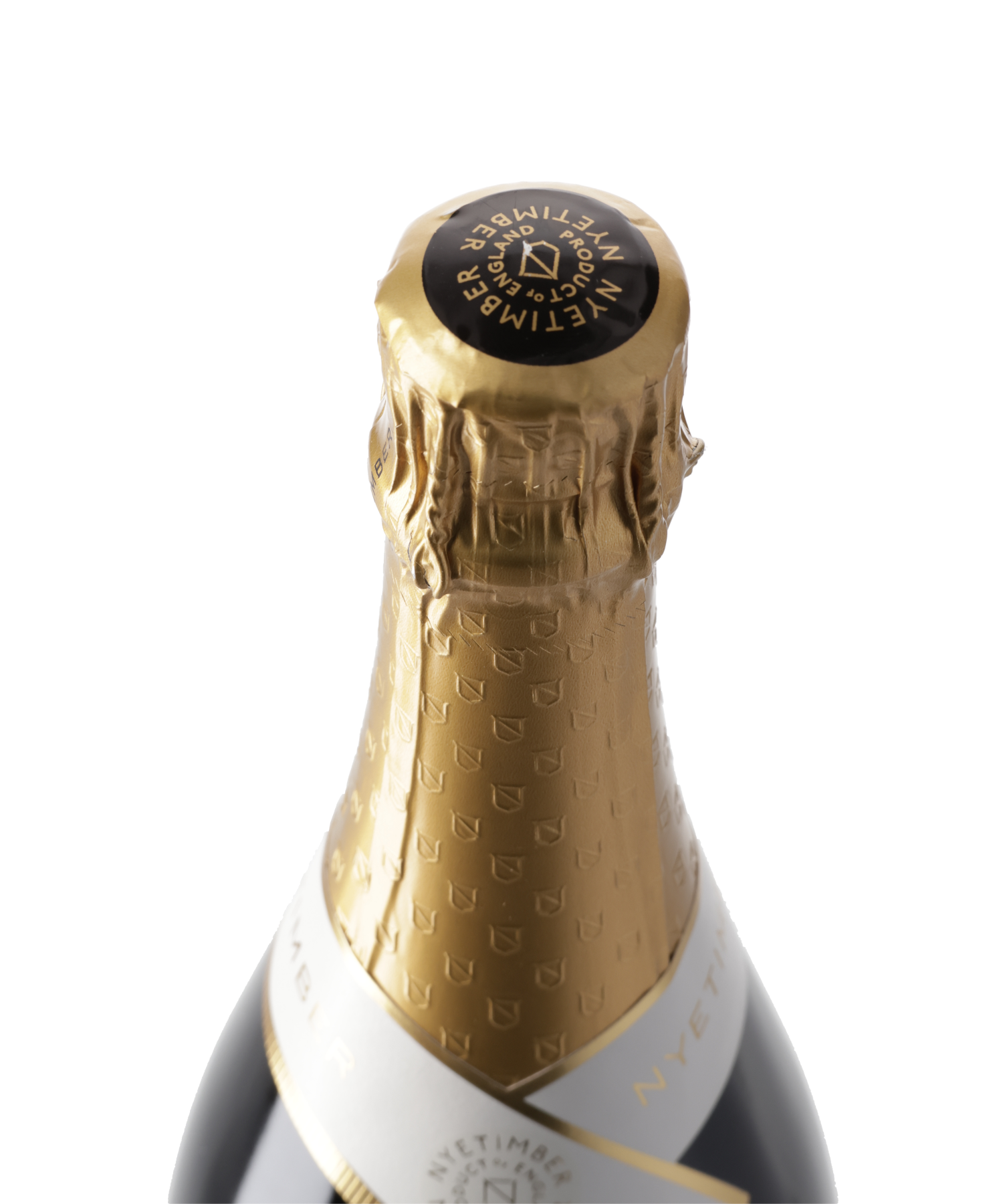
Nyetimber Brut Tillington Single Vineyard 2014
Sussex, English Sparkling Wine, 750 ml


As unique as its location
- From the renowned single vineyard Tillington – produced only in selected vintages.
- A complex interplay of flavours, a delicate effervescence, remarkable depth and elegance.
- Perfect with lobsters, fish and poultry in a cream sauce or a creamy risotto.
Description
The Nyetimber Brut Tillington Single Vineyard comes from the renowned Tillington single vineyard in West Sussex and is produced only in selected vintages. As the expression of a single vineyard, it combines provenance, character and craftsmanship of the highest calibre. On the nose, it reveals aromas of crème brûlée and meringue. The high proportion of Pinot Noir lends the wine additional depth and expressiveness. Notes of mandarin, delicate pastries and vanilla complement the multi-layered bouquet. On the palate, it is both full of character and elegant, with fine bubbles, remarkable depth and a long finish. An exceptional English sparkling wine for special occasions, it pairs superbly with grilled sea fish, lobsters, poultry with a cream sauce, and a creamy lemon or truffle risotto. Particularly exciting is the pairing with a mushroom or fillet Wellington.
Tasting – The Art of Wine Selection at the Baur au Lac

Meet over 20 wine and spirits producers, benefit from attractive special offers, and attend exclusive masterclasses featuring aged wines. Limited places available.
Sunday, November 15, 2026 | 2.00 pm until 7.00 pm
Monday, November 16, 2026 | 2.00 pm until 8.00 pm
Celebrate the Art of Sabring!

With its elegant design, this champagne sabre is not only an impressive eye-catcher at any celebration and an indispensable tool for stylish sabering, but also the perfect gift for all passionate sparkling wine lovers.
Attributes
| Grape variety: | Pinot Noir, Chardonnay |
| Producer: | Nyetimber |
| Origin: | United Kingdom / West Sussex |
| Other vintages: | 2013 |
| Label: | Vegan |
| Ripening potential: | 5 to 20 years |
| Drinking temperature: | 10 to 12 °C |
| Food Pairing: | Smoked fish, Grilled fish, Succulent chicken breast with cream sauc, Giant crevettes, grilled langoustines |
| Vinification: | fermentation in steel tank, bottle fermentation |
| Harvest: | hand-picking |
| Maturation: | long cultivation, on the yeast |
| Maturation duration: | 60 months |
| Volume: | 12.0 % |
| Note: | Contains sulphites |
Nyetimber
For the last quarter-century, England has played a very special role in the world of wines – an exotic in moist and chilly northern Europe.
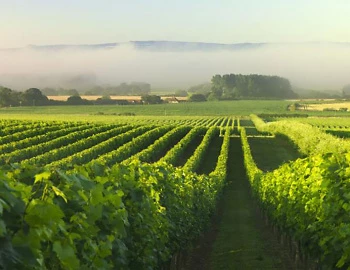
When you think of England you might think of umbrellas, charm, and bowler hats. Specifically umbrellas, since British weather is famously rainy. Few people know that winegrowing in England is historically documented back to the 7th century. Thanks to the Gulf Stream, the climate is mild enough for certain types of grapes to grow and fully ripen. The change in climate during recent decades has brought some advantages to English winemakers, improving growth conditions and encouraging many to try their luck at winegrowing.
Chardonnay
King or beggar?
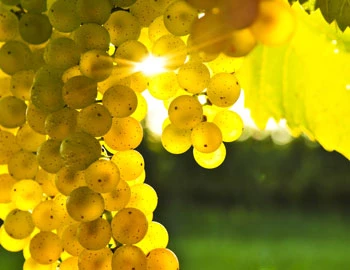
Hardly any variety of vine shows such a broad spectrum of quality as the Chardonnay. Its wines range from faceless neutrality to breath-taking class. It is an extremely low-maintenance vine, which explains why it is grown around the world – even in places where it probably should not be. The aromas of the Chardonnay variety are not very pronounced: a bit of green apple, a little hazelnut; in warmer latitudes, also melon and exotic fruits. The wines are often defined by maturing in casks. They develop more or less subtle notes of butter, toasted bread and vanilla. The grapes achieve their highest expression in their region of origin, Burgundy. Its heart beats in the Côte de Beaune: one might think of the plant growth of Meursault or Puligny-Montrachet. With their finesse and complexity, they can survive for decades. Chardonnay also achieves first class in some Blanc-de-Blancs champagnes. It additionally yields great wines in the Burgundian Chablis, and increasingly in Australia and Chile. A simple rule of thumb for pairing with food: When butter and cream are involved, you cannot go wrong with Chardonnay.