
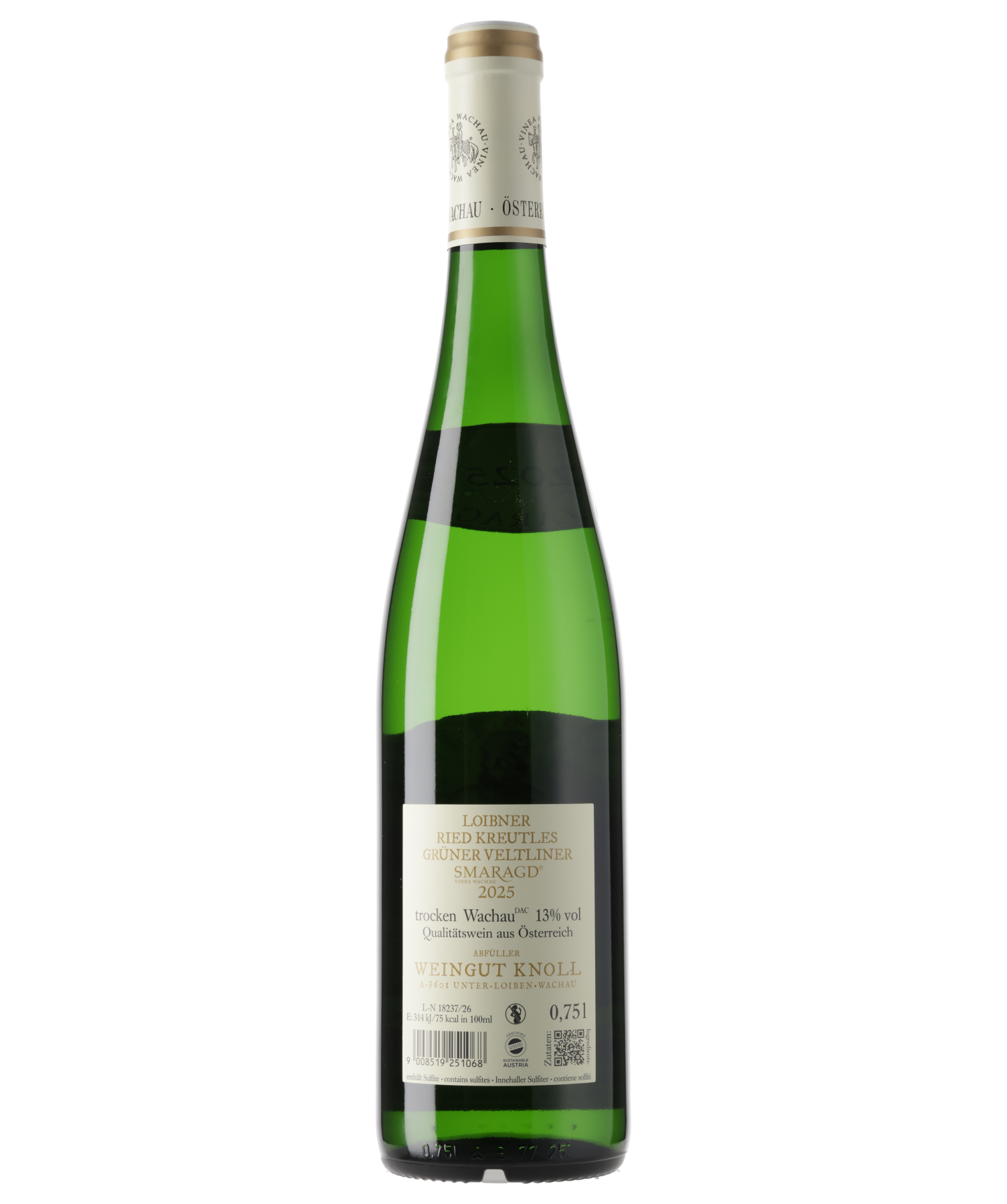
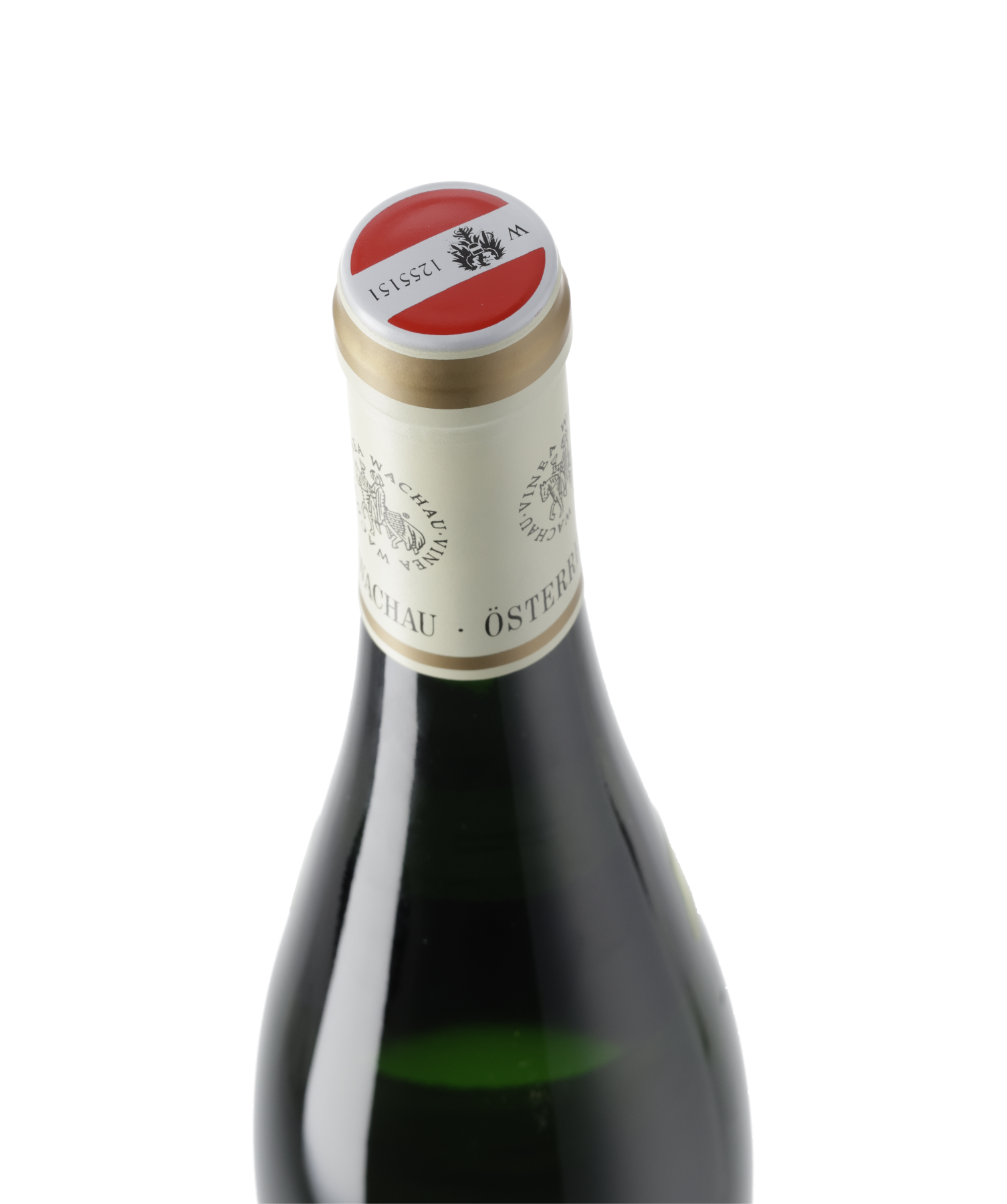
Grüner Veltliner Ried Kreutles Smaragd 2025
DAC Wachau, Emmerich Knoll, 750 ml


Kreutles at his best
- Ried Kreutles – Grüner Veltliner ‘à la Knoll’, with herbal notes and depth.
- Ripe yellow fruit, herbal notes and subtle hints of pepper. Full-bodied, juicy and mineral.
- Perfect with roast veal, fried chicken, pan-fried pike-perch or Asian dishes with a subtle heat.
Description
La mention « Smaragd » désigne le plus haut niveau de qualité dans la Wachau, ce que ce Grüner Veltliner démontre de manière impressionnante. Le Ried Kreutles est le plus à l'est des deux vignobles situés au pied du Loibenberg ; il produit des vins aux notes herbacées et d'une merveilleuse concentration. Le bouquet est finement épicé et rappelle les fruits à pépins jaunes ainsi que la note poivrée typique. L'attaque en bouche est juteuse, puis s'accompagne d'une minéralité discrète qui débouche sur une finale rafraîchissante. Ce vin s'accorde non seulement à merveille avec les plats accompagnés de sauces onctueuses, mais il harmonise également parfaitement avec les viandes ou les légumes en panure croustillante, les asperges à la sauce hollandaise ou encore le poisson grillé aux fines herbes.
Attributes
| Grape variety: | Grüner Veltliner |
| Producer: | Emmerich Knoll |
| Origin: | Austria / Niederösterreich / Wachau |
| Other vintages: | 2024 |
| Ripening potential: | 2 to 12 years |
| Drinking temperature: | 10 to 12 °C |
| Maturation: | partly in steel tank, partly in wooden barrel/foudre |
| Maturation duration: | 12 months |
| Volume: | 13.0 % |
| Note: | Contains sulphites |
Grüner Veltliner
From Austria to the world
With the Grüner Veltliner, the Austrians have conquered the world. In New York bars today, people order "a glass of Gruner" as nonchalantly as if they have never drunk anything else. Despite its name, it has nothing to do with the northern Italian region of Valtellina (Veltlin in German). It is a natural cross between Traminer and a grape Methuselah with a unique DNA profile, found in Sankt Georgen in the Leitha Mountains. As far as is known, this is the only stock of its kind. Grüner Veltliner demonstrates exceptional versatility. It yields fresh, lively whites with the typical “pfefferl” – a spicy, piquant note – as well as dense, mineral top wines. Sparkling and sweet wines are also pressed from them. In total, it occupies almost two-thirds of Austrian vineyards. It achieves its best along the Danube, around the Kamp Valley, in Kremstal or in the Wachau.

Wachau
Wachau: white crus of world renown
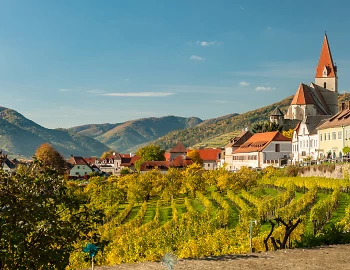
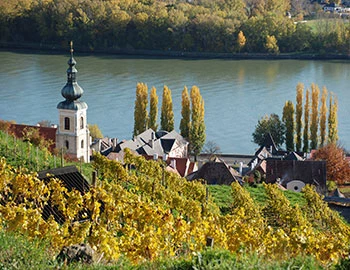
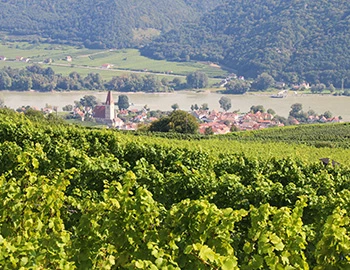
The Wachau is literally a spectacle for all the senses. The river landscape is extraordinarily beautiful, and its terraced vineyards were added to the inventory of UNESCO World Heritage Sites in 2000. The wines, too, are spectacularly good. Grüner Veltliner and Riesling are in friendly competition for being the most high-quality white wines in Austria. In their own way, each variety yields unique crus that combine power and finesse in playful lightness.
Niederösterreich
Lower Austria: crus near and far from the Danube
Austria's largest state is also its largest wine region. 46,000 hectares are planted with vines in Lower Austria. It is a heterogenic wine region, consisting of eight wine growing areas. While white varieties like Grüner Veltliner and Riesling dominate in the areas north and west of Vienna, red varieties set the tone in the south and in the southeast (Thermenregion and Carnuntum). The internationally famous white crus from Grüner Veltliner and Riesling develop in the picturesque Wachau and Kamptal.
Austria
Austria – Sumptuous culture, accessible to all
Austria is characterized by unbelievable topographical diversity. A flat steppe in the east, forests and hills in the Alpine regions, wetlands and Mediterranean landscapes in the south. This in addition to a rich tradition and even greater love. It’s no surprise that the Romans found joy on this patch of Earth and cultivated wine growing. Austrian wine is not abundant, but it is high quality.