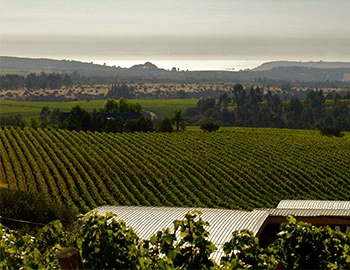

Sauvignon Blanc CIVIS 2022
Casablanca Valley, Terra Noble, 750 ml


Description
This Sauvignon Blanc balances fruitiness and spiciness on the nose and palate, with the latter characterised by tart herbal spices such as nettle, basil and thyme. The fruit is rather exotic with passion fruit, lychee and guava. A lively Sauvignon Blanc!
Attributes
| Grape variety: | Sauvignon Blanc |
| Producer: | Viñedos Terranoble |
| Origin: | Chile / Aconcagua / Casablanca |
| Other vintages: | 2023 |
| Label: | Vegan |
| Ripening potential: | 1 to 3 years |
| Drinking temperature: | 10 to 12 °C |
| Food Pairing: | Mild Asian dishes, Hot Asian dishes, Giant crevettes, grilled langoustines, Grilled fish, Hot vegetable curries |
| Vinification: | fermentation in steel tank, fermentation at low temperatures |
| Maturation: | in steel tank, on the yeast |
| Maturation duration: | 2 months |
| Volume: | 12.5 % |
| Note: | Contains sulphites |
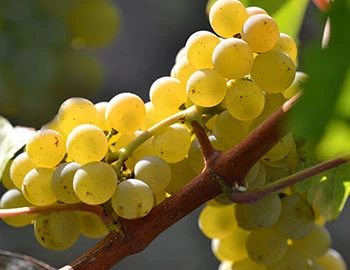
Sauvignon Blanc
The Sauvignon blanc can be recognized with your eyes closed. Its typical bouquet is marked by green notes: freshly cut grass, tomato bunches, gooseberry. Citrus fruits, cassis and flint join into the mix. In warmer latitudes it also shows exotic aromas, such as passion fruit. Its acidity is decidedly lively. In all likelihood, it comes from the Loire Valley, where it is vinified in Pouilly-Fumé and Sancerre in its purest form: varietally, and without timber. In the 18th century, it found its way to Bordeaux. Ambitious producers assemble it there with Sémillon into substantial whites, which are aged in oak barrels. The Sauvignon blanc has been a sensational success in the past 20 years in New Zealand. With its refreshing sweet-and-sour style, winemakers from down under have conquered the world. The rich Sauvignons from Styria and crisp examples of South Tyrol and Friuli are worth mentioning as well. It pairs with anything from the sea. Or do it like they do on the Loire, and enjoy it with goat cheese.
Aconcagua
Aconcagua Valley: an alpine, Bordeaux feeling
The valley gets its name from the highest mountain in the western hemisphere, the 6,962-metre-high Aconcagua. The shimmering white peak, which is actually on Argentinian soil, can be easily seen from the vineyards. In a moderate Mediterranean climate with cool breezes, Bordeaux varieties in particular yield fully concentrated yet always well-structured crus. The vineyards, variously aligned along the valley flanks, bring subtle terroir differences into the glass.
Chile
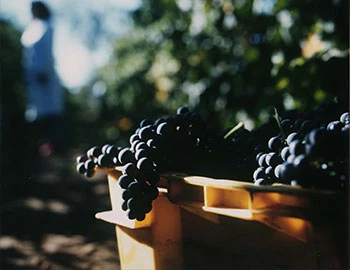
Chile – Where fortune came from tragedy
Wine-growing in Chile was born less out of economic reasons than lifestyle. Like the rest of the world, its aristocratic landowners admired everything that came out of France. They imitated French culture, built their haciendas in French architectural styles, and took trips to France. In 1851, the first French vines were brought back and formed the basis for producing quality wines.