
Pavillon blanc du Château Margaux 2019
AC Margaux, 750 ml

Description
2001 is, with 2004 and probably 2005, one of the greatest Pavillon Blanc vintages. Never before has our white wine achieved such a level of concentration, complexity, and depth. On palate the richness, length, smoothness, and finally the freshness, make you forget that the alcohol level reached a record 14.8% in 2011.
Tasting – The Art of Wine Selection at the Baur au Lac

Meet over 20 wine and spirits producers, benefit from attractive special offers, and attend exclusive masterclasses featuring aged wines. Limited places available.
Sunday, November 15, 2026 | 2.00 pm until 7.00 pm
Monday, November 16, 2026 | 2.00 pm until 8.00 pm
Attributes
| Grape variety: | Sauvignon Blanc |
| Producer: | Château Margaux |
| Origin: | France / Bordeaux |
| Other vintages: | 2023 |
| Ripening potential: | 4 to 10 years |
| Drinking temperature: | 10 to 12 °C |
| Volume: | 13.0 % |
| Note: | Contains sulphites |
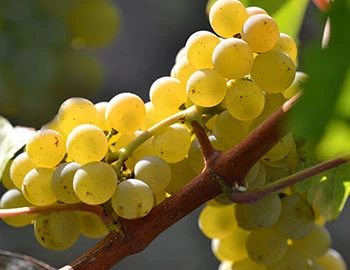
Sauvignon Blanc
The Sauvignon blanc can be recognized with your eyes closed. Its typical bouquet is marked by green notes: freshly cut grass, tomato bunches, gooseberry. Citrus fruits, cassis and flint join into the mix. In warmer latitudes it also shows exotic aromas, such as passion fruit. Its acidity is decidedly lively. In all likelihood, it comes from the Loire Valley, where it is vinified in Pouilly-Fumé and Sancerre in its purest form: varietally, and without timber. In the 18th century, it found its way to Bordeaux. Ambitious producers assemble it there with Sémillon into substantial whites, which are aged in oak barrels. The Sauvignon blanc has been a sensational success in the past 20 years in New Zealand. With its refreshing sweet-and-sour style, winemakers from down under have conquered the world. The rich Sauvignons from Styria and crisp examples of South Tyrol and Friuli are worth mentioning as well. It pairs with anything from the sea. Or do it like they do on the Loire, and enjoy it with goat cheese.
Bordeaux
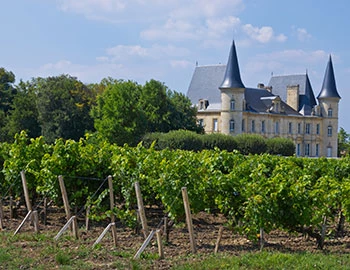
Bordeaux: high prestige, high quality
With a total area of around 115,000 hectares, Bordeaux may not be France’s largest wine-growing region, but it is certainly its most prestigious. The range of wines produced here today is enormous: ranging from red everyday wines with a great relationship between price and quality to exclusive, and accordingly expensive, premier crus. Elegant white wines and noble sweet specialties round out the spectrum.
France
France – Philosophy in a bottle
According to French philosophy, wine should be an expression of the soil and climate. They use the word “terroir” to describe this. Terroir makes every wine different, and many especially good. French wine is regarded worldwide as an expression of cultural perfection. The French believe that humans are responsible for the quality of the berries, the vine variety for their character, and nature for the quantity. This philosophy can be expressed succinctly as: “the truth is the vineyard, not the man.”