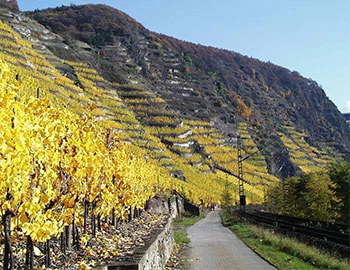
Forster Kirchenstück G.C. Riesling 2023

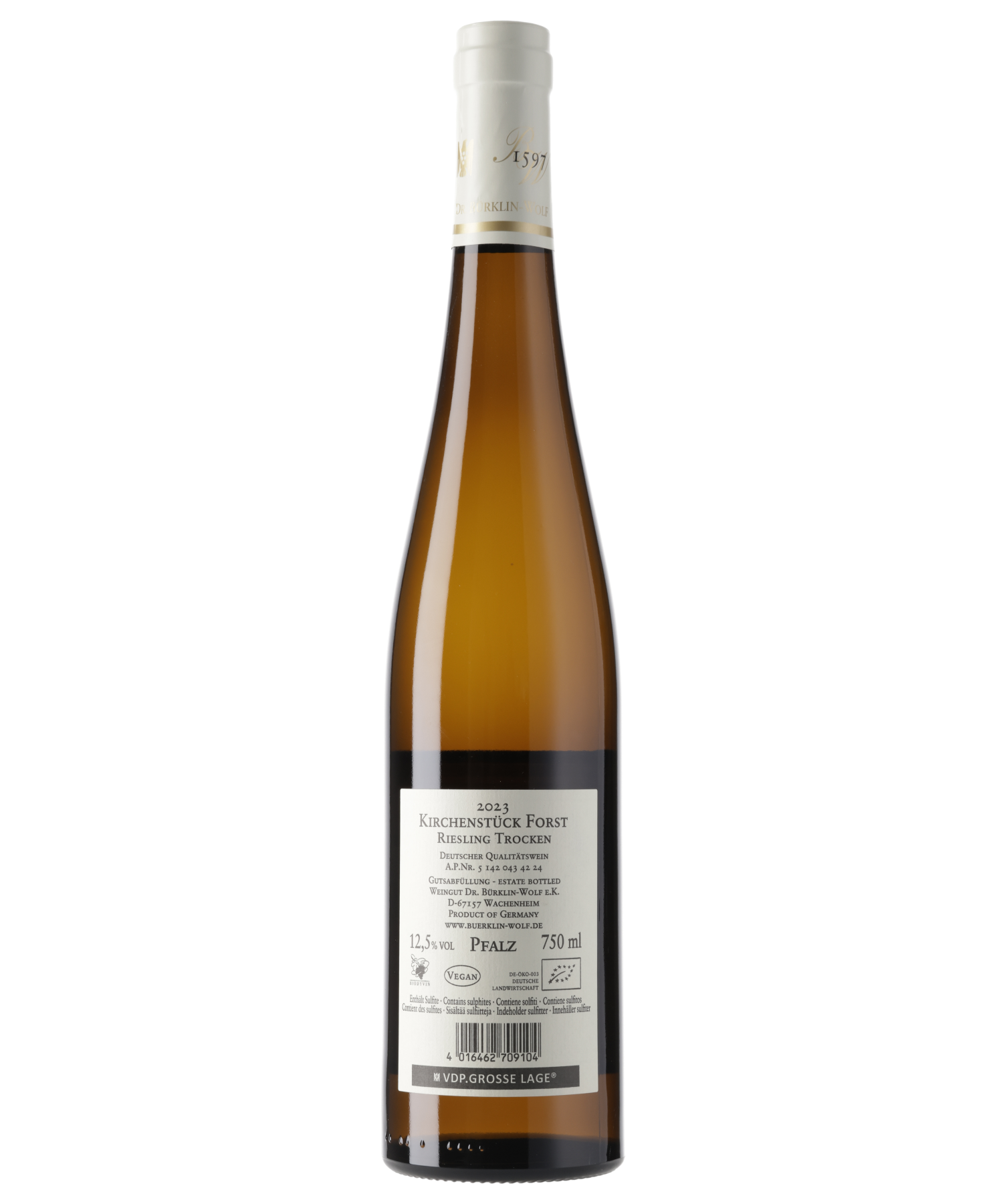
Forster Kirchenstück G.C. Riesling 2023
QbA Pfalz, Dr. Bürklin-Wolf, 750 ml


Elegant majesty
- Kirchenstück – the queen of the G.C. vineyards in the Palatinate.
- Elegant with mineral depth, subtle fruit and an impressive finish.
- Perfect with fine fish dishes, shellfish, white meat or delicate vegetable dishes.
Description
Already in 1828, «Kirchenstück» was the only vineyard to be awarded the highest rating in the Royal Bavarian vineyard classification – to this day, it is considered the queen of the Grand Cru vineyards. The combination of basalt, clay and sand gives the wine its unmistakable mineral depth and elegance. On the nose, it is cool and precise, with notes of wet stone and delicate stone fruit. On the palate, it is incredibly refined, almost weightless, supported by subtle acidity and a salty, chalky minerality. The fruit remains understated – the focus is on precision, structure and length. A great Riesling with quiet intensity and an impressive finish. An unbeatable culinary experience when paired with shellfish such as langoustines, fine fish, white meat with creamy sauces, and sophisticated asparagus or mushroom dishes.
Tasting – The Art of Wine Selection at the Baur au Lac

Meet over 20 wine and spirits producers, benefit from attractive special offers, and attend exclusive masterclasses featuring aged wines. Limited places available.
Sunday, November 15, 2026 | 2.00 pm until 7.00 pm
Monday, November 16, 2026 | 2.00 pm until 8.00 pm
Attributes
| Grape variety: | Riesling |
| Producer: | Dr. Bürklin-Wolf / Fam. Bürklin |
| Origin: | Germany / Pfalz / Mariengarten (Forst) |
| Other vintages: | 2022 |
| Label: | Vegan, Certified organic or biodynamic wine |
| Ripening potential: | 2 to 15 years |
| Drinking temperature: | 12 to 14 °C |
| Food Pairing: | Fresh water fish with cream sauce, Succulent chicken breast with cream sauc, Whitefish fillets à la meunière, Giant crevettes, grilled langoustines |
| Volume: | 12.5 % |
| Note: | Contains sulphites |
Dr. Bürklin-Wolf / Fam. Bürklin
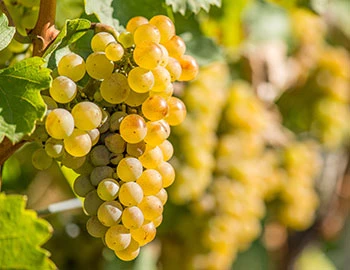
Riesling
The cold-weather king
The Riesling is the flagship of the German wine industry. It grows from north to south in all growing areas. It is also comfortable in the neighbouring Alsace region and in Austria. Its specialty is being vinified to a variety of degrees of sweetness, from bone-dry wines to ice wine. Moreover, thanks to its spirited acidity, it ages better than many reds. The typical Riesling smells of citrus, peach and apricot, shows hints of flint, and with maturity develops an idiosyncratic petrol note. It reflects its terroir like hardly any other white variety. Thus, it often gets fuller and more aromatic in Austria than in Germany. In Alsace, in turn, it has a particular mineral taste. Riesling is a wonderful culinary companion. It fits well not only with fish and shellfish, but also takes the heaviness from hearty meals. And with a fine sweetness and acidity balance, it works wonders for Asian cuisine.
Pfalz
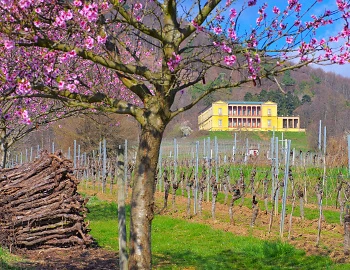
Pfalz: Riesling meets Burgundy
Palatine winemakers manage the feat of vinifying top-tier crus from both white and red varieties. In addition, Riesling presents the same class here as Chardonnay and other Burgundy varieties. This versatility at high quality levels makes Germany’s second-largest wine region a trove of discoveries of all kinds. Tranquil winegrowing towns with a diverse range of culinary offerings and hotels make the Palatinate region a perfect wine travel destination.
Germany
Germany – Into the elite the hard way
Sitting in the heart of Europe, the hilly, lake-dotted landscape of Germany provides ideal, fertile soil for the most diverse vine varieties. From Albalonga to Zweigelt, over 140 different grape varieties are grown on about 100,000 acres, cared for by nearly 50,000 vintners. Most of these vintners are young, modern, internationally trained, inquisitive and urbane. It is hardly surprising, then, that German wine has a good reputation well beyond the country's borders.