
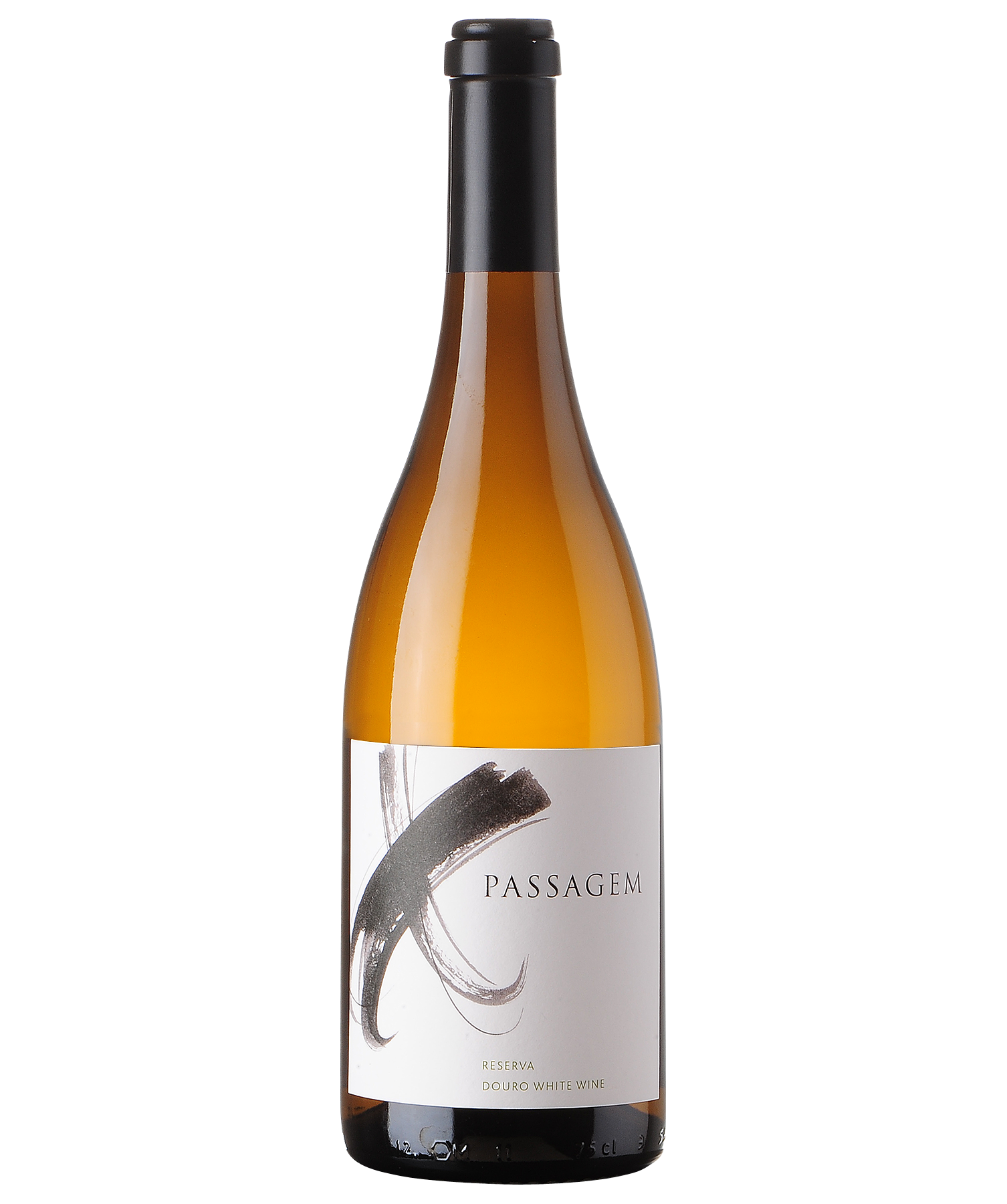
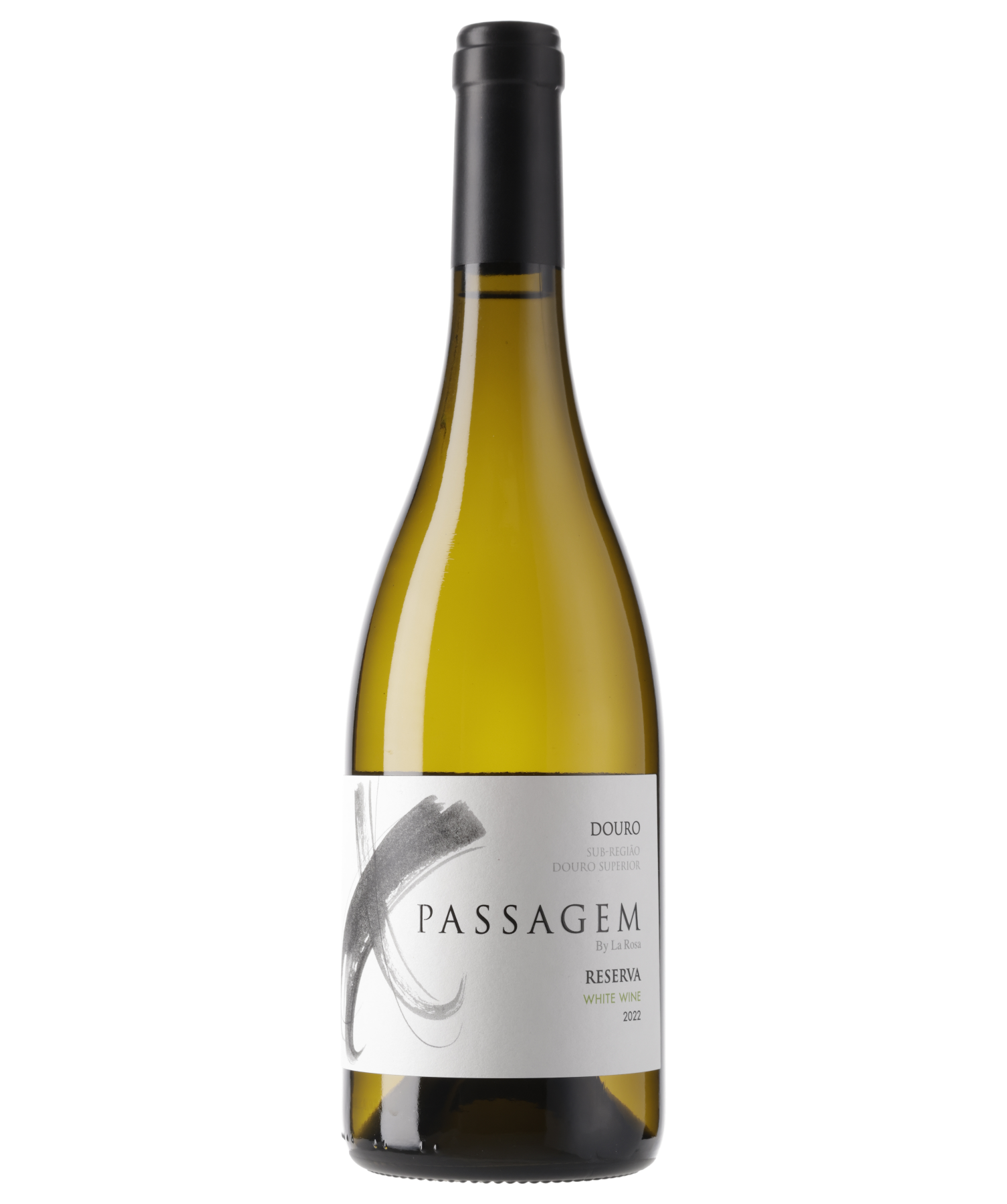
Passagem white wine Reserva 2022
DOC Douro, Quinta de Passagem, 750 ml


An expressive Douro
- Grapes from a blend of different varieties form the basis of this distinctive white Douro Reserva.
- A delicate interplay of flint, white pepper, peach, citrus and floral notes. Creamy and full-bodied on the palate.
- A versatile accompaniment to grilled fish, poultry, rice dishes and tapas.
Description
Quinta das Bandeiras is, so to speak, Quinta de la Rosa’s Douro Superior wine. The 100-hectare estate lies opposite Vale Meão and was taken over by the Bergqvist family in 2005 – in collaboration with the renowned oenologist Jorge Moreira. Five grape varieties typical of Portugal, grown in a classic blend, form the basis for this characterful white Douro Reserva. The Passagem White impresses with its depth and expression: spicy, mineral and complex. With a little air in the glass, a delicate interplay of aromas unfolds, featuring flint, white pepper, ripe peach, citrus and delicate floral notes. On the palate, it is creamy, dense and stylishly modern – with plenty of character. An ideal accompaniment to grilled sea bream or sea bass, rice dishes with vegetables or seafood, poultry or simply with tapas.
Tasting – The Art of Wine Selection at the Baur au Lac

Meet over 20 wine and spirits producers, benefit from attractive special offers, and attend exclusive masterclasses featuring aged wines. Limited places available.
Sunday, November 15, 2026 | 2.00 pm until 7.00 pm
Monday, November 16, 2026 | 2.00 pm until 8.00 pm
Attributes
| Grape variety: | Viosinho, Gouveio, Rabigato, Malvasia, Códega do Larinho |
| Producer: | Quinta de Passagem |
| Origin: | Portugal / Douro |
| Label: | Vegan |
| Ripening potential: | 2 to 10 years |
| Drinking temperature: | 10 to 12 °C |
| Food Pairing: | Italian antipasti, Grilled fish, Whole baked fish, Spicy hard cheese |
| Vinification: | fully destemmed, (short) pellicular fermentation |
| Harvest: | hand-picking |
| Maturation: | in used barriques |
| Bottling: | filtration |
| Volume: | 12.5 % |
| Note: | Contains sulphites |
Quinta de Passagem
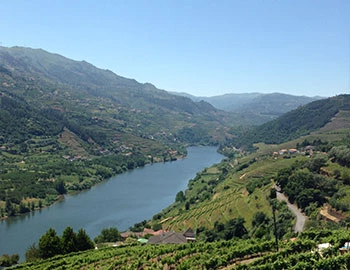
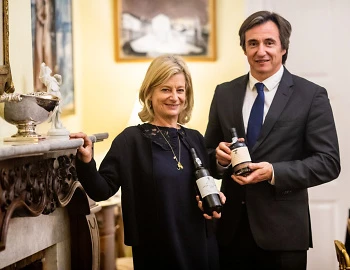
Starting from the heart of the Douro Valley and following the course of the Douro River upstream, you reach the area known as the Douro Superior, which borders Spain. It was here that the Bergqvist family acquired Quinta de Passagem in 2005, located close to the river, not far from the village of Pocinho. Their partner in this joint venture is Jorge Moreira, a long-standing oenologist at Quinta de la Rosa.
Nine hectares are old vineyards planted with a mixture of indigenous grape varieties bearing rarely heard names: Viosinho, Gouveio, Rabigato and Códega do Larinho for the whites, and Tinta Barroca, Tinta Cão and Tinta Roriz for the reds. In 2005 and 2006, 20 hectares were newly planted with Touriga Nacional and Touriga Franca. These relatively young vines are already producing excellent grapes, and with each new vintage, Jorge Moreira succeeds in giving his red and white Passagem even more depth, elegance and expression. Passagem – passage, transition, passageway – is an apt name for a wine from this remote region, where many paths have crossed over the centuries, from prehistoric times (the famous rock carvings of Foz Côa are located here) through the Roman era and the Middle Ages to modern times.
Rabigato
The widepread wild white
This white grape variety likely got its name from its native village in Portugal, Rabigato. However, it could also be an allusion to the appearance of the grape clusters, as their shape is reminiscent of a cat’s tail (“Rabo de Gato”).
Rabigato was first mentioned in writing in 1531. Today, it is cultivated on over 2,000 hectares in Portugal.
The berries provide alcohol-rich wines with pronounced acidity, which is why Rabigato is often used in the production of port wine.

Gouveio
The stranger stong in alcohol
This white grape variety hails from Portugal, where it is planted on around 2,500 hectares. Interestingly, this grape is virtually unknown outside of Spain, yet is also found on the Crimean Peninsula and in the Ukraine. Gouveio is represented in Australia, as well, where it is planted on around 200 hectares.
The grapes provide rich wines and present a moderate acidity, so Gouveio is often used in the production of white port and Madeira wines.
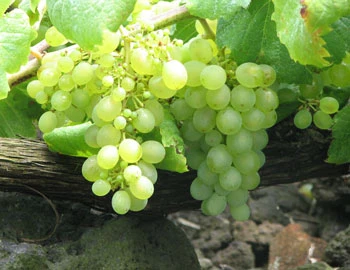
Malvasia
A hint of smoke
Lively citrus aromas and a touch of smoke are the hallmarks of the southern French Bourboulenc. It is also known as Clairette blanche or Malvoisie. This white wine grape is almost never produced solo. Instead, it lends its freshness to the white Châteauneuf-du-Pape and many other assemblages in southern France. Its origins lie in the Vaucluse Plateau in Provence. It turns out particularly delightfully in the massif of La Clapa in Languedoc, directly on the Mediterranean. There, the wines from Malvoisie acquire a salty-iodine note.
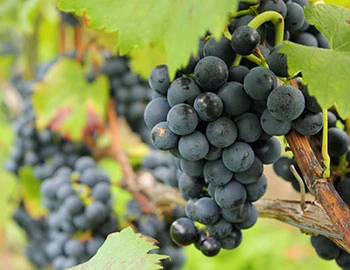
Viosinho
Loved from Alentejo to the Azores
This ancient, northern Portuguese white wine variety with pronounced acidity has very few references in the literature. It was first mentioned in 1822, albeit under a different name. The first citation using the name Viosinho dates from 1900.
According to DNA analysis, this vine is related to the Lado, Tinta Francisca, and Tinta Cão varieties.
This early-ripening grape is uncomplicated and robust. It yields aromatic white wines with pronounced acidity and potential for aging. Viosinho is often also referred to as “Portuguese Sauvignon Blanc.”
It is mainly grown in the Douro, Peninsula de Setubal, Tejo and Tras-os-Montes regions, as well as in the Alentejo and the Azores.

Códega do Larinho
Protected by the UNESCO
This autochthonous white grape variety originates in Portugal, its sole growing area. It is primarily cultivated in the Douro region in the north of the country, one of the oldest wine regions protected by UNESCO. It is cultivated across an area of over 600 hectares. The vines grow mostly on steep terraces, carved into the bare slate ground. The productive vines produce rather low-acidity white wines with aromas of tropical fruits. The grapes are usually blended with other varieties.
Douro
Douro: from port wine to cult wine
For centuries, the legendary reputation of the Douro valley has rested on port wine. By 1970, the five best had been selected from dozens of long-established varieties to be grown on a large scale. Simultaneously, the Douro vintners created the conditions that today allow them to conquer export markets with concentrated and fruity red wines along with port wines. The unique terraced vineyards along the Douro were declared a UNESCO World Heritage Site in 2001.
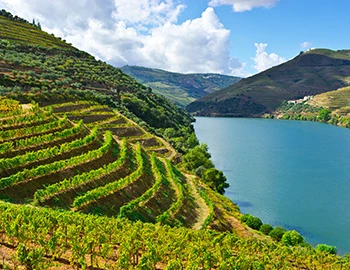
Portugal
Portugal – Much more than port
Situated on the southwestern tip of Europe, this country is, despite its small size, blessed with a multitude of landscapes. Austere mountains alternate with green valleys and golden beaches. Vines have thrived against this backdrop for over 4,000 years, brought to the peninsula by Phoenicians, Greeks, and Romans.
Portugal has over 500 autochthonous varieties. The term derives from ancient Greek, and means roughly “of the land itself.”