
Verdejo Finca Montepedroso 2024
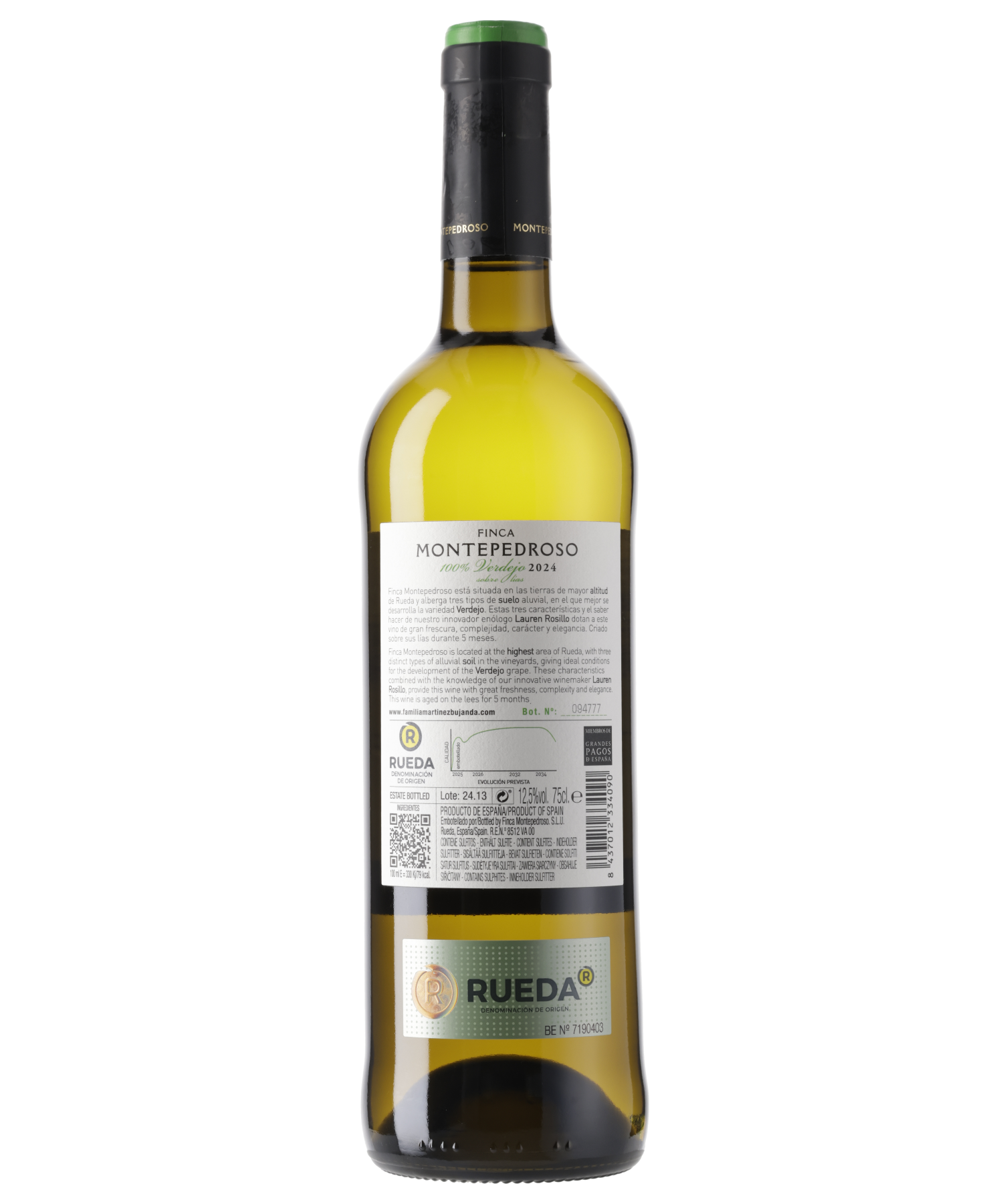
DO Rueda, Finca Montepedroso, 750 ml


The Spirit of Rueda in a Glass
- Verdejo – Spain's answer to Sauvignon Blanc: lively, aromatic, exotic.
- Peach, citrus and tropical notes on the nose; smooth and juicy with a delicate hint of aniseed on the palate.
- Refreshing with tomato and mozzarella or gazpacho, crispy fish with tartar sauce and spaghetti al pesto.
Description
Verdejo is Spain's answer to Sauvignon Blanc: lively, aromatic, exotic – a little explosion of flavour in your mouth! In the Rueda region, the grapes ripen at altitudes of up to 800 metres. No wonder the wines are so fresh. On the nose, it delights with white peach, ripe citrus fruit and a tropical touch. Juicy, smooth and long on the palate with vibrant acidity and a distinctive hint of aniseed. A refreshing accompaniment to tomato and mozzarella or gazpacho, fish fingers with tartar sauce and spaghetti al pesto.
Attributes
| Grape variety: | Verdejo |
| Producer: | Finca Montepedroso |
| Origin: | Spain / Castilla y León / Rueda |
| Other vintages: | 2025 |
| Ripening potential: | 1 to 4 years |
| Drinking temperature: | 10 to 12 °C |
| Food Pairing: | Baked egli fillets with tartare sauce, Salad with vegetables, pulses, pasta, Penne con pesto, Grilled fish, Moules à la marinière, Seafood salad |
| Vinification: | soft pressing, short must fermentation, fermentation in steel tank |
| Harvest: | hand-picking |
| Maturation: | in steel tank, bâtonnage, on the yeast |
| Bottling: | filtration |
| Maturation duration: | 5 months |
| Volume: | 12.5 % |
| Note: | Contains sulphites |
Finca Montepedroso
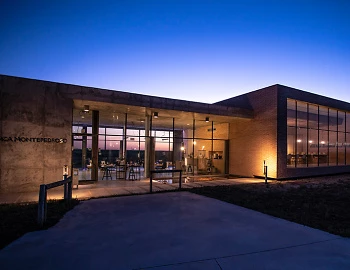
In the heart of Spain's Rueda wine region, at an altitude of 750 metres, lies the Montepedroso estate – a place where tradition, passion and personality come together. Here, siblings Carlos and Pilar Martínez Bujanda produce a white wine from 100% Verdejo grapes that impressively reflects the terroir of the region.
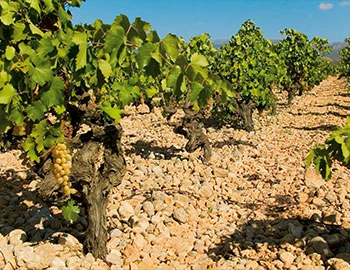
In the 1990s, after working with their father for many years, Carlos and Pilar decided to start a new project: producing estate wines (‘Vinos de Finca’). Today, the family portfolio includes several vineyards, including Finca Montepedroso. In 2008, the family acquired 25 hectares of Verdejo vineyards in Rueda and began construction of the winery, which was inaugurated in 2012. Rueda is particularly ideal for Verdejo: the cool nights preserve the fresh acidity of the grapes, while warm days promote their aromatic ripeness. The calcareous soil and high altitude further contribute to clear fruit and fine minerality.
Verdejo
Spain’s top white
And yet, the country has few top white wines to offer. The northern Spanish region of Ruede produces one of the few exceptions. There, the highly aromatic Verdejo grape makes it home. According to lore, it was introduced in the 11th century by Mozarabs. These were the Christian inhabitants of southern Spain who, during Moorish rule, migrated to the free North. The potential of the Verdejo grape was only recognized in the 1970s. Before, it was mainly processed into intensified sweet wines – a shame as, in its dry version, it yields truly top wines. They are stout and full-bodied, with hefty acidity and expressive fruit and herbal notes. They often end on a hint of almond or nut.
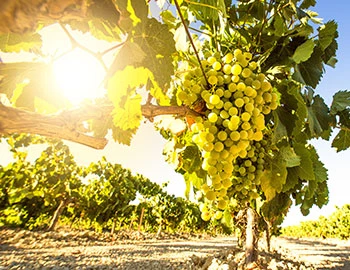
Rueda
Rueda: Everybody’s Darling
The crisp, fruity white wines from Rueda have become an export hit, and there is no end to this success story in sight. These primarily fruity white wines, matured in stainless steel tanks, come on the market just five months after harvest. The Rueda boom is based almost entirely on Verdejo, a variety long-established here. But the Sauvignon Blanc wines impress as well, with aromas typical of the variety and crisp freshness intrinsic to all Rueda wines.
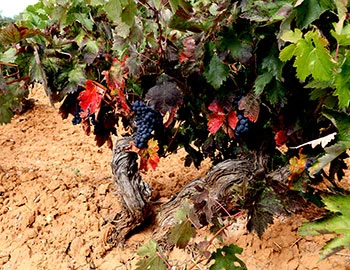
Castilla y León
Castile and León: Increasing diversity
Only 30 years ago, the autonomous region of Castile and León was an almost blank spot on the European wine list. This has changed immensely thanks to three grape varieties. The Tempranillo variety yields feisty, strong wines in Ribera del Duero and Toro. And Bierzo, the small wine area in the region's northwest, has experienced an impressive ascent, thanks to the character-laden Mencia variety. Finally, the fresh and fruity Verdelho pressings from Rueda have become the most successful Spanish white wines.
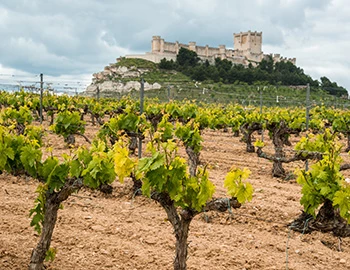
Spain
Spain – Variety and perfection
“Somewhere in la Mancha, in a place whose name I do not care to remember...,” begins Don Quixote's odyssey.
The most famous part is definitely when Don Quixote thinks windmills are his enemy and wants to fight them – until they nearly kill him. It’s possible there was a bit too much of the La Mancha wine at play. Spanish vines fight for their survival in rugged landscapes, battling fierce drought and rough soils. But they fight well.