
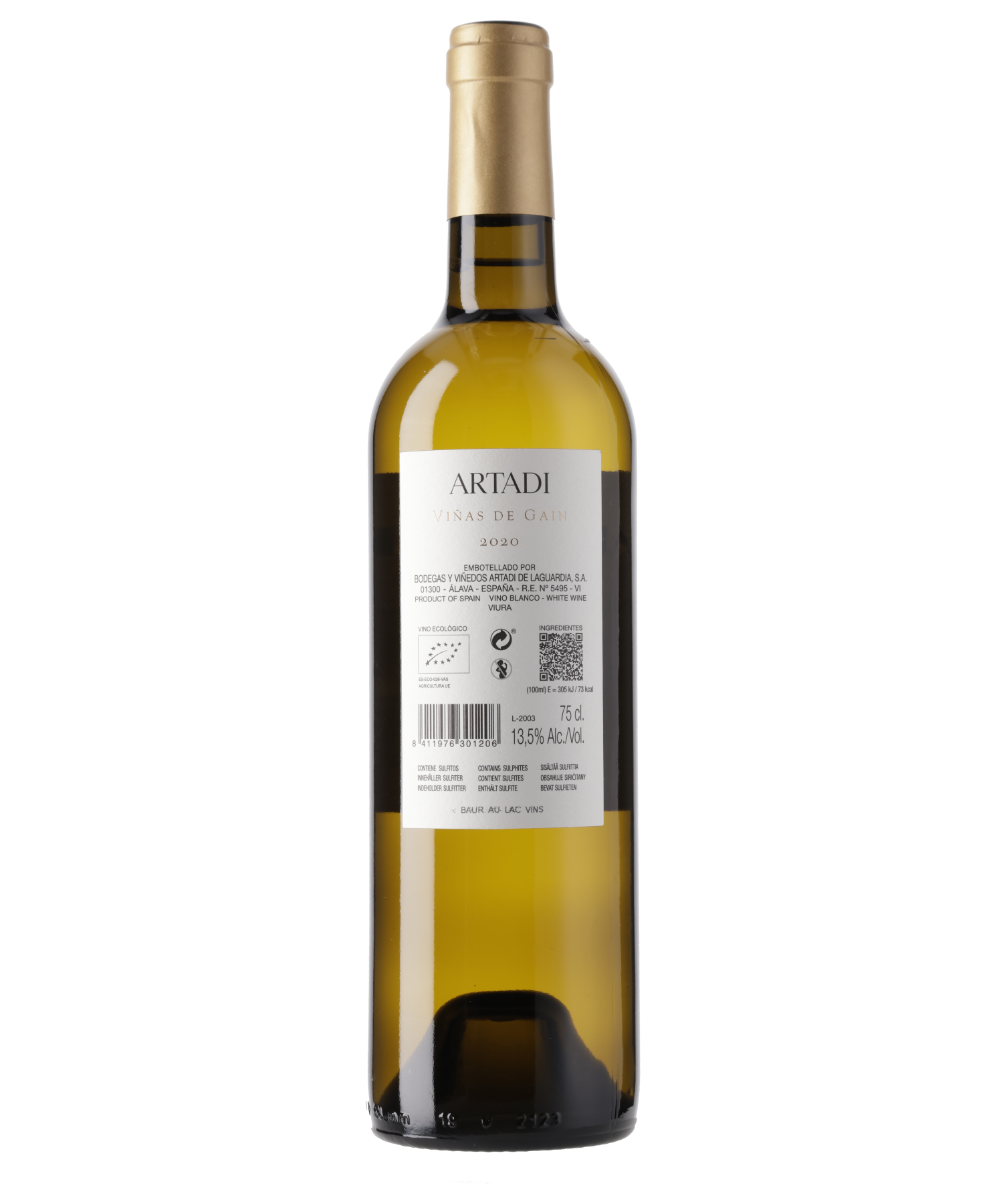
Viñas de Gain blanco 2020
Vineyard Selection, Álava, Bodegas y Viñedos Artadi, 750 ml


More than just Rioja
- Viura from high-altitude vineyards, characterised by limestone, clay and yeast ageing.
- Quince, apricot and a subtle tartness; fresh and complex on the palate.
- Pairs well with fish, paella, creamy risotto and Mediterranean vegetable dishes.
Description
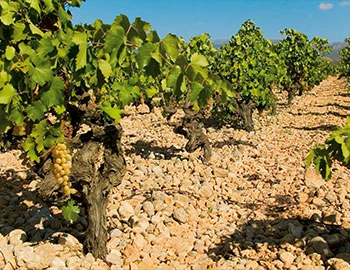
The Viñas de Gain Blanco impressively demonstrates that Viura is anything but ordinary. Sourced from high-altitude vineyards around Laguardia and Elvillar, it combines sun-ripened fruit with the freshness of the high altitudes. Ageing on the lees lends depth and texture, whilst limestone and clay soils provide character and complexity. Quince, apricot and subtle tart notes are complemented by precise minerality and a vibrant freshness. A white wine with character, edge and personality, which pairs superbly with fish, seafood, paella, asparagus risotto or Mediterranean vegetable dishes.
Tasting – The Art of Wine Selection at the Baur au Lac

Meet over 20 wine and spirits producers, benefit from attractive special offers, and attend exclusive masterclasses featuring aged wines. Limited places available.
Sunday, November 15, 2026 | 2.00 pm until 7.00 pm
Monday, November 16, 2026 | 2.00 pm until 8.00 pm
Attributes
| Grape variety: | Viura |
| Producer: | Bodegas y Viñedos Artadi de Laguardia |
| Origin: | Spain / Rioja |
| Other vintages: | 2019 |
| Label: | Certified organic or biodynamic wine |
| Ripening potential: | 2 to 10 years |
| Drinking temperature: | 10 to 12 °C |
| Food Pairing: | Succulent chicken breast with cream sauc, Giant crevettes, grilled langoustines, Asparagus specialities |
| Vinification: | fermentation in wooden barrel |
| Harvest: | hand-picking, strict selection |
| Maturation: | in steel tank |
| Bottling: | filtration |
| Maturation duration: | 24 months |
| Volume: | 13.5 % |
| Note: | Contains sulphites |
Bodegas y Viñedos Artadi de Laguardia
In Rioja Juan Carlos López de Lacalle, oenologist and founder of the Artadi group, has succeeded in making unique wines in an exciting and creative way. This is not least thanks to a distinctive style and his passion for environmentally friendly viticultural methods, which guarantee the future of winemaking and the authenticity of his wines.
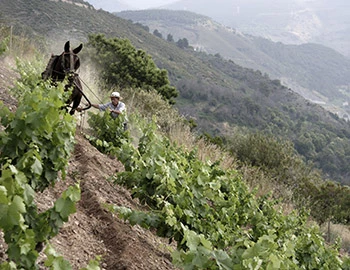
This private cooperative project was founded by a group of winemakers in 1985, and has since 1992 been owned by the Lacalle y Laorden family. The vineyards, some of which are over 90 years old and are mainly planted with the Tempranillo grape, stretch from Laguardia to Elvillar de Álava. Some of the area is also dedicated to the white Viura varietal, which is typical of the Rioja region and goes into creating the Viñas de Gain Blanco. Thanks to the location of the vineyards, some of which are over 600 metres above sea level, the grapes benefit not only from optimal sunshine but also from the cooling Atlantic air.

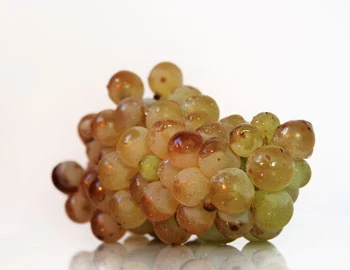
Viura
For fruity cava and white Rioja
Still or sparkling: the Macabeo can do both. In its native Catalonia, it forms, with Parellada and Xarello, the triumvirate of cava grapes. It gives the sparkling wine its fresh apple fruit; the Parellada provides elegance, and the Xarello contributes body and fullness. Pressed as a still white wine, the Macabeo smells of apple, pear, flowers and herbs. A light almond note often comes as well. This can be tasted in the classic white wines from Rioja: they are made from this variety, which there is called Viura. The Macabeo – also spelled Macabeu – migrated from northern Spain across the border into French Roussillon.
Rioja
Rioja: A legend in upheaval
It is the flagship of the Spanish wine industry: the Rioja region, with its elegant, yet storable wines, most of which are dominated by the Tempranillo, has decisively influenced the image of Spanish wine. Above all, the Reservas and Gran Reservas, aged for years in barrels, enjoy a magical reputation. For about 20 years, the Rioja houses have created a sensation with modern-designed, fruity wines, which are marked more by their terroir than their aging processes.
Spain
Spain – Variety and perfection
“Somewhere in la Mancha, in a place whose name I do not care to remember...,” begins Don Quixote's odyssey.
The most famous part is definitely when Don Quixote thinks windmills are his enemy and wants to fight them – until they nearly kill him. It’s possible there was a bit too much of the La Mancha wine at play. Spanish vines fight for their survival in rugged landscapes, battling fierce drought and rough soils. But they fight well.