
Cuvée 1844 Blanc 2020
Ostschweizer Landwein, Bioweingut Lenz, 750 ml


Aromatic diversity from Thurgau
- Organically produced cuvée with a hint of Pinot Noir (white pressed) – unusual, exciting, different.
- A tempting variety of aromas on the nose, fresh on the palate, with a delicate tartness and subtle honey notes.
- Wonderful with an aperitif, fish terrine, fried delicacies or spicy hard cheese.
Description
Organically produced cuvée from Thurgau with a small proportion of Pinot Noir, pressed immediately. This wine unfolds an enticing variety of aromas on the nose: juicy orange, tangy bergamot and sweet quince meet caramel, elderflower and a hint of verbena. On the palate, it reveals its fruity richness with a hint of honey, supported by a fresh, pleasant acidity and a subtle tartness. The result is an unusual but very exciting cuvée that goes well with fish terrine, baked perch fillets with tartar sauce or spicy hard cheese.
Attributes
| Grape variety: | Sauvignon Blanc, Pinot Noir, Souvignier Gris |
| Producer: | Bioweingut Lenz |
| Origin: | Switzerland / Ostschweiz |
| Other vintages: | 2023 |
| Label: | Vegan, Certified organic or biodynamic wine |
| Ripening potential: | 1 to 4 years |
| Drinking temperature: | 10 to 12 °C |
| Food Pairing: | Fondue and raclette, Baked egli fillets with tartare sauce, Spicy hard cheese |
| Vinification: | pressed carefully and immediately, fermentation in wooden barrel, biological acid degradation in barrel |
| Harvest: | hand-picking, strict selection |
| Maturation: | in used barriques, on the yeast, bâtonnage |
| Maturation duration: | 6 months |
| Volume: | 12.0 % |
| Note: | Contains sulphites |
Bioweingut Lenz
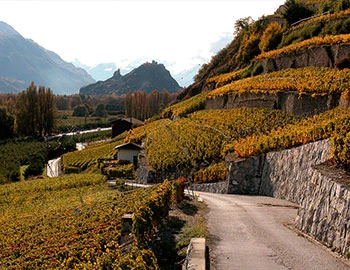
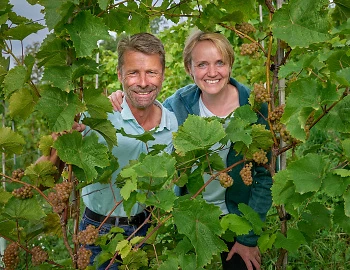
In 1994, while Roland Lenz was still studying oenology, he and his wife Karin were able to acquire eight hectares of vines on the Iselisberg. It was a unique opportunity that they seized, even though they were toying with the idea of setting up their own business abroad, far from Switzerland. They actually did so later, but that's another story…
It is only in the last two decades that the Canton of Thurgau has really come to the attention of wine lovers as a wine-growing area. Its apple orchards and the apple juice (must) pressed from the picked fruit have always been popular, inevitably earning the canton its nickname of «Must India». Viticulture, however, has existed in this region for centuries.
Sauvignon Blanc
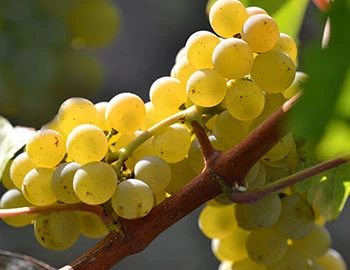
The Sauvignon blanc can be recognized with your eyes closed. Its typical bouquet is marked by green notes: freshly cut grass, tomato bunches, gooseberry. Citrus fruits, cassis and flint join into the mix. In warmer latitudes it also shows exotic aromas, such as passion fruit. Its acidity is decidedly lively. In all likelihood, it comes from the Loire Valley, where it is vinified in Pouilly-Fumé and Sancerre in its purest form: varietally, and without timber. In the 18th century, it found its way to Bordeaux. Ambitious producers assemble it there with Sémillon into substantial whites, which are aged in oak barrels. The Sauvignon blanc has been a sensational success in the past 20 years in New Zealand. With its refreshing sweet-and-sour style, winemakers from down under have conquered the world. The rich Sauvignons from Styria and crisp examples of South Tyrol and Friuli are worth mentioning as well. It pairs with anything from the sea. Or do it like they do on the Loire, and enjoy it with goat cheese.
Ostschweiz
Eastern Switzerland: an intriguing puzzle
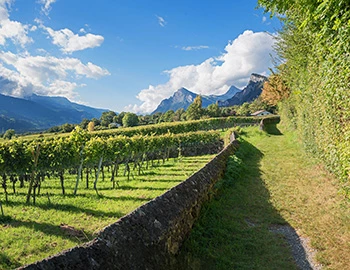
Eastern Switzerland has long been positioned on the northern rim of the climate zone where the cultivation of popular Swiss varieties is possible. Due to a warming climate, the vineyards of Aargau, Zurich, Schaffhausen, Thurgau and Graubünden are now in the zone where varieties such as Müller-Thurgau or Pinot Noir succeed excellently. But even long-established, almost-forgotten varieties such as Elbling, Räuschling and Completer are experiencing a renaissance.
Switzerland
Switzerland – A small country with enormous diversity
Switzerland is famous for its banks, watches, and cheese, but not necessarily for its wine. The Swiss didn't invent wine, but they have been extremely open and curious to it. Wine culture arrived in what is now modern Switzerland via several routes: from Marseilles to Lake Geneva and the Lower Valais region; from the Aosta Valley through the Great St. Bernard Pass to the rest of Valais; from the Rhone through Burgundy, across the Jura Mountains to Lake Constance; and from Lombardy to Ticino, and then on to Grisons.