
Châteauneuf-du-Pape Domaine de Ferrand 2023
AC, Charles Bravay, 750 ml


Terroir in Every Sip
- Châteauneuf-du-Pape from ancient vines, aged without barriques to preserve the purest expression of its terroir.
- Fig, date and garrigue. Concentrated yet weightless, with a spicy finish.
- An aromatic partner for lamb, game birds and hearty vegetable stews.
Description
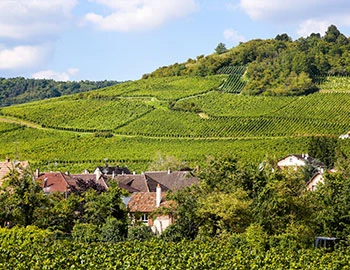
Winemaker Philippe Bravay deliberately cultivates his plots in the north of Châteauneuf-du-Pape, where the climate remains cooler and some vines are up to 110 years old. His philosophy is: no ageing in barriques, which might mask the wine’s terroir. Instead, the wine matures in concrete and stainless steel tanks. The result is a Châteauneuf-du-Pape full of finesse. On the nose, it reveals figs, dates and the scent of the garrigue; on the palate, it is concentrated, without any heaviness, yet all the more juicy for it. The tannins are finely woven, and the finish is long and spicy. An elegant accompaniment to leg of lamb or roast duck breast, and also perfect with pulses such as lentils. Would you prefer to drink it young? Then it’s best to decant it. The Domaine de Ferrand Châteauneuf-du-Pape 2023 was awarded 95 points by James Suckling.
Tasting – The Art of Wine Selection at the Baur au Lac

Meet over 20 wine and spirits producers, benefit from attractive special offers, and attend exclusive masterclasses featuring aged wines. Limited places available.
Sunday, November 15, 2026 | 2.00 pm until 7.00 pm
Monday, November 16, 2026 | 2.00 pm until 8.00 pm
Attributes
| Grape variety: | Syrah, Grenache, Cinsault, Mourvèdre |
| Producer: | Domaine de Ferrand |
| Origin: | France / Rhône / Châteauneuf-du-Pape |
| Other vintages: | 2022 |
| Ripening potential: | 3 to 15 years |
| Drinking temperature: | 16 to 18 °C |
| Food Pairing: | Beef Stroganoff, Roasted lamb gigot, Wild boar entrecôte with Spätzli, Hearty stew with pulses |
| Vinification: | cooling period, fermentation in steel tank |
| Harvest: | hand-picking, strict selection |
| Maturation: | in cement tank |
| Bottling: | no filtration |
| Volume: | 15.5 % |
| Note: | Contains sulphites |
Domaine de Ferrand
Philippe Bravay represents the fourth generation of the family that owns Domaine de Ferrand. The winery can be traced back to the 17th century. Philippe’s parents sold the grapes to wine merchants. But he decided to press and bottle his own wine.
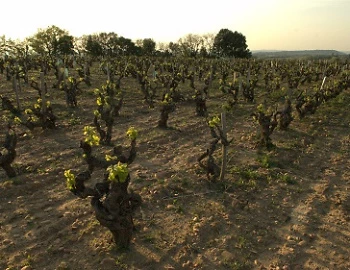
7.5 hectares lie in the north of the Châteauneuf-du-Pape appellation, 10 hectares in the Côte-du-Rhône appellation. These include very old vineyards planted by his great-grandfather in 1904, 1910 and 1920; as usual in the so-called field blend. About 10% of the vines are Syrah, Counoise, Vaccarès, Bouboulenc, Mourvèdre and others, which are blended with the Grenache.
Grenache
Grenache seldom comes alone
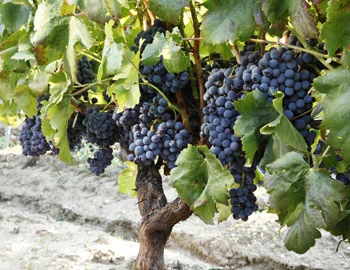
Spaniards and Sardinians make the Grenache contentious: both claim it originated from their country. In fact, it had already appeared in both places by the 16th century. But a large number of mutations in Spain indicates that it has deeper roots on the Iberian Peninsula. The Grenache is meaty and spicy, with a wonderful, fruity sweetness and rich aromas of blackberry, cassis, plums and pepper. Under the name Garnacha, it contributes fullness to the Rioja. In Sardinia it is called Cannonau, where it yields strong, expressive wines. But its stronghold is in France. Grenache is the star in Châteauneuf-du-Pape and streams into many other assemblages from the south. Its preferred partners are Syrah and Mourvèdre. This blend is also very popular abroad. In Australia, these wines are simply called "GSM".
Cinsault
Sun in a glass
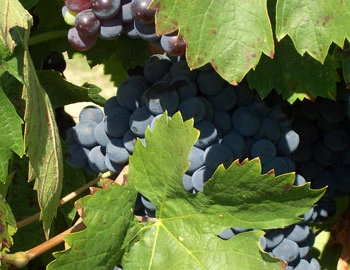
The southern French Cinsault, also written Cinsaut, is a curiosity among the grape varieties. It belongs to the so-called “dyer grapes”. These are red grapes in which the pigments sit not only in the skins but also in the flesh. That means, when the Cinsault is pressed, pink juice results, rather than the white you see from other grapes. Previously, the Cinsault was used to spice up lighter-coloured Burgundy. But now it has become emancipated. With a soft, fruity style, seductive raspberry and strawberry aromas and good aging potential, it mixes with the most renowned growths from the southern Rhône, around the Châteauneuf-du-Pape. Solo, it yields wonderfully aromatic rosés.
Syrah
A hint of pepper
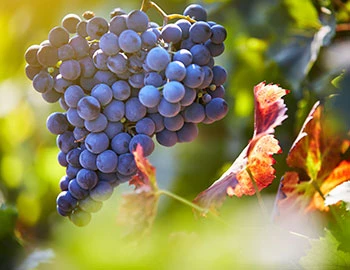
The legend stubbornly persists that the Syrah variety came from the Persian city of Shiraz. Yet, researchers have shown that it is a natural crossing of two old French varieties: the red Dureza from the Rhône Valley and the white Mondeuse blanche from Savoy. Wines from Syrah are gentle and concentrated. They smell of dark berries, violets and liquorice, and amaze with a piquant touch of white pepper. As varietal wines, they are found on the northern Rhone, as in the Hermitage or Côte Rôtie appellations, as well as in Swiss Valais. In the southern Rhône Valley, Syrah is often wedded with Grenache and Mourvèdre. In 1832, a Frenchman brought the variety to Australia, where it became the emblem of the national wine industry. There, the weightiest versions develop with typical notes of tar and chocolate.
Mourvèdre
Hot-blooded Spaniard
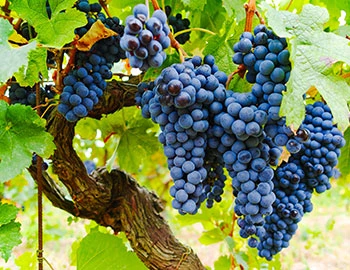
It cannot be hot enough for the Monastrell grape. It grows around the Mediterranean, where the summers are long and hot and the winters mild. At only 200 metres in elevation, or 80 kilometres from the coast, its grapes have problems ripening. It was likely born in the Valencia region. According to written records, it was already counted among the most important varieties in 1460. Its exact origin is thought to be the Camp de Morvedre area. From there, it migrated in the 17th century to Provence, where it was christened Mourvèdre. Its wines are deeply dark, with intense blackberry aromas, rich tannins and moderate acidity. They enter into the most beautiful harmonies with other varieties from the south, such as Garnacha, Carignan or Syrah. The Mourvèdre is the main ingredient of red wines of Bandol; it also flows into the Châteauneuf-du-Pape. On the Spanish Levante coast, it is also pressed solo.
Rhône
Rhône: northern power, southern charm
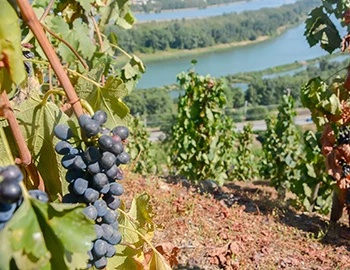
The Rhône’s source is in Valais, and it flows into the Mediterranean 800 kilometres to the south. In the last 200 kilometres of its course, it is lined with vines which yield a range of red crus that are among the most prestigious wines in the world – for example, on the spectacular cliffs of the Hermitage Mountains, or in the gravelly terraces of Châteauneuf-du-Pape. The river valley, however, is also a rich source of characterful white wines and affordable, high-quality, everyday red wines.
France
France – Philosophy in a bottle
According to French philosophy, wine should be an expression of the soil and climate. They use the word “terroir” to describe this. Terroir makes every wine different, and many especially good. French wine is regarded worldwide as an expression of cultural perfection. The French believe that humans are responsible for the quality of the berries, the vine variety for their character, and nature for the quantity. This philosophy can be expressed succinctly as: “the truth is the vineyard, not the man.”