
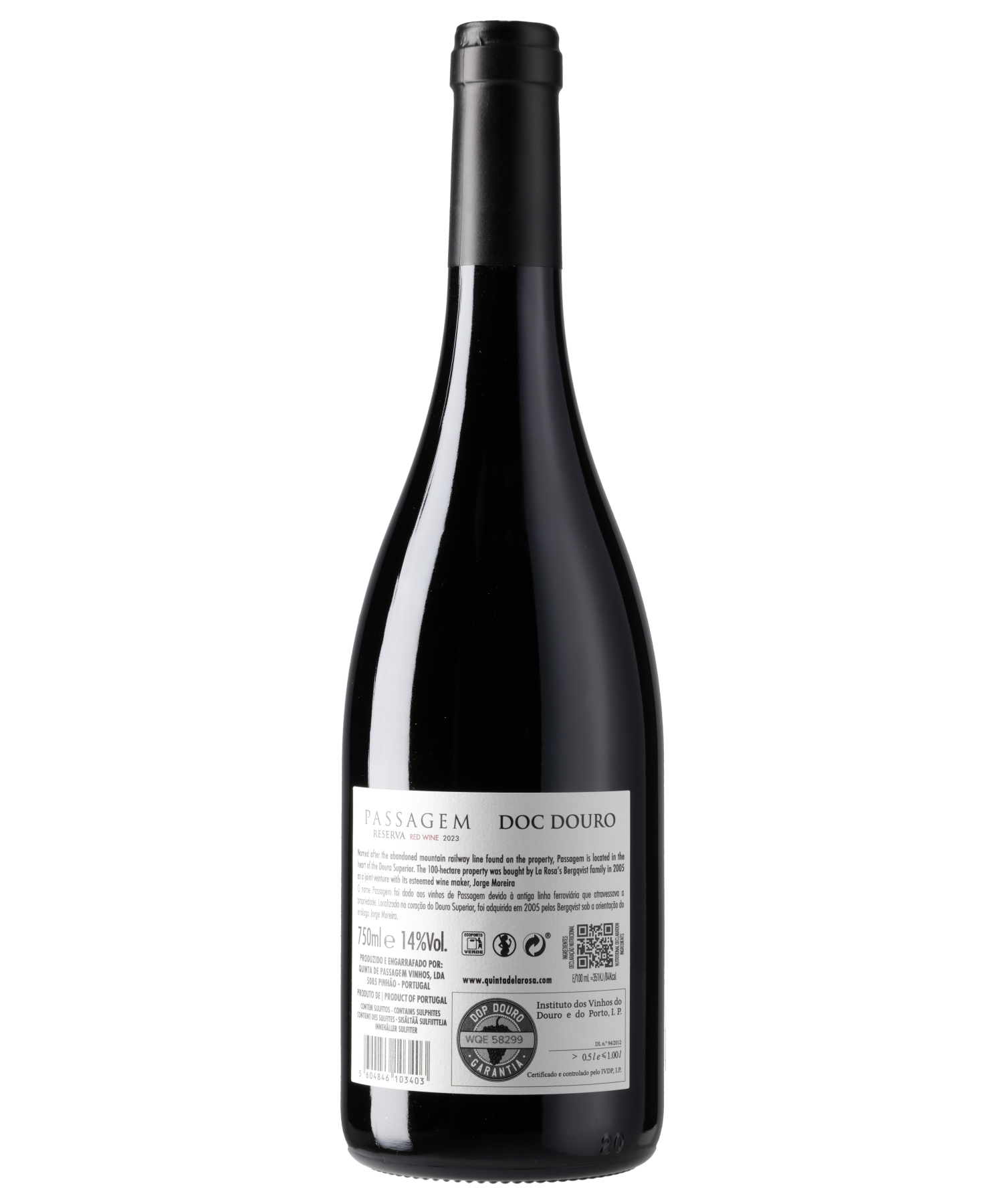
Passagem Reserva 2023
DOC Douro, Quinta de Passagem, 750 ml


Description
An elegant, expressive, very harmonious, youthful wine with a lot of development potential. Its aromatic palette is wide-ranging, which is certainly also due to the mixed planting in the vineyard, which is over 20 years old and typical for Portugal. The fruitiness and pronounced spiciness are joined by the floral notes that seem to be so typical of Douro wines: lavender, violets, lilac and black tea as well as thyme. Its pronounced flavour spreads in the mouth with vigour and considerable length. The tannins are well present, but of fine structure. The wine will give great pleasure for many years to come and will bring out new aroma facets with every year of life. Quinta das Bandeiras is basically the Douro Superior wine of Quinta de La Rosa. Bandeiras is located opposite Vale Meão. The property (100 hectares) was bought by the Bergqvist family from Quinta de la Rosa in 2005. It is a joint venture with the renowned oenologist Jorge Moreira.
Attributes
| Grape variety: | Touriga Nacional, Touriga Franca |
| Producer: | Quinta de Passagem |
| Origin: | Portugal / Douro |
| Ripening potential: | 2 to 10 years |
| Drinking temperature: | 16 to 18 °C |
| Food Pairing: | Brasato di manzo al Barolo, Spiced grillades, Wild specialities, Roast saddle of venison |
| Vinification: | stamped by foot, fermentation in steel tank |
| Harvest: | hand-picking, strict selection |
| Maturation: | in new barriques |
| Maturation duration: | 18 months |
| Volume: | 14.0 % |
| Note: | Contains sulphites |
Quinta de Passagem
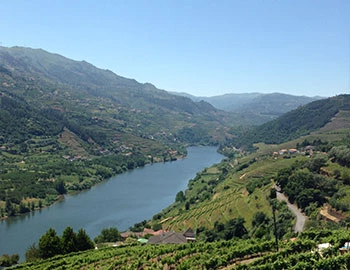
Starting from the heart of the Douro Valley and following the course of the Douro River upstream, you reach the area known as the Douro Superior, which borders Spain. It was here that the Bergqvist family acquired Quinta de Passagem in 2005, located close to the river, not far from the village of Pocinho. Their partner in this joint venture is Jorge Moreira, a long-standing oenologist at Quinta de la Rosa.
Nine hectares are old vineyards planted with a mixture of indigenous grape varieties bearing rarely heard names: Viosinho, Gouveio, Rabigato and Códega do Larinho for the whites, and Tinta Barroca, Tinta Cão and Tinta Roriz for the reds. In 2005 and 2006, 20 hectares were newly planted with Touriga Nacional and Touriga Franca. These relatively young vines are already producing excellent grapes, and with each new vintage, Jorge Moreira succeeds in giving his red and white Passagem even more depth, elegance and expression. Passagem – passage, transition, passageway – is an apt name for a wine from this remote region, where many paths have crossed over the centuries, from prehistoric times (the famous rock carvings of Foz Côa are located here) through the Roman era and the Middle Ages to modern times.
Touriga Nacional
National emblem
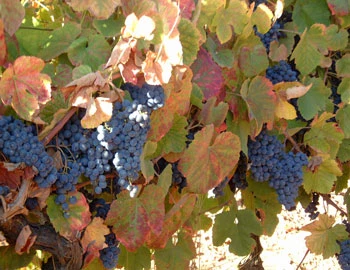
The Touriga Nacional originally comes from the Dão, in the heart of Portugal. There is a village there named Tourigo. But it became famous in the Douro Valley, where port wine is produced. When the five best varieties were selected from the motley assortment of grapes growing in the vine terraces in the 1980s, the Touriga Nacional was the first choice. It smells of cassis, raspberry, plum, violet and liquorice, and is concentrated on the palate with supple tannins. It does well not only in port wine, but also in dry reds. Solo, the Touriga Nacional tastes almost too intense; therefore, it is usually blended with other varieties such as Touriga Franca and Tinta Barroca. Developed in barriques, the wines show their full potential. In the past ten years, the cultivation area of this grape has more than doubled, and spread to the whole of Portugal.
Touriga Franca
Ingredient for red wine and port.
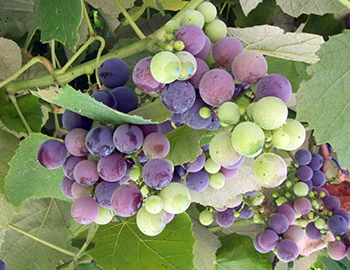
The Touriga Franca is at home in the rugged beauty of the Portuguese Douro Valley. On the slate terraces over the river, the grapes were traditionally grown in mixed settings. Up to 80 different vine varieties shared a single parcel. Not even the vintners knew which variety they were dealing with. In the 1980s, Ramos Pinto undertook to identify the five best grape varieties for port wine production. One member of this selection was Touriga Franca. It shines with its deep red colour, intense aromas of blackberry, rose and wildflowers, its full-bodied structure and velvety tannins. Port wine was once dominant on the Douro. But for 15 years the dry red wines here have experienced an unprecedented boom. The Touriga Franca almost always plays a part. It is mostly blended with Touriga Nacional and Tinta Roriz.
Douro
Douro: from port wine to cult wine
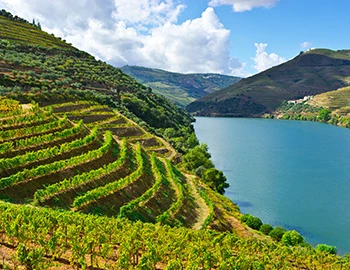
For centuries, the legendary reputation of the Douro valley has rested on port wine. By 1970, the five best had been selected from dozens of long-established varieties to be grown on a large scale. Simultaneously, the Douro vintners created the conditions that today allow them to conquer export markets with concentrated and fruity red wines along with port wines. The unique terraced vineyards along the Douro were declared a UNESCO World Heritage Site in 2001.
Portugal
Portugal – Much more than port
Situated on the southwestern tip of Europe, this country is, despite its small size, blessed with a multitude of landscapes. Austere mountains alternate with green valleys and golden beaches. Vines have thrived against this backdrop for over 4,000 years, brought to the peninsula by Phoenicians, Greeks, and Romans.
Portugal has over 500 autochthonous varieties. The term derives from ancient Greek, and means roughly “of the land itself.”