

Brut Nature Rosé
DO Cava Guarda, Glissade, 750 ml


Pink pearls from Spain
- An aromatic cava made from Monastrell, Garnacha, and Trepat, traditionally fermented in the bottle.
- Juicy stone fruit and berry notes – dry, fresh, with an elegant effervescence and a juicy finish.
- Perfect as an aperitif, with sushi and seafood, or as a sparkling accompaniment to fruity desserts.
Description
This lively blend, made from Monastrell, Garnacha, and the local Trepat grape — all red varieties — is produced using the traditional bottle-fermentation method and impresses with its aromatic depth, freshness, and elegant smoothness. On the nose, juicy peach and apricot dance with cherry and raspberry, accompanied by delicate floral notes and a hint of fresh pastry. On the palate, it is dry, wonderfully fresh, and smooth, with a fine, elegant effervescence and a juicy finish that leaves you craving the next sip. A rosé cava that’s always a good choice: perfect as an aperitif, with seafood and sushi, or as a sparkling accompaniment to fruity desserts.
Attributes
| Grape variety: | Monastrell, Garnacha, Rote Autochthone |
| Producer: | Glissade |
| Origin: | Spain / Catalunya / Penedès |
| Drinking temperature: | 6 to 8 °C |
| Food Pairing: | Grilled fish, Apéro riche, Goat's cheese, Hot Asian dishes, Paella |
| Vinification: | fermentation in steel tank, bottle fermentation |
| Maturation: | some months bottle storage before sale |
| Maturation duration: | 11 months |
| Volume: | 11.5 % |
| Note: | Contains sulphites |
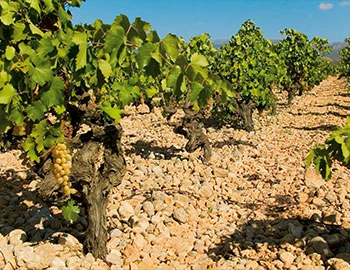
Garnacha
Grenache seldom comes alone
Spaniards and Sardinians make the Grenache contentious: both claim it originated from their country. In fact, it had already appeared in both places by the 16th century. But a large number of mutations in Spain indicates that it has deeper roots on the Iberian Peninsula. The Grenache is meaty, rich in tannins and spicy, with a wonderful, fruity sweetness and rich aromas of blackberry, cassis, plums and pepper. Under the name Garnacha, it contributes fullness to the Rioja. In Sardinia it is called Cannonau, where it yields strong, expressive wines. But its stronghold is in France. Grenache is the star in Châteauneuf-du-Pape and streams into many other assemblages from the south. Its preferred partners are Syrah and Mourvèdre. This blend is also very popular abroad. In Australia, these wines are simply called "GSM".

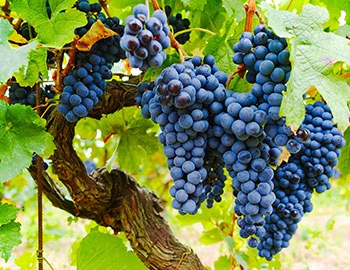
Monastrell
Hot-blooded Spaniard
It cannot be hot enough for the Monastrell grape. It grows around the Mediterranean, where the summers are long and hot and the winters mild. At only 200 metres in elevation, or 80 kilometres from the coast, its grapes have problems ripening. It was likely born in the Valencia region. According to written records, it was already counted among the most important varieties in 1460. Its exact origin is thought to be the Camp de Morvedre area. From there, it migrated in the 17th century to Provence, where it was christened Mourvèdre. Its wines are deeply dark, with intense blackberry aromas, rich tannins and moderate acidity. They enter into the most beautiful harmonies with other varieties from the south, such as Garnacha, Carignan or Syrah. The Mourvèdre is the main ingredient of red wines of Bandol; it also flows into the Châteauneuf-du-Pape. On the Spanish Levante coast, it is also pressed solo.
Penedès
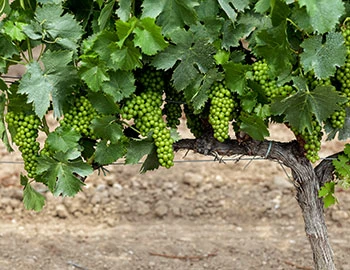
Penedès: growth thanks to new ideas
With a vineyard area of roughly 25,000 hectares, Penedès is the largest wine-growing region with DO status in Catalonia. The spectrum of locally produced wines here is immense. Aging in a pronounced Mediterranean climate, they range from refreshing sparkling cava wines to sparkling whites and fully textured reds. Premium wines are vinified from long-established and international varieties such as Cabernet Sauvignon or Chardonnay.
Catalunya
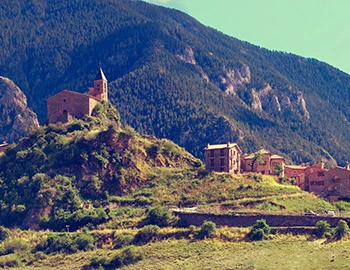
Catalonia: the great range
Spain’s second largest wine region has an impressive variety to offer. As a result, there are eleven different designations of origin in Catalonia. As the home of cava, Catalonia is one of the leading producers of sparkling wines produced according to classical methods. There is a wide selection of both elegant white wines and well-structured reds. Areas such as Priorat or Montsant have experienced an enormous upswing in recent years. The traditional sweet wine Moscatel de Sitges is also produced here.
Spain
Spain – Variety and perfection
“Somewhere in la Mancha, in a place whose name I do not care to remember...,” begins Don Quixote's odyssey.
The most famous part is definitely when Don Quixote thinks windmills are his enemy and wants to fight them – until they nearly kill him. It’s possible there was a bit too much of the La Mancha wine at play. Spanish vines fight for their survival in rugged landscapes, battling fierce drought and rough soils. But they fight well.