
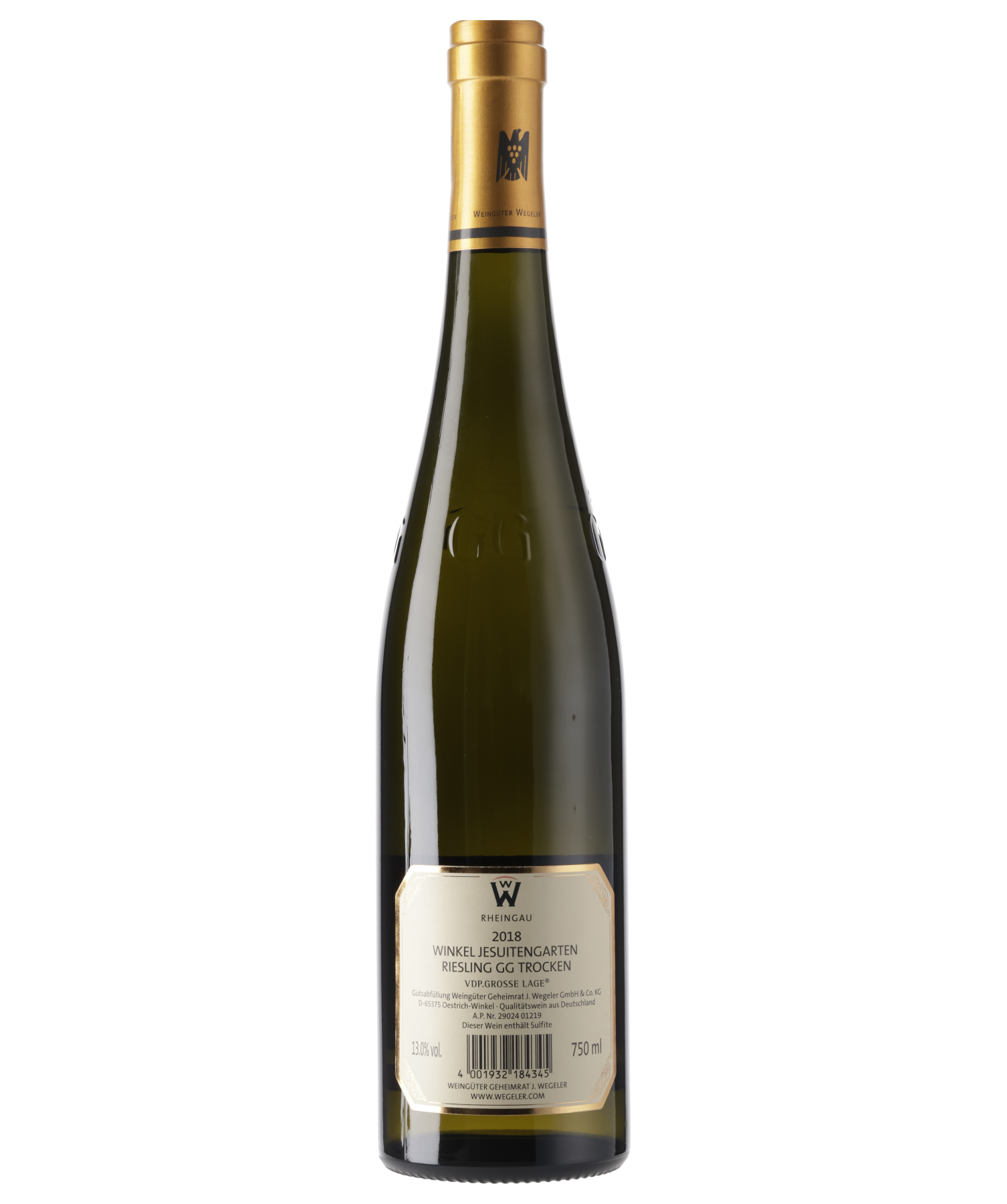
Jesuitengarten Riesling GG 2018
VDP.GROSSE LAGE, Rheingau, Weingüter Wegeler, 750 ml


Perfectly aged
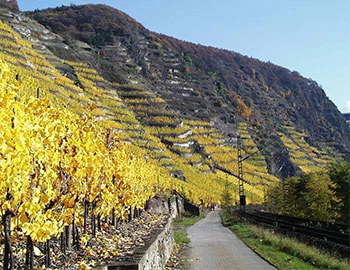
- Winkeler Jesuitengarten – one of the warmest locations in the Rheingau, already very inviting and yet full of potential for tomorrow.
- Yellow fruit and spicy minerality with a delicate petrol note. Palate: full-bodied, smooth and lively.
- Perfect with smoked fish, poultry in cream sauce and Asian food.
Description
The Winkeler Jesuitengarten is one of the warmest locations in the Rheingau: situated close to the Rhine and protected from cold air by a historic vineyard wall, it enjoys a favourable climate for optimal ripening. Riesling is one of the most age-worthy white wine varieties in the world – this Grand Cru from the traditional Wegeler winery, founded in 1881, is the best proof of this. Already extremely inviting, it will continue to develop wonderfully. Open-hearted, beguiling yellow fruit, spicy-mineral nose with a hint of petrol. Full-bodied and mellow on the palate, interspersed with mouth-watering acidity. Fantastic with smoked fish, pork chops or poultry in cream sauce, beetroot salad with goat's cheese, sushi and Asian food with ginger in general.
Attributes
| Grape variety: | Riesling |
| Producer: | Weingüter Wegeler |
| Origin: | Germany / Rheingau |
| Ripening potential: | 6 to 20 years |
| Drinking temperature: | 8 to 11 °C |
| Food Pairing: | Goat's cheese, Sushi, Sashimi, Ceviche, Mild Asian dishes, Succulent chicken breast with cream sauc |
| Volume: | 13.0 % |
| Note: | Contains sulphites |
Weingüter Wegeler
Since 1882, Wegeler has been synonymous with excellent winegrowing in Germany. Today, the fourth generation runs the family business with a blend of tradition, foresight, and genuine passion—especially for Riesling, complemented by a small proportion of Pinot Noir.
Julius Wegeler began as a wine merchant and sparkling wine producer at Deinhard before becoming a winemaker himself. For him, wine was always a question of quality, maturity, and patience: young wines spent at least two winters on the lees, exceptional vintages even longer. With this foresight and the right instinct for top vineyards, he laid the foundation for a winery with a unique portfolio of Grand and Premier Cru vineyards in the Rheingau and Mosel regions.
Steep slopes with slate and loess soils give the Rieslings minerality, tension, and aging potential. The mild climate and proximity to the river ensure slow, even ripening. This results in Rieslings with elegance, depth, and long-lasting aromatics. The Pinot Noirs—especially those from Assmannshausen—captivate with their silky structure, fine acidity, and characterful fruit.
Riesling
The cold-weather king
The Riesling is the flagship of the German wine industry. It grows from north to south in all growing areas. It is also comfortable in the neighbouring Alsace region and in Austria. Its specialty is being vinified to a variety of degrees of sweetness, from bone-dry wines to ice wine. Moreover, thanks to its spirited acidity, it ages better than many reds. The typical Riesling smells of citrus, peach and apricot, shows hints of flint, and with maturity develops an idiosyncratic petrol note. It reflects its terroir like hardly any other white variety. Thus, it often gets fuller and more aromatic in Austria than in Germany. In Alsace, in turn, it has a particular mineral taste. Riesling is a wonderful culinary companion. It fits well not only with fish and shellfish, but also takes the heaviness from hearty meals. And with a fine sweetness and acidity balance, it works wonders for Asian cuisine.
Germany
Germany – Into the elite the hard way
Sitting in the heart of Europe, the hilly, lake-dotted landscape of Germany provides ideal, fertile soil for the most diverse vine varieties. From Albalonga to Zweigelt, over 140 different grape varieties are grown on about 100,000 acres, cared for by nearly 50,000 vintners. Most of these vintners are young, modern, internationally trained, inquisitive and urbane. It is hardly surprising, then, that German wine has a good reputation well beyond the country's borders.