
ZH Cuvée Blanc 2025
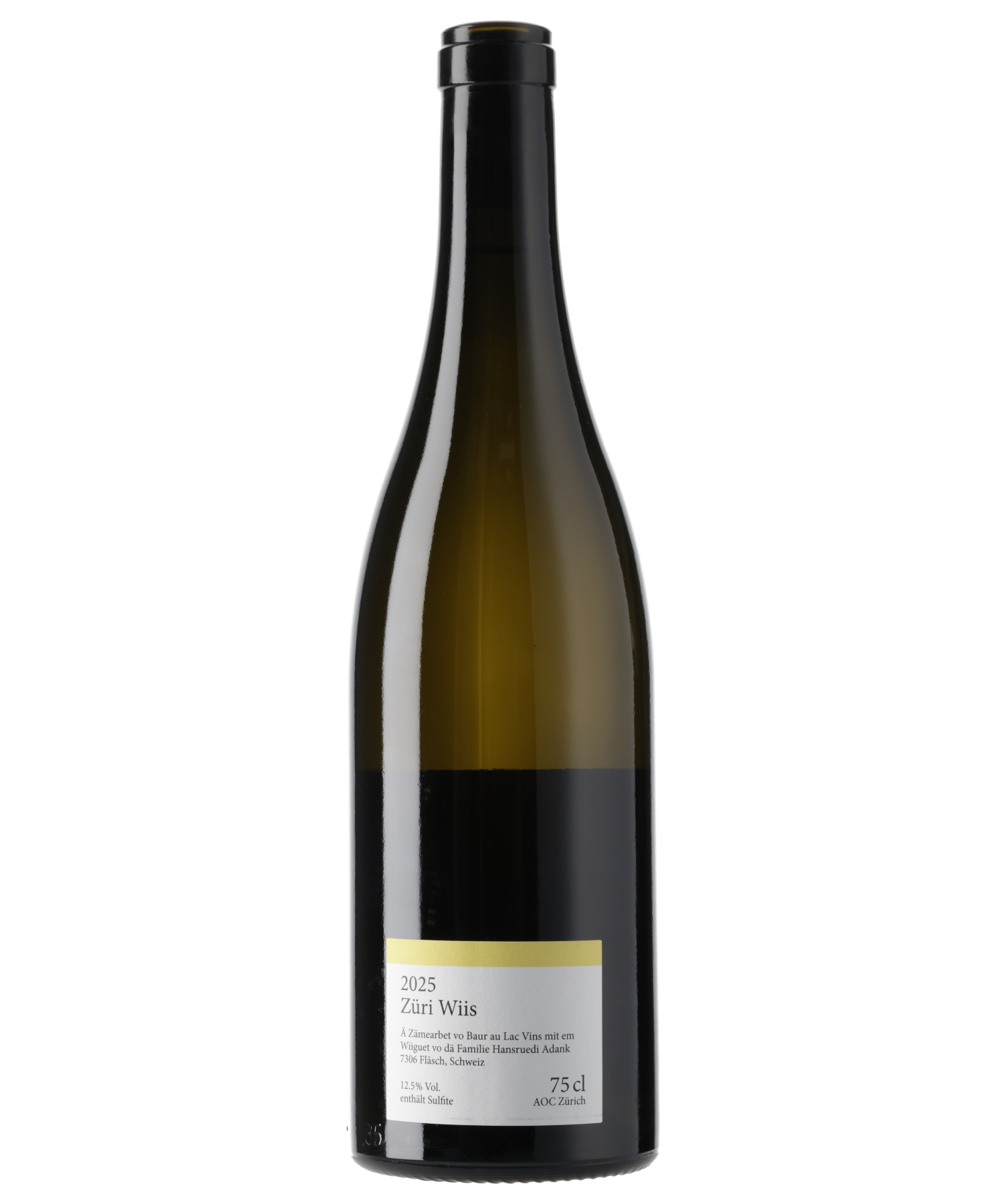
AOC Zürich, Joint-Venture von Baur au Lac Vins & Weingut Familie Hansruedi Adank, 750 ml


Uncompromisingly fresh
- Zurich grapes, Grisons craftsmanship: a joint project by Adank and Baur au Lac Vins.
- White blossoms, tropical fruit and citrus notes: crisp, lively and wonderfully fresh.
- Perfect for aperitifs, as well as with crispy fish bites, quinoa salads and savoury quiches.
Description
Winemaking know-how from the Grisons meets Zurich terroir: In collaboration with Baur au Lac Vins, the winemaking family Hansruedi Adank created Züri Wiis, a fresh and approachable cuvée made from Zurich-grown grapes. On the nose, it delights with aromas of white flowers and tropical fruits. On the palate, it is straightforward and lively, with crisp freshness and notes of grapefruit, mandarin and citrus fruits. A cool undertone lends it extra zing and provides just the right amount of excitement in the glass. This Zurich wine with a Graubünden twist is a versatile culinary companion – whether as an aperitif, with crispy fish fritters and tartar sauce, fruity couscous or quinoa salads, or with savoury quiches.
Wines for Autumn's Golden Days

Perfect for autumn cuisine and cosy moments: benefit from a 15% price advantage on our autumn wine selection until 31 October 2026, whilst stocks last.
Attributes
| Grape variety: | Müller-Thurgau, Pinot Noir, Gewürztraminer |
| Producer: | Hansruedi Adank |
| Origin: | Switzerland / Ostschweiz / (AOC) Zürich |
| Ripening potential: | 1 to 5 years |
| Drinking temperature: | 10 to 14 °C |
| Food Pairing: | Apéro pastries, Calamari alla romana, Baked egli fillets with tartare sauce, Vegetable flan, quiche, Vegetable cous-cous |
| Volume: | 12.5 % |
| Note: | Contains sulphites |
Müller-Thurgau
Germany and Switzerland combine
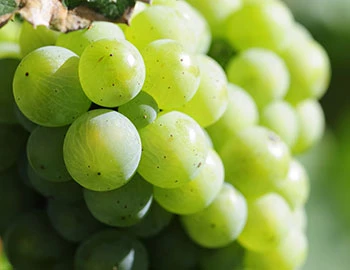
Yes, this grape actually gets its name from a Mr Müller from Thurgau. Then active as a wine researcher in Germany, the Swiss Hermann Müller developed the flowery, peachy new variety in 1882. Unfortunately, it was not accepted into the German register of varieties, so he took the seedlings with him to Switzerland. Here they settled under the name Riesling-Silvaner. This was because Hermann Müller mistakenly thought his white creation was a cross between these grapes. His error was only discovered later: the actual parents of the Riesling-Silvaner are Riesling and the ornamental grape Madeleine royal. Meanwhile, the Germans realised what they had missed. Above all, vintners from Lake Constance would have liked to have planted the Riesling-Silvaner, but they were not allowed. Thus, in 1925, a young winemaker rowed across the lake at night, smuggling 400 seedlings across the border in a fishing boat. Thirty years later, the grape was officially named Müller-Thurgau. It is called by the exact same name in Thurgau.
Gewürztraminer
Floral wines for exotic cuisine
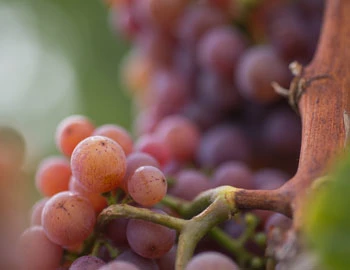
SeThe aroma is unmistakable: if it smells of exuberant rose, lychee and fresh grape, it is guaranteed to be Gewürztraminer. Its berries shine almost pink at harvest, but the wine is golden yellow. It has low acidity, but often reaches 14 percent alcohol and more. It is characterized by a slight bitter note at the end. These flavours stem from the family of the Traminers. It is cultivated on a large scale in Alsace, where the “gewurz” (spice) brings out an exotic side. In South Tyrol it is known as Traminer aromatic, and in Germany simply – and wrongly – as Traminer. In the Palatinate, there is a Gewurztraminer vineyard whose stocks are likely up to 400 years old. Wines of this variety harmonize fantastically with Asian cuisine, especially with Thai dishes and their lemongrass aromas.
Ostschweiz
Eastern Switzerland: an intriguing puzzle
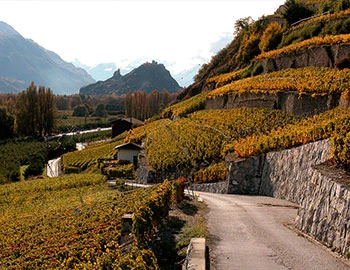
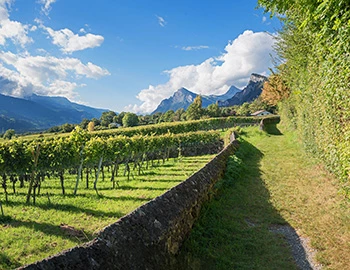
Eastern Switzerland has long been positioned on the northern rim of the climate zone where the cultivation of popular Swiss varieties is possible. Due to a warming climate, the vineyards of Aargau, Zurich, Schaffhausen, Thurgau and Graubünden are now in the zone where varieties such as Müller-Thurgau or Pinot Noir succeed excellently. But even long-established, almost-forgotten varieties such as Elbling, Räuschling and Completer are experiencing a renaissance.
Switzerland
Switzerland – A small country with enormous diversity
Switzerland is famous for its banks, watches, and cheese, but not necessarily for its wine. The Swiss didn't invent wine, but they have been extremely open and curious to it. Wine culture arrived in what is now modern Switzerland via several routes: from Marseilles to Lake Geneva and the Lower Valais region; from the Aosta Valley through the Great St. Bernard Pass to the rest of Valais; from the Rhone through Burgundy, across the Jura Mountains to Lake Constance; and from Lombardy to Ticino, and then on to Grisons.